























A map with holes in it
Chad has roughly 189 primary school pupils for every trained teacher. In Mauritius, the figure is about 14. Both numbers are from 2024, and the contrast is striking. They sit at opposite ends of a map showing the pupil-trained teacher ratio across Sub-Saharan Africa, based on UNESCO data for SDG indicator 4.c.2.
My Python analysis and interactive map reveal a wider concern. Of the 36 countries that have reported data since 2018, 21 have more than 40 pupils for every trained teacher. Forty is the ceiling UNESCO uses for primary classes in its teacher projections.

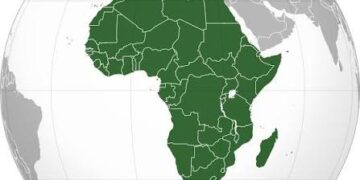
Africa has 54 countries, but this analysis covers the 48 that the World Bank classifies as Sub-Saharan Africa. North African countries, including Egypt, Morocco and Algeria, are excluded.
Twelve countries, no recent figure
Twelve countries have not reported this indicator to UNESCO since 2018. Among them are Ethiopia, Tanzania, Uganda and South Africa, some of the most populous countries in the region. Somalia, South Sudan and the Central African Republic have no recent figures either.

The gaps extend beyond teacher data. At UNESCO’s first global Conference on Education Data and Statistics in 2024, Director-General Audrey Azoulay noted that 40% of countries could not report the qualification levels of their teachers, according to a UNESCO article published by the World Economic Forum. The learning levels of 680 million children worldwide have never been measured. UNESCO has also had to model out-of-school figures for Nigeria, Ethiopia and Kenya, which had not reported this data for more than a decade.
Why the data disappears where it matters most
For some of the countries missing from the map, the absence of data is linked to conflict and prolonged instability. A 2024 policy brief from the ERICC research consortium, drawing on case studies including South Sudan and Nigeria, found that education data in conflict-affected settings is often scattered across government ministries, humanitarian organisations and donor-funded projects. Displaced children and those who are out of school are particularly difficult to account for.
When schools close, teachers and other education personnel flee, and government offices lose funding or capacity, routine data collection can break down. The result is a troubling gap in what we know. Countries facing some of the greatest challenges in providing trained teachers may also be among those with the least reliable data on the scale of the problem.
Planning in the dark
UNESCO’s Global Report on Teachers estimates that Sub-Saharan Africa needs 15 million more teachers by 2030. The same report finds that low-income countries averaged 52 pupils per trained primary teacher in 2022, against 15 in high-income countries. Numbers like these shape how governments and donors divide money between teacher salaries, training colleges and recruitment drives.
A country that does not report struggles to make its case. Its shortage drops out of regional averages, and its children become harder for funders to see. The report itself names weak planning procedures and missing monitoring tools as one reason shortages persist, and its second recommendation is simply to collect more and better data.
Counting teachers is part of the job
Closing these gaps requires sustained investment in the people and systems responsible for collecting education statistics, particularly in fragile states where donors already fund significant parts of the education system. Donors supporting teacher salaries and training should also invest in the systems that track how many trained teachers there are and where they work. A missing annual census should be treated as a gap to close.
Governments can also strengthen teacher management systems to maintain reliable records of teachers’ qualifications, training and deployment. Senegal’s MIRADOR system, highlighted in the UNESCO report, offers an example. It tracks recruitment, training and teacher numbers, helping education planners anticipate future staffing needs. Similar systems should become more common across the region.
My analysis took less than a week to complete using freely available tools. The code and data are publicly available on GitHub for anyone interested in checking the findings or extending the analysis. Mapping the available data was the easy part. Filling in the grey requires sustained effort from governments and their partners. Until that happens, millions of children risk remaining invisible in the data used to understand and plan their education.

Profile
Oluwademilade Olanrewaju is a First Class graduate of International Relations from Covenant University, Nigeria, and a Research and Writing Intern at EduTimes Africa, writing on education access and equity across the continent.


Her interests lie at the intersection of education policy and international development, particularly in how data and digital technology can address learning inequalities. Her recent work includes developing a Python pipeline to map shortages of trained teachers across Sub-Saharan Africa using UNESCO data.
Oluwademilade hopes to pursue graduate studies in public policy and build a career shaping evidence-based education and technology policy in Africa.












 EduTimes Africa, a product of Education Times Africa, is a magazine publication that aims to lend its support to close the yawning gap in Africa's educational development.