











































As governors across the country present their 2026 appropriation bills to state Houses of Assembly, Anambra, Enugu and Kano have emerged as the leading states in education funding, committing significantly higher proportions of their budgets to the sector than most of their counterparts.

An analysis of the 2026 budget proposals so far submitted by 34 states shows wide disparities in education spending, with only a handful meeting or exceeding internationally recommended benchmarks.

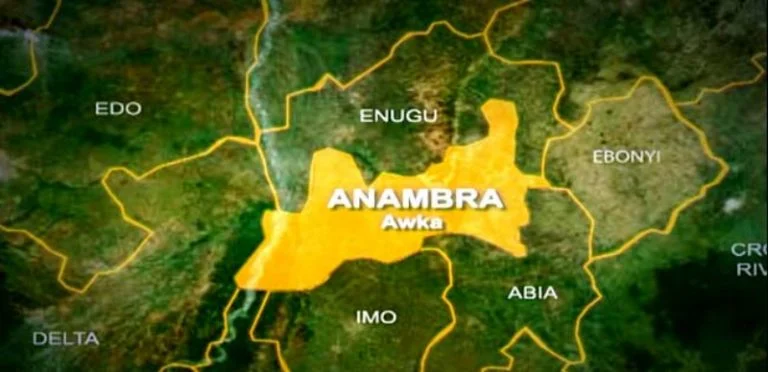
Anambra leads nationwide, allocating 46.9 per cent of its N757bn budget to education. The allocation, the highest in the country, underscores the state government’s strong emphasis on human capital development.
Enugu State follows, with N522bn—about 32.3 per cent of its N1.62tn budget—earmarked for education. The state has sustained this level of commitment, having devoted over 30 per cent of its total budget to the sector in both 2024 and 2025.

For 2026, the allocation is expected to support infrastructure upgrades, teacher recruitment and flagship initiatives such as Smart Green Schools, including N30bn set aside for school feeding programmes.
Kano State ranks third, allocating N405.3bn to education, representing 30 per cent of its N1.368tn budget. The state government has described quality education as a strategic driver of development.
Jigawa also recorded a strong showing, earmarking N234.48bn for education, which amounts to 26 per cent of its N901.84bn budget. Governor Muhammad Badaru has described education as central to the state’s future.

Other states that made notable commitments include Kaduna, which allocated N246.25bn of its N985bn budget (25 per cent); Abia, with N203.2bn of N1.016tn (20 per cent); and Taraba, which earmarked N131.6bn of its N650bn budget, representing about 20 per cent.
States with mid-level allocations include Kogi (N145.26bn of N820.49bn, 18 per cent), Katsina (N156.3bn of N897bn, 17.4 per cent), Oyo (N155.21bn of N892bn, 17.4 per cent), Nasarawa (N92.91bn of N545.2bn, 17.05 per cent), Ogun (N275.4bn of N1.66tn, 16.6 per cent) and Kebbi, which earmarked about 16 per cent, amounting to N105bn of its N642.93bn budget.
In contrast, several states lagged behind, with education allocations falling below the 10 per cent mark. Akwa Ibom recorded the lowest allocation, setting aside N31.6bn of its N1.39tn budget, representing 2.27 per cent, while Imo allocated N60.62bn of its N1.43tn budget, amounting to 4.24 per cent.
Other states with low allocations include Adamawa (6.86 per cent), Delta (6.11 per cent), Bayelsa (7.43 per cent), Gombe (8.01 per cent), Lagos (5.87 per cent), Niger (8.24 per cent) and Zamfara (7.55 per cent).
The United Nations Educational, Scientific and Cultural Organisation recommends that countries allocate between 15 and 20 per cent of total public expenditure or four to six per cent of Gross Domestic Product to education. Several states fell short of this benchmark.
In some states, education spending was grouped under broader social services, making it difficult to determine the exact amount dedicated to the sector. These include Cross River, Edo, Plateau, Yobe, Kwara and Ebonyi.
Meanwhile, Borno and Rivers states are yet to present their 2026 appropriation bills before their state Houses of Assembly.






 EduTimes Africa, a product of Education Times Africa, is a magazine publication that aims to lend its support to close the yawning gap in Africa's educational development.