



































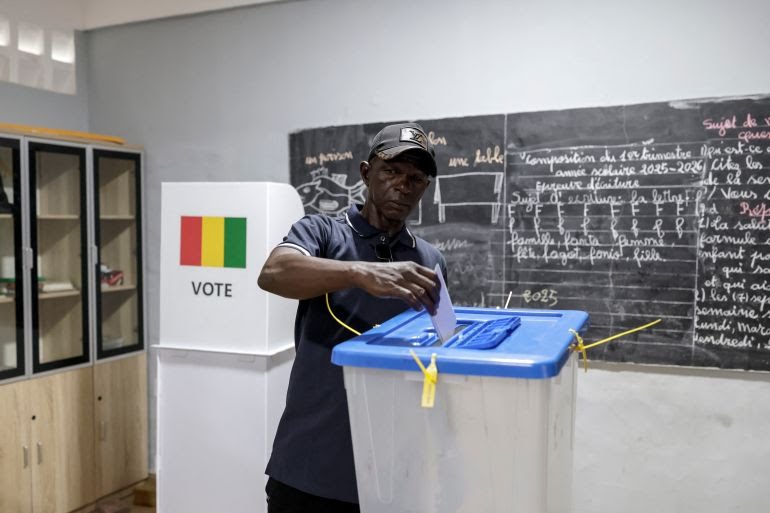


Guinea’s election authorities confirmed initial presidential results due Monday, following Sunday’s vote where junta leader Mamady Doumbouya seeks civilian presidency after ousting Alpha Condé in 2021. General Directorate head Djenabou Toure announced on radio and TV that manual and computerized counting yields early data, with partial tallies imminent amid 85% turnout from 6.8 million eligible voters, including 125,000 abroad.
Doumbouya, running independently among nine candidates, faces weak opposition after key figures like Cellou Dalein Diallo and Sidya Toure were exiled or barred, alongside Lansana Kouyaté and Ousmane Kaba on technicalities. His closest rival, ex-Education Minister Yero Baldé of the Democratic Front of Guinea, trails in recognition. A September referendum enabled junta candidacies, extending terms to seven years renewable once.


This caps a four-year shift from military rule, reverting Guinea’s post-1958 pattern of authoritarianism despite 2010 democratic gains under Condé. Opposition decried the process amid poverty affecting over half the population in a bauxite, iron, gold, and diamond-rich nation per World Bank data.

High turnout bolsters legitimacy claims, but exclusion of prominent challengers raises doubts on voter choice. Doumbouya touts infrastructure and Simandou mine launches; analysts question economic governance post-vote.

Guinea bucks Sahel junta isolation, maintaining France ties unlike Mali peers. Results could solidify Doumbouya’s grip, mirroring 2025 African polls with incumbents barring foes in Cameroon, Ivory Coast.
Source: AFP









 EduTimes Africa, a product of Education Times Africa, is a magazine publication that aims to lend its support to close the yawning gap in Africa's educational development.