























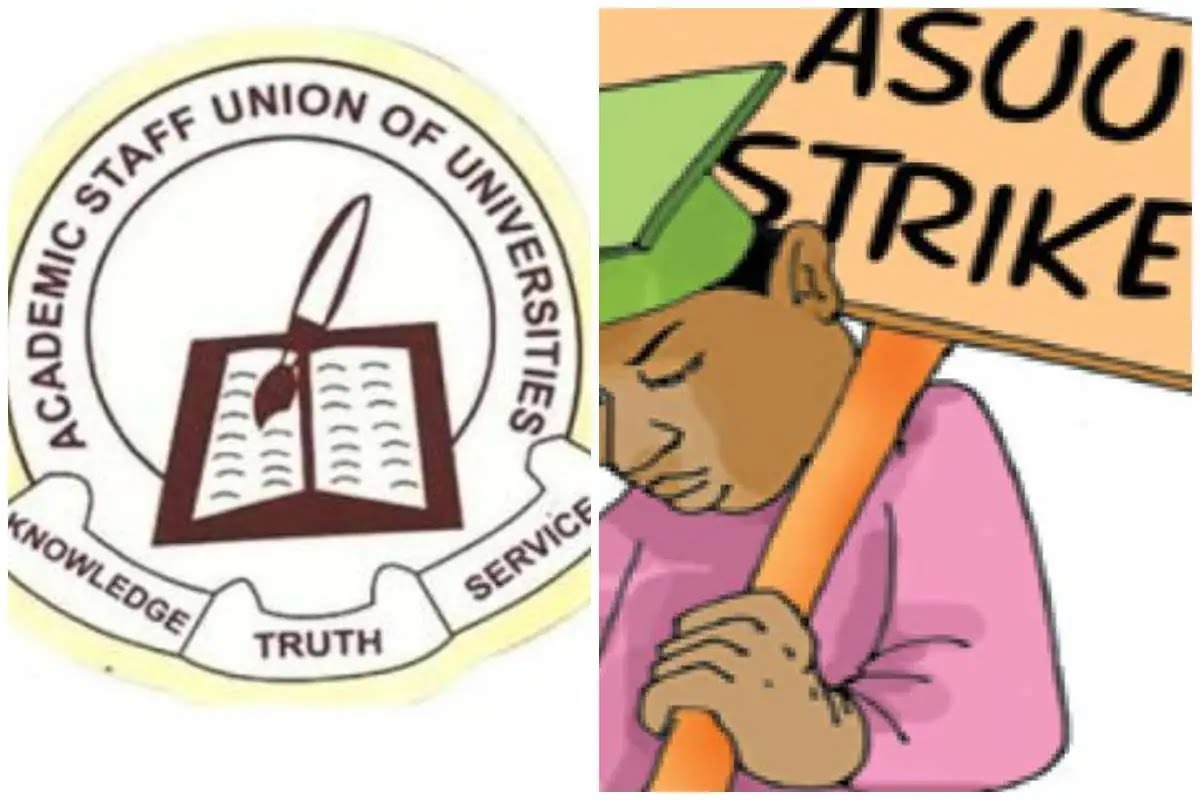


The renegotiated agreement between the Federal Government of Nigeria (FGN) and the Academic Staff Union of Universities (ASUU) has reignited debate over the long-term sustainability of Nigeria’s pension system, following provisions granting professors enhanced retirement benefits.



At the centre of the controversy is a clause allowing professors to retire at the age of 70 with pension benefits equivalent to as much as 100 per cent of their final salary. While the National Pension Commission (PenCom) maintains that the Contributory Pension Scheme (CPS) remains intact, analysts warn that the arrangement effectively reintroduces elements of the defunct Defined Benefit (DB) pension system.

Nigeria phased out the Defined Benefit Scheme in 2004 due to inefficiencies, unpaid arrears, and heavy fiscal pressure on government finances. Under that system, pensions were funded entirely by government and calculated based on years of service and final salary, leading to chronic delays and pension crises.

The introduction of the CPS shifted responsibility to both employers and employees, who now contribute 10 per cent and eight per cent respectively into individual Retirement Savings Accounts (RSAs). Retirement benefits under the CPS depend on accumulated contributions and investment returns, a structure designed to reduce unfunded government liabilities.

Responding to growing concerns on social media, PenCom’s Director-General, Omolola Oloworaran, said the new agreement does not amount to a return to a Defined Benefit Scheme. She explained that the Pension Reform Act (PRA) 2014 already permits professors to retire at 70 with enhanced benefits, provided government funds any shortfall between their RSA balances and the guaranteed pension level.
According to Oloworaran, what distinguishes the current administration is its willingness to fund obligations that had remained unimplemented for over a decade. She noted that the Federal Government recently issued a N758 billion bond to clear accumulated pension arrears, describing the move as a decisive step toward resolving legacy liabilities.

However, financial analyst Kalu Aja disagreed, arguing that once pension payments are tied to final salary rather than RSA balances, the system effectively becomes a Defined Benefit arrangement. He warned that such obligations are historically difficult to sustain and pose significant fiscal risks.
Aja also raised concerns over broader elements of the FG–ASUU agreement, particularly the proposal to establish a National Research Council funded with at least one per cent of Nigeria’s Gross Domestic Product. At current GDP estimates, he said, this would exceed N4 trillion annually—more than the entire federal education budget.
The debate has intensified online, with critics arguing that repeated government bailouts to clear pension arrears suggest that DB-style liabilities continue to accumulate within the CPS framework. PenCom, however, insists that acknowledging and funding legacy obligations strengthens, rather than undermines, the pension system, provided liabilities are transparently recognised and consistently funded.
Education Minister Tunji Alausa also defended the agreement, stating that President Bola Ahmed Tinubu directed that no commitments be made to ASUU without secured funding. He said the government currently has the fiscal capacity to support a 40 per cent salary increase for academic staff, nine academic allowances, and a new professorial cadre allowance.
The agreement, which takes effect from January 1, 2026, also includes commitments to improved university funding models, greater institutional autonomy, elected academic leadership, and a comprehensive review of the pact after three years.











 EduTimes Africa, a product of Education Times Africa, is a magazine publication that aims to lend its support to close the yawning gap in Africa's educational development.