
























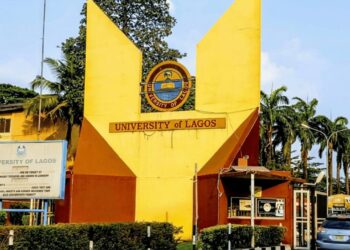
The University of Lagos (UNILAG) has recorded another academic milestone as its students clinched the top two positions at the second edition of the TPL Olutoyin Ayinde Urban Design Competition.


By securing both the winner and first runner-up spots, the university reinforced its reputation for excellence in planning education and professional training in urban design.

Organised by the Nigerian Institute of Town Planners – Young Planners Forum (NITP-YPF), Lagos Chapter, the competition attracted impressive submissions from tertiary institutions across Lagos State.

After a rigorous evaluation process, UNILAG emerged dominant, claiming first and second positions, while the Lagos State University of Science and Technology (LASUSTECH) placed third overall.

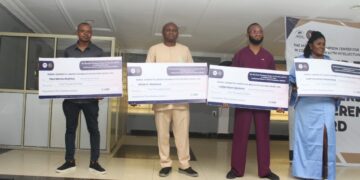
The winning UNILAG team, led by Odele Quadri, with Muibi Muhammed, Oduselu Adewale and Olonade Oluniyi as members, impressed judges with an innovative and context-responsive urban design proposal.
The team demonstrated strong technical competence, creativity and practical solutions to contemporary urban challenges.

Further highlighting the depth of talent within the Department of Urban and Regional Planning, another UNILAG team led by Gbande David, alongside Laikpo Fredrick, Birch Matilda and Oyetade Faruq, emerged as first runner-up.
Awards were presented at the Lagos State Ministry of Physical Planning and Urban Development. The ceremony was attended by the Commissioner for Physical Planning and Urban Development, Oluyinka Olumide; former Commissioner, Olutoyin Ayinde; and Chairman of the Nigerian Institute of Town Planners, Lagos Chapter, Dele Akindele, among other professionals.
The achievement underscores UNILAG’s sustained commitment to academic excellence, innovation and the development of industry-ready graduates equipped to address Nigeria’s evolving urban development needs.








 EduTimes Africa, a product of Education Times Africa, is a magazine publication that aims to lend its support to close the yawning gap in Africa's educational development.