
























Imagine having one number that follows your entire school journey — from your first day in primary school to the end of secondary school.



That’s the direction Abia State is heading with a new digital education tracking system.

The state government has introduced a Comprehensive Education Management and Information System (EMIS), designed to centralise and digitally integrate data from both public and private schools.
In simple terms, it’s a move to put all student and school records into one organised digital database.

The Commissioner for Information, Okey Kanu, disclosed this after the State Executive Council meeting on Tuesday.
According to him, when fully operational, EMIS will warehouse education data at the basic and secondary school levels into a unified central system.
That means better planning, measurable outcomes, and policies based on real data not guesswork.
Kanu noted that the documentation exercise is already ongoing in primary and secondary schools across the state’s 17 local government areas.
“The Education Management and Information System documentation exercise in our primary and secondary schools across the 17 local government areas of the state is ongoing,” he said.
One major outcome of this exercise is the introduction of the Abia Learners Identification Number (ABSLIN).
Every pupil in the state will receive this unique number.
According to Kanu, all public and private schools have already been issued secured login credentials to access the EMIS platform.
“EMIS integrates education data and processes at the basic and secondary levels into a single central database. The system will support efficient school management, data-driven development and the planning of measurable outcomes,” he added.
For students and parents, this could mean more structured record-keeping, easier tracking of academic progress, and potentially fewer cases of lost or inconsistent school records.
But there’s more…
Speaking at the briefing, the Commissioner for Basic and Secondary Education, Elder Goodluck Ubochi, said the EMIS and ABSLIN initiatives will allow the government to track each learner’s academic journey from entry to completion of Basic Education.
He added that each child enrolled in school will be issued an Abia Learners Identification Number and shall not change school without government approval.
That detail may raise questions about flexibility and student mobility, especially for families who relocate or change schools for personal reasons.

Beyond digital tracking, the state also shared updates on teachers’ recruitment.
Out of 36,415 applications received, 24,023 candidates have been shortlisted to participate in the Computer-Based Test (CBT).
Earlier, the government employed 5,394 teachers and is now targeting the recruitment of an additional 4,000 teachers in the second batch.
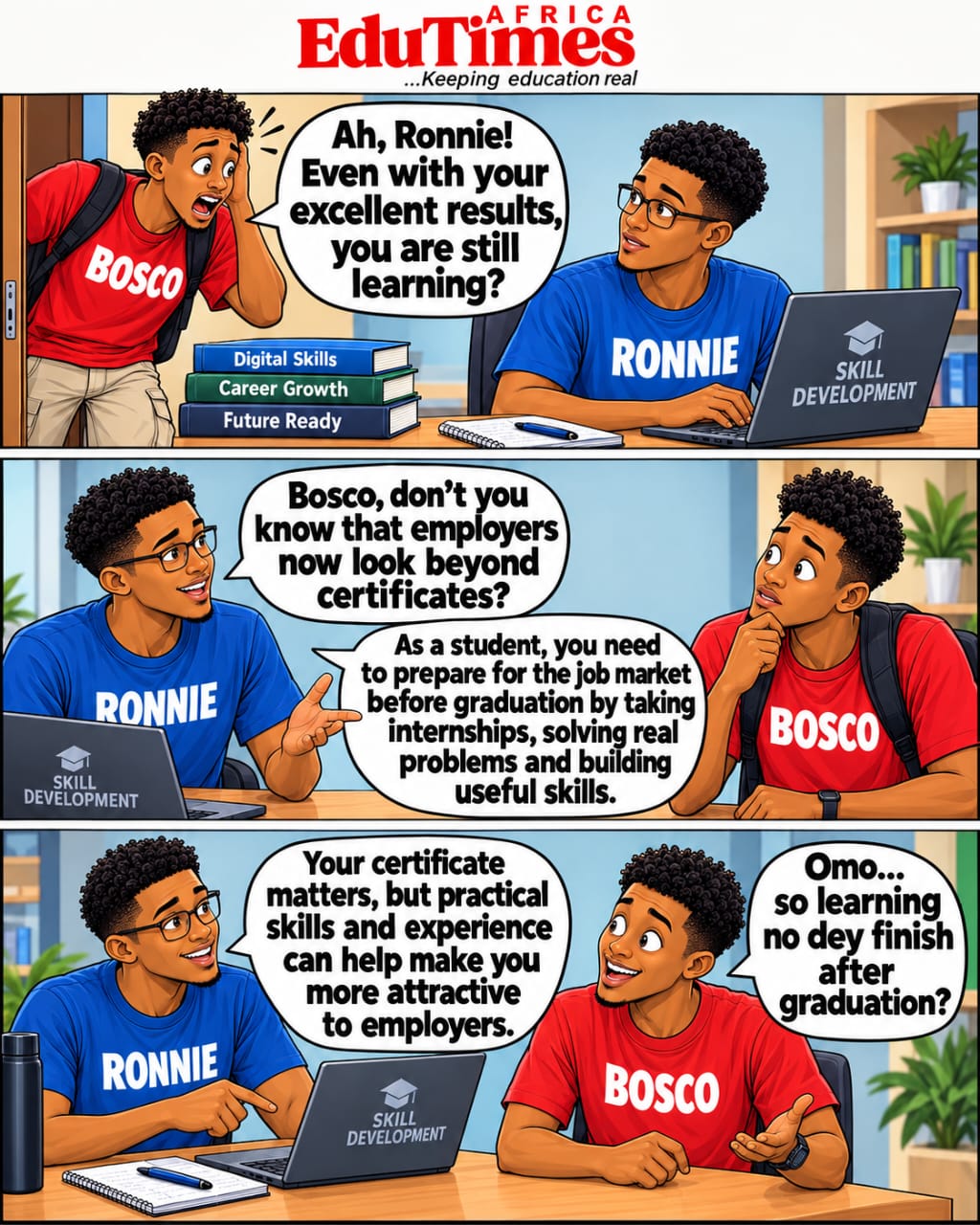
For young people in Abia, this isn’t just policy talk. It touches on classroom quality, teacher availability, student records, and how education is managed behind the scenes.
If implemented effectively, EMIS could mean smarter planning and better resource allocation.
But as with any big reform, students, parents, and educators will be watching closely to see how it affects real school life — from admissions to transfers and everything in between.
Because in today’s world, education is not just about chalk and board anymore.
It’s about data and who controls it.











 EduTimes Africa, a product of Education Times Africa, is a magazine publication that aims to lend its support to close the yawning gap in Africa's educational development.