
























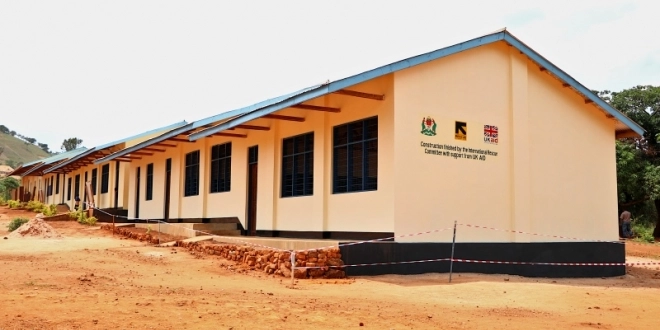


The Revolutionary Government of Zanzibar has launched an ambitious education infrastructure project aimed at constructing more than 400 classrooms across Unguja and Pemba to tackle school congestion and improve learning conditions.



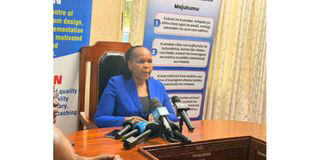
The initiative was flagged off by the Minister for Education and Vocational Training, Lela Mohammed Mussa, as part of activities marking the first 100 days of President Hussein Ali Mwinyi’s second term in office.

Speaking during the handover of construction sites to contractors, Ms Mussa said the project is designed to completely eliminate the long-standing double-shift system in schools. Currently, about 30 per cent of primary schools and 20 per cent of secondary schools operate on double shifts due to insufficient classroom space.
“Our goal is to end the double-shift system so students can receive adequate classroom time and actively participate in academic and extracurricular activities, including sports and madrasa,” she stated.

Permanent Secretary Khamis Abdulla Said highlighted one of the key projects — a modern G+3 facility in Jang’ombe — which will feature 38 classrooms, science laboratories, a computer room, and a library. The government also plans to equip schools with modern furniture and ensure reliable internet connectivity to enhance digital learning.

The programme, funded by the World Bank at an estimated cost of 8bn/-, will be implemented across all districts of Unguja and Pemba.

Project supervisors have been directed to ensure timely completion while maintaining quality standards. Contractors have also been encouraged to prioritise local youth employment, especially in non-specialised roles.
Construction at the Jang’ombe site is progressing as scheduled, with completion expected by January 2027.












 EduTimes Africa, a product of Education Times Africa, is a magazine publication that aims to lend its support to close the yawning gap in Africa's educational development.