





















The Federal Government has advanced plans to establish the Armed Forces College of Medicine and Health Sciences (AFCOM&HS) as part of efforts to strengthen military medical readiness and expand Nigeria’s overall healthcare training capacity.

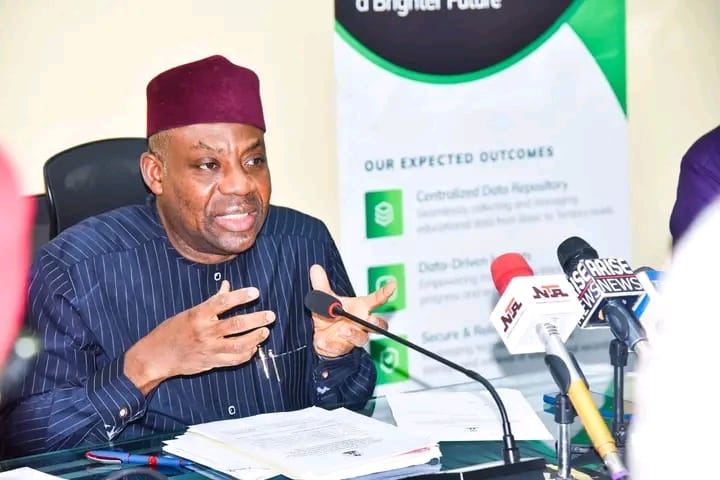
The decision was reached at a high-level meeting convened by the Minister of Education, Dr Maruf Tunji Alausa, and the Minister of State for Education, Prof. Suwaiba Sa’id Ahmad, alongside the Minister of Defence, Mohammed Badaru Abubakar, the Minister of State for Defence, Dr Bello Mohammed Matawalle, and other key stakeholders from the education, defence and health sectors.


The proposed college is designed to address critical manpower shortages within the Armed Forces and create a sustainable pipeline of military-trained doctors, surgeons, trauma specialists, emergency response medics and allied health professionals.
The Minister of Education noted that Nigeria, with a population of over 240 million, faces an estimated deficit of about 340,000 doctors, underscoring the urgent need for scalable and innovative medical training models.

He explained that the initiative aligns with the administration’s education reform agenda, which includes strengthening science, technology, engineering, mathematics and medical sciences (STEMM).
As part of broader reforms, the Federal Ministry of Education has increased annual medical school admissions from about 5,000 to nearly 10,000, with projections to raise the figure to approximately 19,000 in the coming years.
The new Armed Forces college is expected to complement this expansion strategy.
In compliance with the Federal Government’s seven-year moratorium on new tertiary institutions, the college will be established under the existing framework of the Nigerian Defence Academy. The institution will be located in Lagos State and linked to accredited federal and military hospitals to ensure strong clinical training partnerships.
Clinical training will take place at designated military medical facilities, including the 68 Nigerian Army Reference Hospital and the 661 Nigerian Air Force Hospital, alongside other military hospitals in Lagos, structured to accommodate substantial student cohorts while maintaining accreditation standards.
Medical cadets will undergo an eight-year programme comprising six years of academic medical training, one year of structured military training and one year of housemanship.
Upon completion, graduates are expected to possess both professional medical competence and the leadership and operational discipline required for military service.

To ensure regulatory compliance and quality assurance, a Technical Working Group has been constituted. Members include representatives of the Federal Ministry of Education, Ministry of Defence, Nigerian Defence Academy, Ministry of Defence Health Implementation Programme, the Medical and Dental Council of Nigeria, the Pharmacists Council of Nigeria, the Nursing and Midwifery Council of Nigeria, the National Universities Commission, the Joint Admissions and Matriculation Board and representatives of the Armed Forces. Admissions are projected to commence by October or November 2026.
The Federal Ministry of Education reaffirmed its commitment to collaborating with defence and regulatory partners to deliver the project in line with national standards and global best practices, describing the initiative as a strategic investment in Nigeria’s health security and military medical training capacity.








 EduTimes Africa, a product of Education Times Africa, is a magazine publication that aims to lend its support to close the yawning gap in Africa's educational development.