
















































The University of Lagos (UNILAG) has inaugurated the 2026 Genomics Summer School as part of efforts to strengthen precision healthcare, cancer research and genomic science through international collaboration and advanced scientific training.
You might also like thesePosts
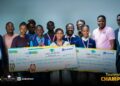


The programme, organised by the Centre for Genomics of Non-Communicable Diseases and Personalised Healthcare (CGNPH), commenced with a virtual opening ceremony held on July 14, bringing together leading scientists, healthcare professionals, researchers, students and stakeholders from Nigeria and abroad.

Speaking on behalf of the Vice-Chancellor, Prof. Folasade Ogunsola, the Deputy Vice-Chancellor (Development Services), Prof. Foluso Ebun Afolabi Lesi, reaffirmed the university’s commitment to research and innovation that addresses emerging healthcare challenges.

Similarly, the Deputy Vice-Chancellor (Academics and Research), Prof. Matthew Olusoji Ilori, commended the Centre for sustaining a globally relevant platform for genomic science, expressing confidence that the Summer School would further strengthen UNILAG’s reputation for scientific excellence.


Director of the Centre, Prof. Olufemi Akintoye, described the Summer School as “an investment in the future of healthcare,” noting that it equips emerging researchers with contemporary genomic knowledge, practical skills and collaborative networks needed to address complex health challenges.
Delivering the keynote address titled “Visualizing the Genome at the Nanoscale,” Prof. Pina Colarusso, Director of the Live Cell Imaging Resource Laboratory at the University of Calgary, Canada, highlighted how advances in super-resolution microscopy are transforming disease diagnosis and treatment.
She explained that modern imaging technologies now enable scientists to observe DNA and cellular structures in unprecedented detail, allowing them to detect disease-causing changes long before symptoms appear.
“Today, we can watch biological processes unfold in real time, how genes switch on and off, how chromosomes are organised, and how disease-causing changes emerge long before symptoms appear,” she said.
According to her, the integration of genomics and advanced imaging is accelerating the development of targeted therapies and ushering in a new era of personalised medicine.
In a plenary session, Professor of Chemical Pathology at Nile University of Nigeria, Prof. John I. Anetor, examined the relationship between environmental factors and genetics in cancer development.
Speaking on “Toxicological Inquiry in the Genomics Era: Sharpening the Tools Against an Unyielding Adversary,” he warned that global cancer cases could double by 2050 without stronger environmental health policies and sustained research.
He stressed that genomics, toxicology, nutrition and environmental science must work together to improve disease prevention and public health.
Participants described the programme as transformative, with many highlighting the importance of expanding genomic research across African populations to improve understanding of diseases prevalent on the continent.
The annual Genomics Summer School brings together experts and young researchers from around the world to deepen knowledge in genomic science and personalised healthcare.
This year’s edition selected 37 participants from different countries for the physical phase of the programme, which began on July 20, where they will receive intensive laboratory training and engage with internationally renowned experts on emerging developments in genomics and precision medicine.













 EduTimes Africa, a product of Education Times Africa, is a magazine publication that aims to lend its support to close the yawning gap in Africa's educational development.