










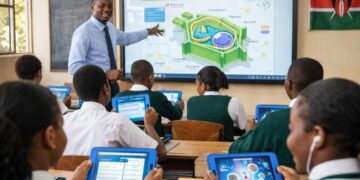
















Studying abroad offers more than the opportunity to earn a degree in another country. It allows students to experience different cultures, explore new academic environments and acquire skills that can shape their personal and professional lives.
For Nigerian students considering international education, studying overseas can open doors to career opportunities, global networks and specialised academic programmes. Although the experience comes with financial and personal challenges, its potential benefits make it an attractive option for young people seeking to broaden their horizons.

Here are ten major benefits of studying abroad.
1. Improved Career Opportunities

One of the most significant advantages of studying abroad is the potential to improve career prospects. International education exposes students to different professional environments, teaching methods and industry practices.
Employers may value graduates with international experience because they have demonstrated adaptability, independence and the ability to work with people from diverse backgrounds. However, studying abroad does not automatically guarantee employment, as career opportunities also depend on the institution, course of study, professional experience and demands of the job market.
2. Access to Global Networking Opportunities
Studying in another country allows students to interact with people from different nationalities, academic backgrounds and professional interests. These relationships can develop into valuable friendships, professional connections, research partnerships and business opportunities.
Students may also gain access to international alumni networks, academic conferences and industry events, creating opportunities that could benefit their careers long after graduation.
3. Improved Language and Communication Skills
For students studying in countries where different languages are spoken, international education provides an opportunity to develop language proficiency through everyday interactions.
For instance, studying in France, Germany or Spain can help students improve their French, German or Spanish beyond what they learn in the classroom.
Even in English-speaking countries, interacting with people from different linguistic and cultural backgrounds can strengthen communication skills, confidence and the ability to express ideas effectively.
4. Exposure to Different Teaching Methods
Educational systems differ across countries. While some institutions emphasise independent research, others prioritise practical training, classroom discussions, laboratory work and group projects.
Studying abroad exposes students to these different approaches, encouraging them to explore new ways of thinking and learning. This experience can strengthen critical thinking, problem-solving, academic writing and independent research skills.
5. Access to Specialised Academic Resources
Some foreign universities have advanced research facilities, specialised laboratories, extensive libraries and academic programmes that may not be readily available in a student’s home country.
Students interested in fields such as engineering, medicine, artificial intelligence and environmental science may benefit from access to specialised equipment, research opportunities and experienced academics.
These resources can provide valuable exposure to innovations and research projects addressing challenges around the world.
6. Greater Independence and Self-Reliance
Moving to another country often requires students to take greater responsibility for their daily lives. From managing accommodation and personal finances to preparing meals, handling transportation and organising academic schedules, students learn to make decisions independently.
These experiences can develop maturity, confidence and practical life skills. For many young people, studying abroad represents their first experience of living independently, making it an important stage in their personal development.
7. Better Cultural Awareness and Understanding
Living and studying in a foreign country provides direct exposure to different traditions, beliefs, social practices and ways of life.
Students learn to interact with people whose experiences and perspectives may differ significantly from their own. This exposure encourages tolerance, open-mindedness and cross-cultural communication.
For Nigerian students, experiencing other societies can also provide fresh perspectives on Nigeria’s institutions, culture, economy and position in the international community.
8. Opportunities for International Travel
Studying abroad can make it easier to explore different cities and destinations, particularly when a university is located in a region with accessible transportation networks.
For example, students studying in European countries may have opportunities to visit neighbouring countries during holidays and academic breaks. Such experiences can broaden their understanding of geography, history, culture and international affairs.
However, students must consider travel expenses, visa requirements and academic responsibilities before making travel plans.
9. Opportunities for Further Education and Research

An international degree can provide a pathway to further academic opportunities, including postgraduate studies, research programmes and professional qualifications.
Students may gain access to experienced research supervisors, academic institutions and specialised programmes that align with their long-term interests.

International academic experience can also strengthen postgraduate applications when supported by good academic performance, relevant research and other qualifications. This can be particularly valuable for students interested in academia, policy research and international organisations.
10. Personal Growth and a Broader Worldview
Perhaps one of the most important benefits of studying abroad is the opportunity for personal transformation.
Living in an unfamiliar environment challenges students to adapt, solve problems and become comfortable with new experiences. They encounter different perspectives, develop new interests and learn to navigate situations outside their usual surroundings.
Over time, these experiences can shape their confidence, ambitions and understanding of the world. Students may also discover new career interests, develop entrepreneurial ideas and become more interested in global issues through interactions with people from different backgrounds.
Conclusion
Studying abroad can be a transformative experience, offering benefits that extend beyond academic qualifications. From improved career prospects and international networking to personal independence and cultural awareness, international education can equip students with valuable skills for an increasingly interconnected world.
Nevertheless, prospective students should carefully consider tuition fees, living expenses, scholarship opportunities, university accreditation and post-study employment regulations before choosing a destination.
Ultimately, the value of studying abroad depends not simply on the country or university attended, but on how effectively students utilise the opportunities available to them.














 EduTimes Africa, a product of Education Times Africa, is a magazine publication that aims to lend its support to close the yawning gap in Africa's educational development.