


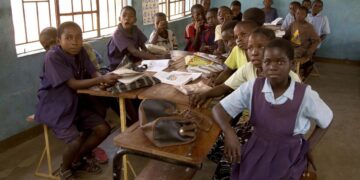
























Today, many Nigerian students have been offered admission into different higher institutions across the country, marking the beginning of a new journey for them.
For many students, this means spending the next four or five years of their lives away from their families while pursuing their academic dreams. In most cases, students see this sojourn as the best time to explore and experiment with their conscious and subconscious capabilities. They call it “freedom”, but most times, they view it from a negative perspective.

However, beyond that, every new environment comes with its own demands and sacrifices. While some students adapt smoothly, many become frustrated easily and wish they had been told what to expect so they could have prepared their minds.
In an interview with Lateef Adepoju, Hikmat Anuoluwapo Atoyebi, a final-year student studying far away from home in the North Central part of the country, recounts her experience navigating the rollercoaster of environmental demands.

From her admission journey and accommodation challenges to navigating university life in a different part of the country, she offers insights into the realities of making that transition.
Read below:
1. Can you introduce yourself? Tell us your name, current level, institution, course of study and where you lived before moving to your current location for school.
My name is Hikmat Anuoluwapo Atoyebi, a final year student at the university of Ilorin studying Education and English language. Before moving to Ilorin for school, I actually grew up in Lagos, but I did live at Osogbo for about two years before I got admission into the university.
2. How did you end up studying in this location? Walk us through your JAMB journey, from choosing your preferred institution to the point you accepted your admission on JAMB CAPS.
I actually did UTME twice, I didn’t get admission the first time because of late uploading of my WASSCE result, I wanted to go to OAU then and I’d picked Law, I chose OAU because it was the nearest of all the five options of universities that my dad said I could pick from. I wrote my second UTME, but I was no longer interested in Law, so I picked Education and English language, but still chose Obafemi Awolowo University, unfortunately, again, I lost the admission, I didn’t even wait for the school to reject me, once I saw that I had less than twenty in the Post-UTME I knew I couldn’t make it in.
My dad didn’t want me home without admission again, I wasn’t interested in writing a third UTME, so we looked at other options from my five list of schools and UNILORIN happened to have their Post-UTME form for sale as at then, so I did a change of institution to Unilorin. I had a five days reading marathon, just me, food, water, sleep and UNILORIN Post-UTME past questions. I had to stay with an uncle during this period because unlike OAU where you can write your exam from any location, you had to write Unilorin’s exam under their watch, so I travelled down and locked in. I scored 71. So with that score and a 268 in UTME, we were certain I had a chance.
However, my admission got really delayed, actually, the admission of everyone in my set, we wrote our exam in February 2022 and and resumed December 2022, we also felt the impact of that eight months strike that happened in Nigeria then. While we were waiting for admission, my mum proposed going to a polytechnic but my dad wasn’t having it. When I heard that admission had started rolling out, I was restless, I really would call my dad every time, telling him I hadn’t gotten mine, I eventually did and sent a friend my details to accept for me. I’ve never met this friend physically, but somehow I trusted him. He’s currently studying MBBS at Unilorin too.
3. Before gaining admission, what were your expectations about studying so far away from home?
Really, I’ve always been someone that hates travelling, the idea of sitting on a bus for hours drains me, plus the stress of having to carry bags, then negotiating price with drivers, there’s also thie fear of having to deal with people in public transport, nothing about going from Osogbo to Ilorin was exciting, it was just something I had to do out of obligation. Now, about expectation, I actually expected convenience, I didn’t think I’d have to be speaking to agents to look for hostels outside the campus, I didn’t expect that balloting for school hostel would be unreliable, and that getting somewhere to live was solely my business and none of the school’s, I was really expecting that there would be adequate provision.

4. Tell us the most exciting and challenging parts of your experience so far.
The most exciting…nothing has been particularly exciting, but I’d say it’s been easy, aside from after 100L that I moved from off campus into the school, I’ve not had to worry about packing all my bags home at the end of every session and bringing them back again, I just had to renew my fee and that’s all. For someone with my kind of personality, having to share a space with three other people built my sense of diplomacy, I can easily stand with everyone while supporting nobody, it built my people skill. The challenging part is, I can’t just up and go home, it has to be a holiday that’s at least a month long, else, it’s not worth it, due to cost and stress. I have to wait months to be in the warmth of my family.
5. When you arrived at your institution, how did you adjust to the new environment? Tell us about your experience with accommodation, food, language and other things you had to get used to.
First when I arrived, I arrived at my uncle’s place, I was there for a few weeks and the transport fare from there to school isn’t child’s play, not to mention how long it takes me to get there, it’s a lot of time, I can’t meet up with 8am classes and I definitely can’t stay in school when I had classes till 6pm else I’d miss my uncle’s car at the park, that was really draining. I eventually spoke with a coursemate and she said I could split rent with her and move in, and that was how I got accommodation, my roommate was great, we never had a disagreement or fight, but some of my neighbours were uncomfortable, they blared loud music, lacked courtesy and didn’t know how to stay in their lane.
Growing up, I only had to share toilet with my two cousins, sometimes three during the holiday, but here it was different, this toilet was serving about twenty people, that was insane to me! Very, very insane, but myself and my roommate devised a means to make it better for us, yet adjusting to that was not easy, people always messed that place up.
Now, we had to share the duty of washing the toilet, and this guys were unnecessarily difficult, they said men don’t wash toilet, yet, they were the plentiest in a room in the hostel, about six of them. There was really no change in the food, it was still what I used to eat at home thankfully, because that would have been drastic if it was otherwise, given that I’m very picky with food. For me, adjusting to the environment was realising that there’s nowhere else I could be at the moment.
6. As a Nigerian student studying far away from home, “When are you coming home?” is probably a question you hear often from family and friends. Have you ever experienced homesickness, and how do you cope with it?
I’ve always been the kid that grew up outside of home, so nobody really used to ask, and I wasn’t homesick too, because there’s no reason to be. It’s only in recent times after spending a few holidays with my older cousin that she now always looks forward to having me around, but for me really, I don’t get homesick, I actually enjoy being in school.
7. At some point, there were concerns about insecurity in parts of Kwara State, including Ilorin. How did you cope during that period, and what measures did you take to keep yourself safe?
Then, really I was scared, I think I got a little paranoid, I started thinking of can I scale a fence, I’d have that thought every night before sleeping because I could see my hostel fence from my side of the bunk. But I didn’t do anything other than pray, and pray and I believe that the university had put tight security measures in place.
8. Many young people believe that studying far away from home gives them greater freedom. Has that been your experience, or is the reality different from what you expected?
I’ve always been a child that was contained, yet, very free, I’ve always had freedom even though it would have come with some consequences if I explored it, I had it anyways. So studying far away from home wasn’t any big deal, I naturally love the company of my room, so I wouldn’t go anywhere, I don’t have friends, so there’s no one to visit me, maybe I had extra freedom, but my personality still contained me.
9. What advice would you give to students who have been offered admission to study in places far away from their homes?

I’d say they need a shit load of money! Also, they should learn to express themselves, ask questions, but at the same time not expose their vulnerability, they’d be in a strange land, with no idea how things are done, if possible get a reliable source to sort out accommodation for you before you move into that coty.
10. How has studying in a different region influenced the way you communicate with people, make friends and understand other cultures?
If anything has changed in the way I communicate with people, that would be because I grew personally, not really because I moved to a different region, I haven’t had to relate with people outside of discussing school issues or at most market runs. About making friends and culture, I witnessed the way weddings are being done in Ilorin, even though it’s a distant relative’s wedding, if I wasn’t schooling here I wouldn’t be in attendance, so I saw the beauty of their wedding culture, amazing stuff, I almost attended Durbar too, but the crowd would suffocate me, so I didn’t, but generally it’s a peaceful place here.
11. If you had another opportunity to choose an institution, would you still choose to study this far away from home? Why or why not?
Hmmm, I honestly can’t tell, maybe because I’ve always been outside of home, so there’s no much impact it really has in me, except of course the hours of sitting in the bus and all the stress associated with travelling. Would I be doing it again, if I can afford a more comfortable means of travel, yes. And if I can’t and I still have to do it again it’ll just be another case of “Yakubu manage.”
12. Looking back on your journey, what do you wish you had known before leaving home to study in another part of Nigeria?
Nothing really, it’s always been me and my Lord, and we scaled through this one too, there was really no extreme difficulty or any out of ordinary situation.
13. If you could speak directly to a student who is afraid to leave home to study in another part of Nigeria, what would you tell them about the opportunities, sacrifices and realities of taking that step?
If your fear is not falling victim of extreme insecurity issues, I’d say: do it. It’s a great way to explore, add to your well of experience, meet more people, the good, the bad and everyone in between. You won’t be the only one there that has made this sacrifice for themselves, you’ll meet people from different walks of life, and sometimes seeing from another person’s point of view is all you need to be better. Do not let fear, and the discomfort of leaving behind what you’re familiar with rob you of the joy of the new opportunities that might just be waiting for you on the other side.











 EduTimes Africa, a product of Education Times Africa, is a magazine publication that aims to lend its support to close the yawning gap in Africa's educational development.