
























EduTimes Africa’s exclusive interview with Renato Basteri, creator of VANFROG.ART
How did this extraordinary adventure begin?
It began with a game, not a business plan. In April 2026, while experimenting with visual storytelling and artificial intelligence, I began imagining myself as a cheerful green frog. That frog became René VANFROG, my artistic alter ego, with bright blue eyes and blue glasses. Then Julie arrived: a shy, dark-grey duckling with black eyes, red cheeks and an orange beak and feet. I imagined them entering paintings together. Julie would hide and René would search for her. At first it was simply fun. I could not have imagined that this little experiment would grow into an international artistic and educational journey.

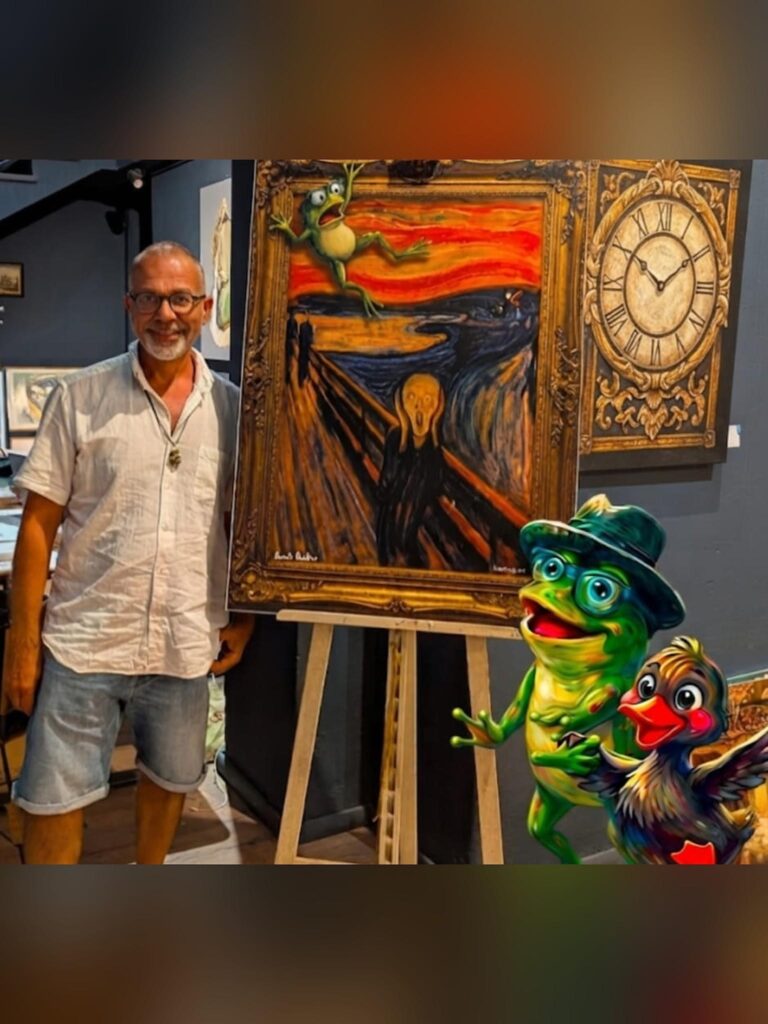
Why did you decide to place the characters inside famous paintings?
I have always believed that art should invite people in, rather than make them feel excluded. A painting can seem distant if someone feels they do not know enough about its artist or historical period. But almost anyone can enjoy looking for a tiny character hiding in a picture. The game offers an accessible doorway into art history. People stop scrolling, look carefully, search for clues and discover details they might otherwise have missed. The great artists remain at the centre: René and Julie are visitors who encourage us to look again.
How exactly does the daily game work?
Every day I publish an artwork in which Julie is hidden. René searches for her, and followers are invited to do the same. The first person to identify her hiding place correctly in the comments wins a special privilege: choosing the next day’s artwork from two proposed paintings. The prize is not money. It is participation. The audience becomes part of the creative process and helps decide what happens tomorrow. That ongoing relationship makes the project feel like a community rather than a collection of images.

What makes René and Julie special to you?
René is curious, optimistic and adventurous. In some ways, he is me, transformed into a frog. Julie is quieter, shy and mischievous. She never needs to shout for attention: she simply hides and waits to be discovered. Together they represent two ways of encountering the world: going out to search, and waiting to be seen. Their friendship brings warmth and humour into the paintings. Their consistent visual identities also make them recognisable across very different artistic styles.
Is VANFROG.ART only a game?
Not at all. The game is the invitation; education is an essential part of the experience. Each day, alongside the challenge, I share an accessible explanation of the painting, the artist, techniques, historical background and surprising curiosities. I call this “L’Angolo del Prof,” or “The Teacher’s Corner.” The aim is not to deliver a formal lecture. It is to awaken curiosity. Someone may come to find Julie and leave having learned something about a painter, a movement or a historical moment. That is a beautiful result.
How has your experience as a teacher influenced the project?
I am a support teacher at the Alfieri Bertagnini school in Massa, Tuscany, Italy. My work has taught me that people do not all learn in the same way. I have led creative activities involving painting, scenery, papier-mâché and recycled materials. Visual and practical experiences can make participation possible for students who find more conventional methods difficult. This has shaped my approach to VANFROG.ART: I want the starting point to be welcoming. Everyone can observe a picture, make a guess, notice a detail or ask a question.

How do you use artificial intelligence in the classroom?
I explore AI as a creative and educational tool, always emphasising responsible use and critical thinking. For example, students can compare responses from ChatGPT and Gemini to the same prompt, discuss why the outputs differ, and see what happens when an instruction is unclear. We can use voice and text, work collaboratively and gradually help students formulate their own prompts. An important goal is inclusion: students with different abilities should have opportunities to contribute. AI is not there to replace the teacher or the students’ imagination; it can help open additional paths for expression.
What do you say to people who worry that AI diminishes human art?
Those questions deserve serious discussion. Technology does not eliminate the importance of authorship, artistic intention, cultural context or ethics. In my work, I choose the ideas, the characters, the narrative direction, the references and the educational purpose. AI assists the visual experimentation. My intention is not to replace the original masterpieces or their creators. It is to encourage people to engage with them. The test for me is whether the result creates curiosity, attention and dialogue, rather than simply producing another image to scroll past.
How quickly did the project grow?
In April 2026 the Instagram account had roughly 200 followers. It has grown day by day through the participation of people who return to play and share the project. According to figures checked on 9 November 2026, VANFROG.ART had more than 8,630 Instagram followers and over 168,000 views in the preceding 30 days. These figures are constantly evolving. What moves me most is not simply the number, but the thought that people in different places are taking a moment to look at art through this small shared game.
How did VANFROG.ART reach the international exhibition circuit?
That is the part of the story that still feels like a dream. In June 2026, a VANFROG.ART work appeared on a digital screen in New York’s Times Square. The project has also reached exhibitions in Milan, Tokyo, London and Amsterdam. Madrid is scheduled for November 2026 and Paris for January 2027. To think that something that began as a playful experiment in front of a computer could travel through these cities is extraordinary. Each new exhibition is a reminder of how far a simple idea can go.
What has been the most emotional moment?
Seeing the project in Times Square was unforgettable. But I also cherish much smaller moments: a follower discovering Julie after studying a painting carefully, a comment showing that someone has noticed a detail for the first time, or a participant excitedly choosing the next day’s artwork. These everyday moments give the project its meaning. International recognition is wonderful, but the connection with people is the reason I continue.
You have also published a book. What is it about?
Yes. The project has become a bilingual Italian-English book, available on Amazon, titled “Dove si nasconde l’anatroccolo timido? – Trovalo nei quadri / Where Is the Shy Duckling Hiding? – Find It in the Paintings.” It brings the same playful idea onto the printed page. Readers can spend time with the artworks, search for Julie and discover René’s adventures at their own pace. I love the thought that the characters can live beyond the social-media feed and be enjoyed by families and readers together.
What can educators in Africa and around the world take from your experience?
I would never claim that one project has all the answers. But the underlying questions are universal. How do we help learners become curious? How do we invite participation from people with different needs? How do we combine new technologies with human imagination and judgement? My experience suggests that a simple story and a playful challenge can create opportunities for observation, discussion and learning. Teachers can adapt this principle to their own subjects and circumstances, using technology thoughtfully and protecting students’ privacy and wellbeing.
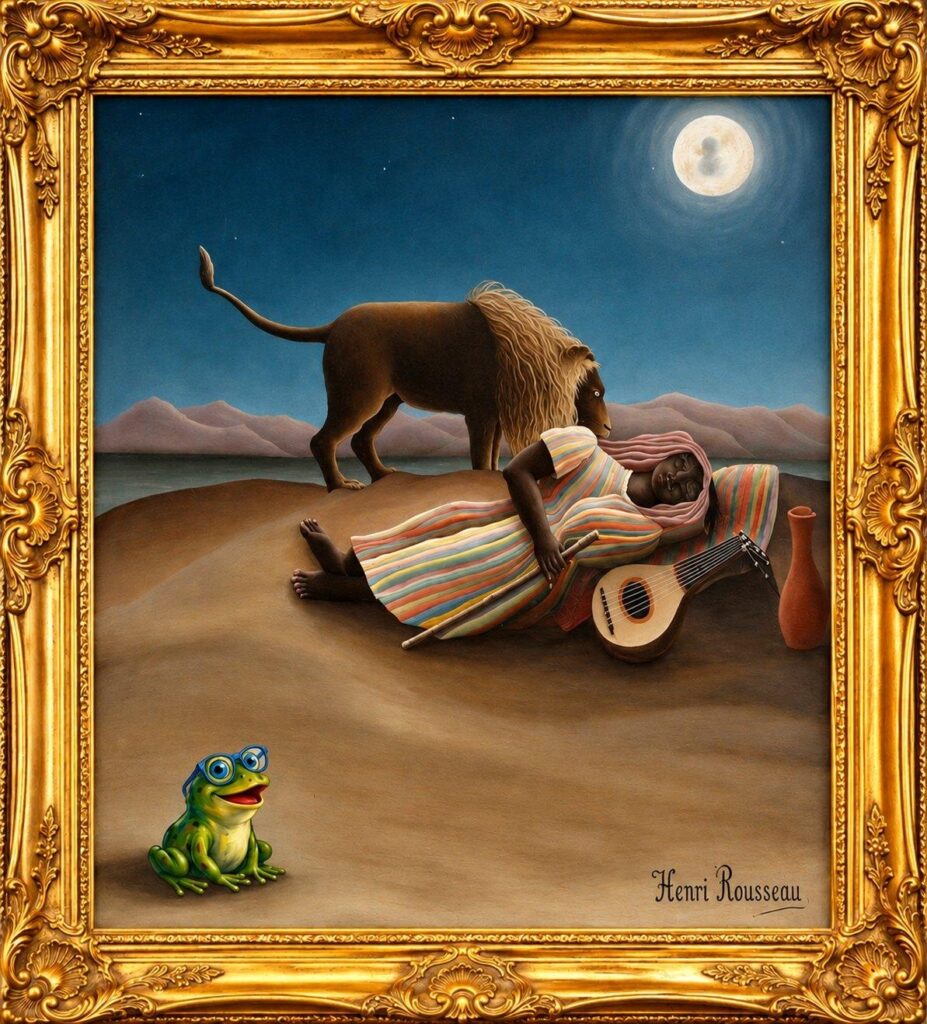
“The Sleeping Gypsy” — referencing Henri Rousseau
What is your dream for the future, and what would you tell readers?
I hope René and Julie continue travelling, reaching new people and inspiring creative educational experiences. Perhaps they will one day become familiar characters in further books, learning materials or other storytelling formats. But I never want to lose the spirit of the beginning. This was born as a game. I would tell readers not to underestimate small ideas: sometimes a dream arrives disguised as a joke, a drawing or an experiment. You follow it because it makes you happy, and one day you discover how far it has taken you. Thank you to everyone who has accompanied us on this adventure.

Renato Basteri is an Italian artist and support teacher at the Alfieri Bertagnini school in Massa, Tuscany. He created VANFROG.ART in 2026, combining participatory art games, storytelling, art education and AI-assisted visual experimentation.
Instagram: @vanfrog.art — https://www.instagram.com/vanfrog.art/
Facebook and TikTok: VANFROG.ART
IMAGE CAPTIONS (INDIVIDUAL EMAIL ATTACHMENTS)
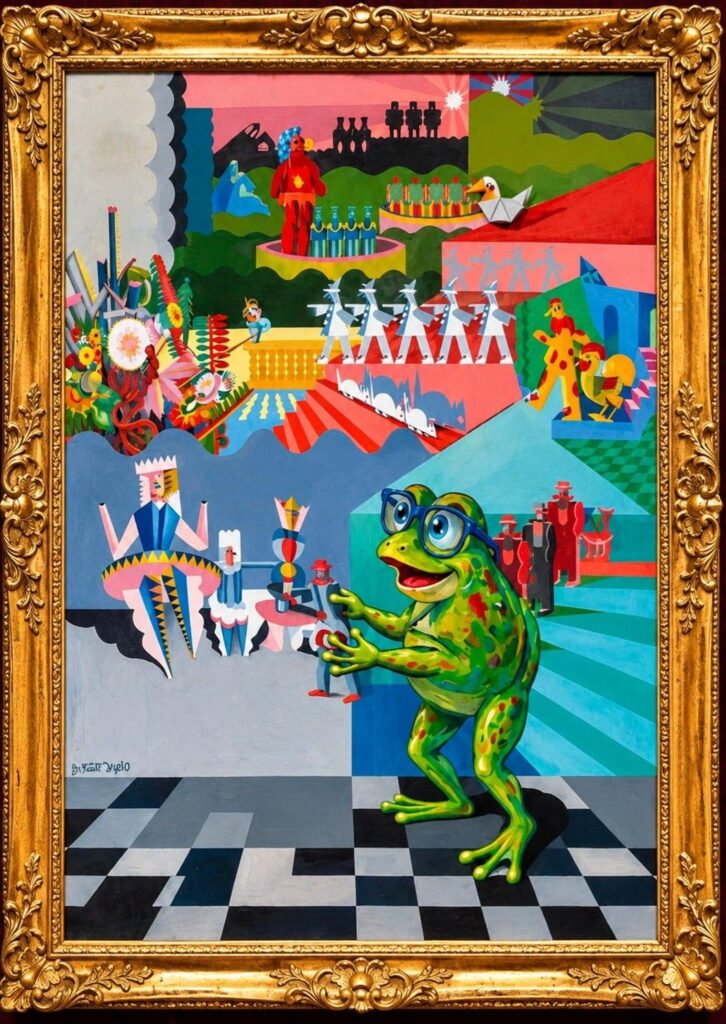
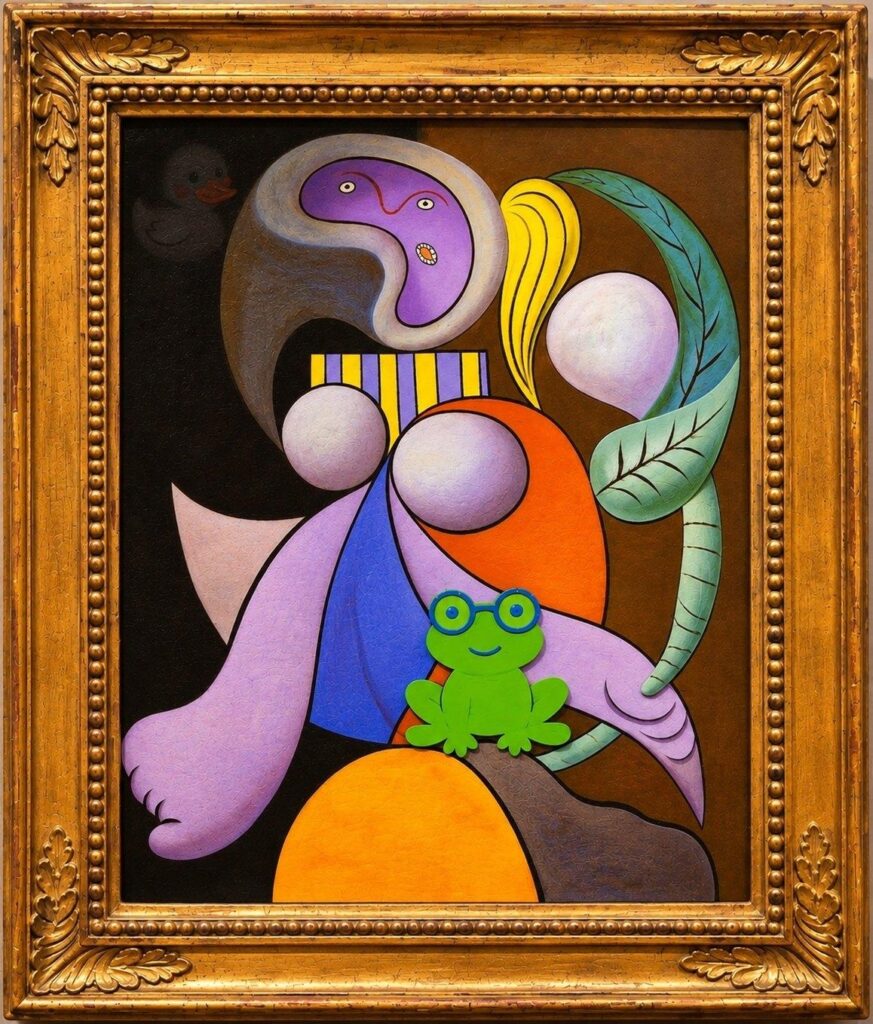
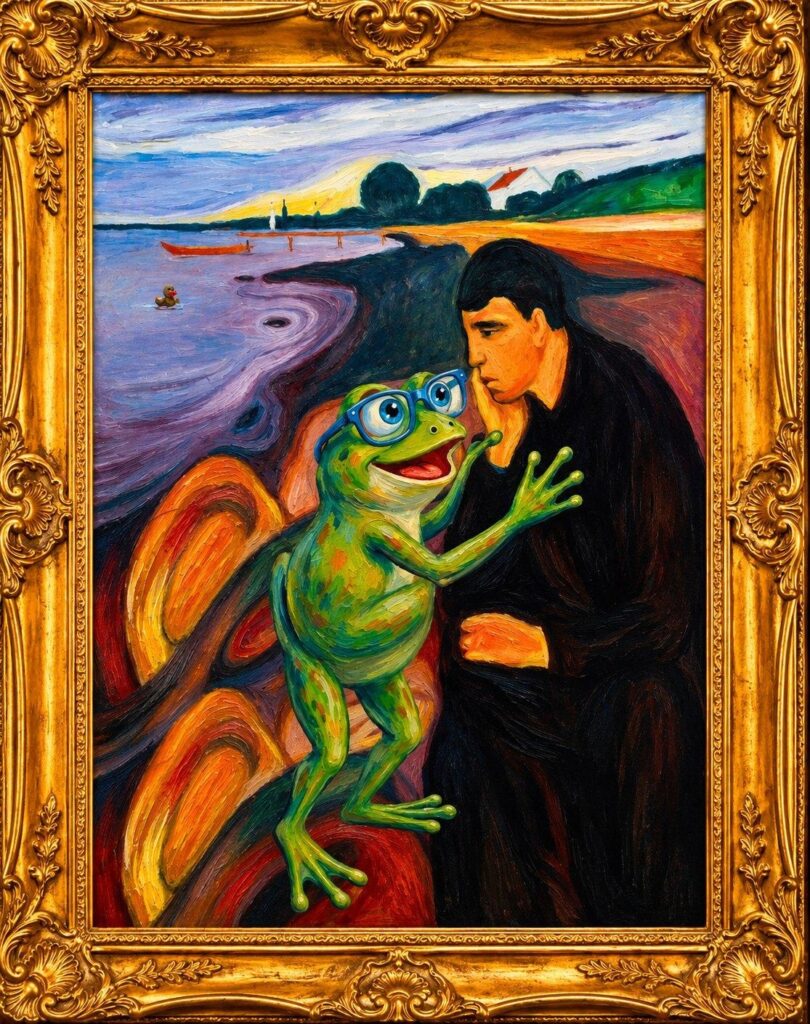
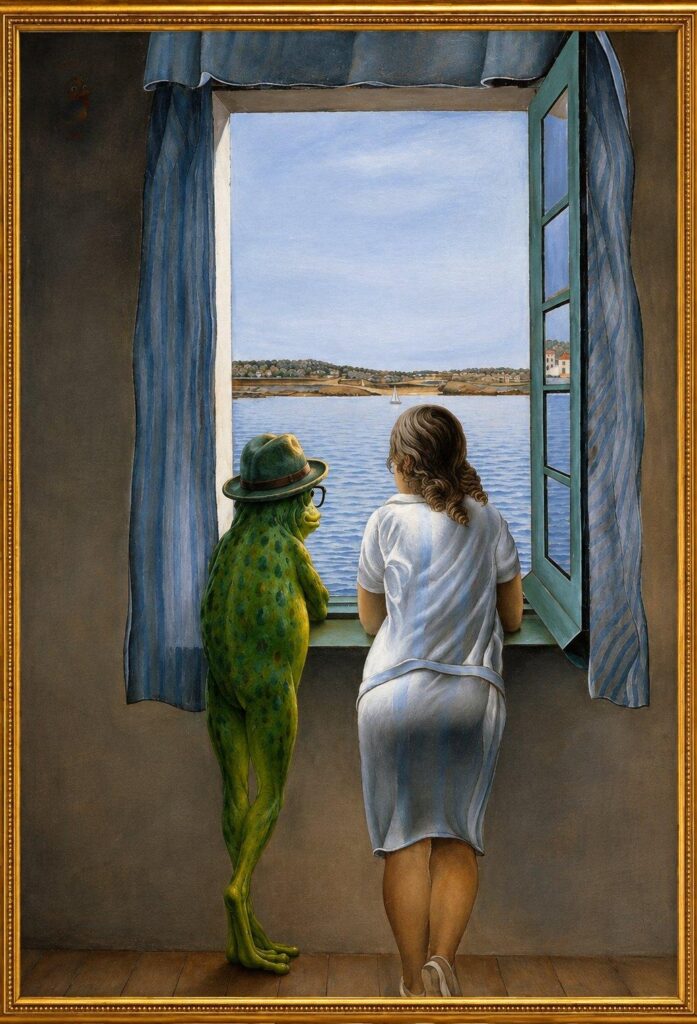
The following are VANFROG.ART interpretations referencing the named artists, not original works created by those historical artists.
01 — “Fautrier Unleashed” — VANFROG.ART interpretation referencing Jean Fautrier.
02 — “Dynamism of a Dog on a Leash” — referencing Giacomo Balla.
03 — “Melancholy” — referencing Edvard Munch.
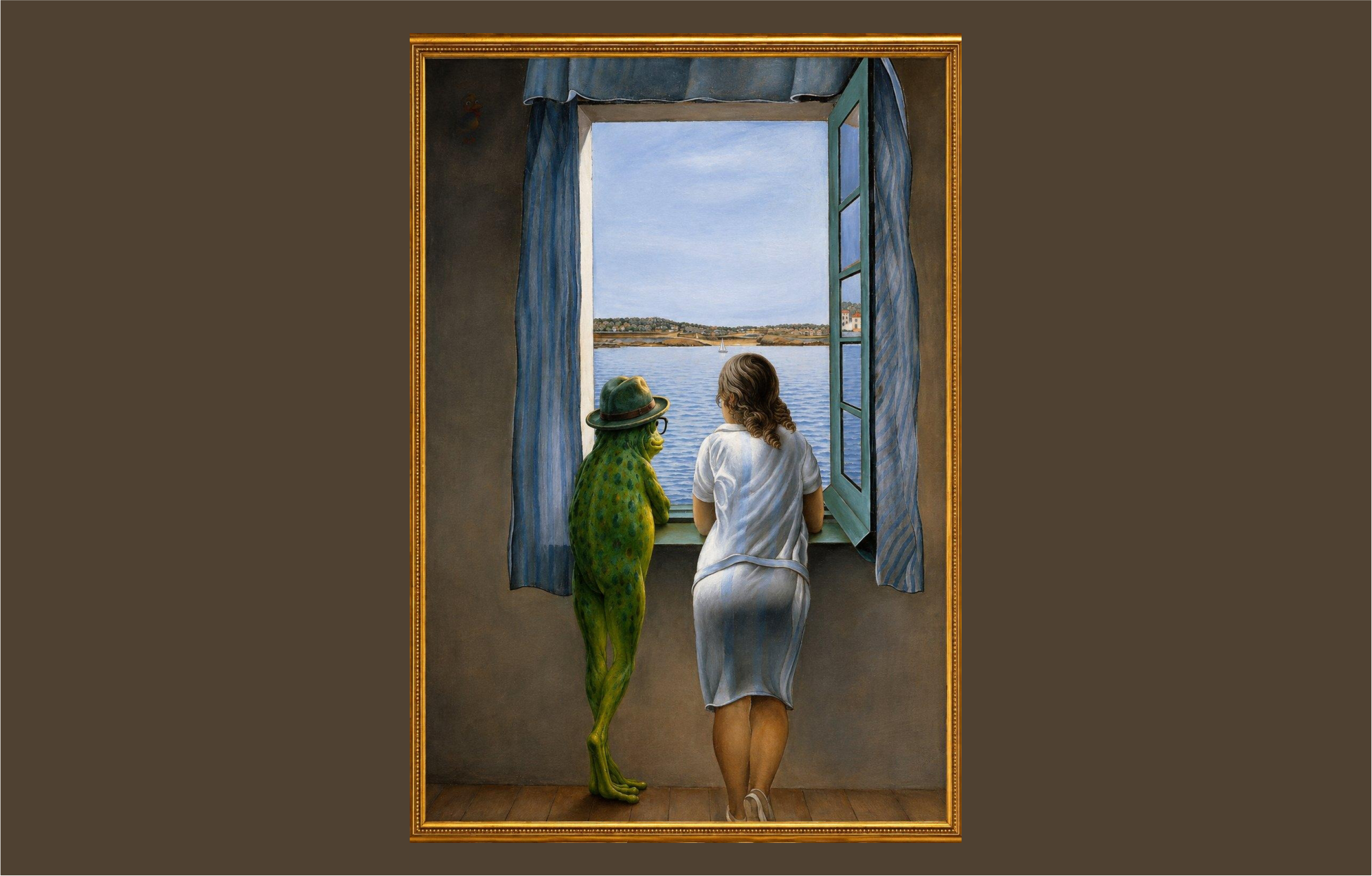
04 — “You Are No Longer Alone” — referencing Salvador Dalí.
05 — “Composition VI” — referencing Wassily Kandinsky.
06 — “A Girl with a Watering Can” — referencing Pierre-Auguste Renoir.
07 — “The Sleeping Gypsy” — referencing Henri Rousseau.
08 — “My Plastic Dances” — referencing Fortunato Depero.
09 — “Woman with a Flower” — referencing Pablo Picasso.
10 — Book cover: “Where Is the Shy Duckling Hiding? – Find It in the Paintings” / “Dove si nasconde l’anatroccolo timido? – Trovalo nei quadri”.











 EduTimes Africa, a product of Education Times Africa, is a magazine publication that aims to lend its support to close the yawning gap in Africa's educational development.