


















































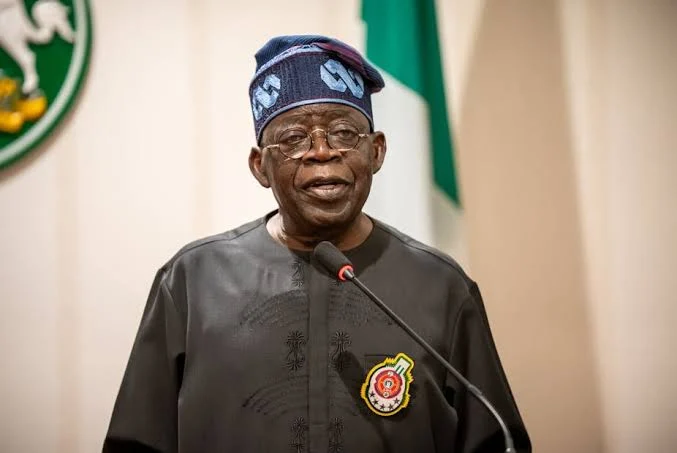


President Bola Ahmed Tinubu has approved the payment of N2.8tn to power generation companies as the Federal Government’s verified liability for accumulated electricity subsidies dating back to 2010, cutting down the N6tn claim submitted by the operators.
Highly placed officials in the Presidency and the Federal Ministry of Power disclosed that the President declined to approve any amount beyond the audited figure, insisting that public funds would only be committed based on verified claims.
The approval followed months of negotiations and a tripartite audit involving the Ministry of Finance, the Nigerian Bulk Electricity Trading Plc, and the generation companies. The development also comes days after the Nigeria Labour Congress accused the GenCos of attempting to inflate their claims against the Federal Government.
According to Presidency sources, the GenCos had initially presented claims ranging between N4tn and N6.6tn, warning that mounting legacy debts could force plants to shut down. However, President Tinubu ordered a comprehensive audit of the submissions before approving any payment, likening the situation to irregularities that characterised the fuel subsidy regime.

While negotiations were ongoing, the Federal Government raised N501bn in January through a bond issued under the Presidential Power Sector Debt Reduction Programme as a show of good faith. The bond reportedly recorded full subscription from pension funds, banks and asset managers.
Following the conclusion of the audit, officials said the verified liability stood at N2.8tn — less than half of the N6.6tn publicly referenced by the Chief Executive Officer of the Association of Power Generation Companies, Dr Joy Ogaji, in a recent television interview.
Five generation companies have already signed settlement agreements with NBET valued at N827.16bn to be paid in four phased instalments. They include First Independent Power Limited, Geregu Power Plc, Ibom Power Company Limited, Mabon Limited and Niger Delta Power Holding Company Limited.
The power sector debt crisis dates back to the 2013 privatisation of electricity assets, when generation and distribution companies acquired government assets for about N400bn. Since then, tariff shortfalls, liquidity constraints and foreign exchange pressures have led to persistent market debts classified as electricity subsidies.
As part of the payment conditions, the President reportedly directed that a significant portion of the N2.8tn be ring-fenced for settling outstanding debts to gas suppliers in order to stabilise supply and reduce recurring grid collapses. The government is also expected to tie part of the payment to mandatory investment in infrastructure renewal, with evidence of compliance required from beneficiary companies.
Sources indicated that between May and July, the Federal Government plans to release an additional N600bn to N800bn, bringing total payments to roughly half of the approved liability by mid-year, while the balance will be spread over 12 to 24 months.
Officials further alleged that both generation and distribution companies had underinvested in infrastructure, arguing that the new payment framework would compel operators to channel funds into system upgrades to improve service delivery nationwide.








 EduTimes Africa, a product of Education Times Africa, is a magazine publication that aims to lend its support to close the yawning gap in Africa's educational development.