











































The Presidency has reaffirmed its commitment to combating rising social vices in secondary and tertiary institutions across Nigeria, pledging institutional support and funding for a special intervention committee.
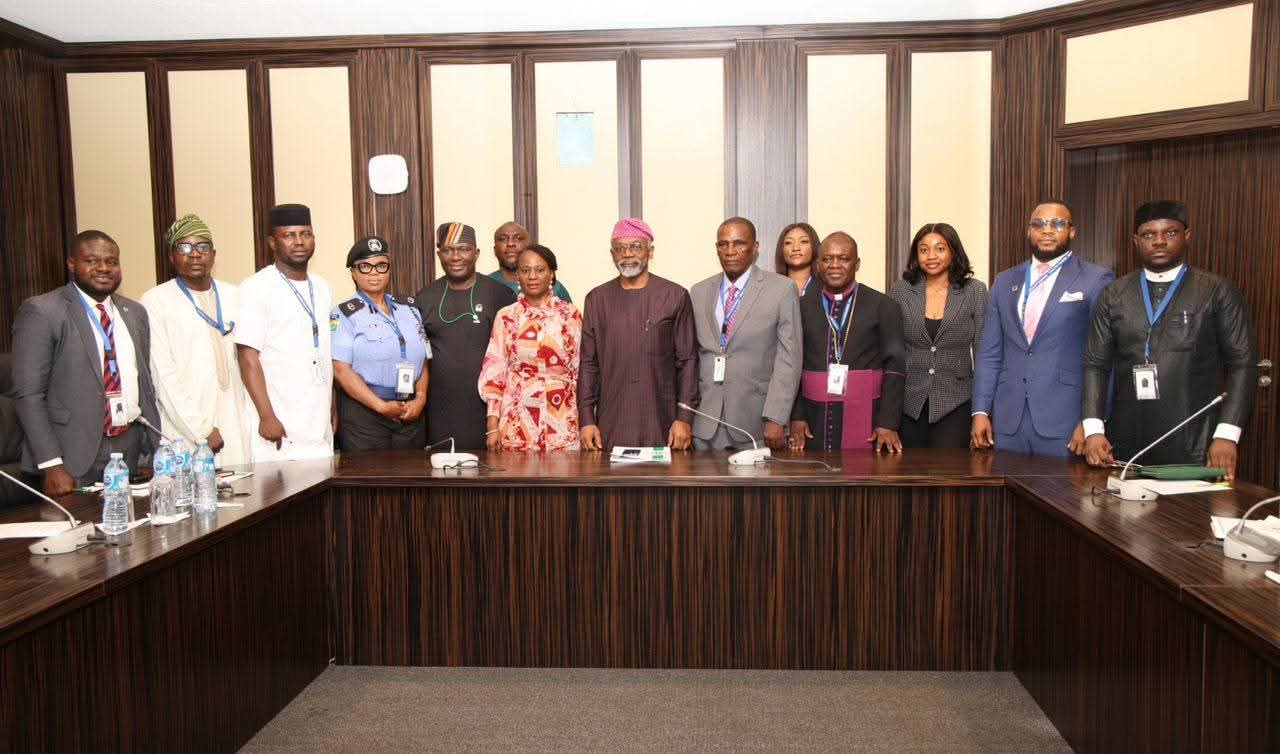
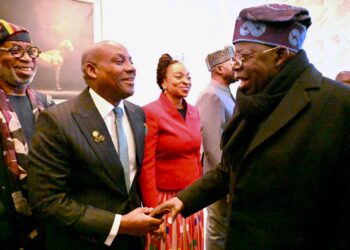
The Chief of Staff to the President, Femi Gbajabiamila, gave the assurance on Thursday during a meeting with members of the Special Committee on Campaign Against Social Vices in Secondary and Tertiary Institutions at the State House, Abuja.
Gbajabiamila described the committee’s mandate as critical to safeguarding Nigeria’s future, expressing confidence in its integrity and capacity to deliver results. He said the designation of the body as a “special committee” underscored the importance the Federal Government attaches to youth wellbeing and moral development.
He warned that the growing prevalence of social vices among young people constitutes a serious national concern, stressing that deliberate and coordinated action is required to secure the country’s future.

“Young people are often described as the future, but we must take concrete steps to protect that future,” he said, adding that many of the government’s ongoing reforms are forward-looking and targeted at the younger generation.
The Chief of Staff emphasised that addressing the menace requires a whole-of-society approach involving parents, teachers, religious leaders, communities and institutions. He noted that the challenge has assumed near-pandemic proportions globally.
“It takes a community to raise a child. It is not just about the parents anymore. It is about the clergy, your neighbour, the teachers. We all stand in loco parentis for the children,” he said, warning that failure to address the problem at its foundation could undermine national development.
Gbajabiamila also highlighted the link between law and morality, describing moral re-orientation as fundamental to tackling social vices in schools and campuses. He urged the committee to think innovatively and adapt to changing realities, drawing from his experience of engaging students directly during school visits.
As a demonstration of personal commitment, he announced a ₦50 million seed donation to support the committee’s work. The sum will be released in two tranches, beginning with ₦25 million. He also pledged efforts to mobilise support from corporate organisations through Corporate Social Responsibility initiatives and explore possible budgetary provisions.
Earlier, the Chairman of the Committee, Jerry Ugokwe, expressed appreciation for the Presidency’s backing, describing the initiative as a structured presidential intervention aimed at confronting social vices among students.
Ugokwe said the committee’s mandate includes identifying and addressing social vices in schools, promoting discipline and responsible leadership, and collaborating with institutional authorities and security agencies to combat cultism, drug abuse, examination malpractice and cybercrime.
He added that the committee is responsible for organising sensitisation campaigns and recommending policies to strengthen student welfare, campus security and academic excellence.
According to him, the committee has moved from policy to action since its inauguration, holding major engagements in Edo and Kwara states as part of a nationwide campaign. He appealed for stronger institutional ownership, including approval and logistical support for a proposed grand national launch at the State House Conference Hall.
Also speaking, the Senior Special Assistant to the President on Student Engagement, Sunday Asefon, described the intervention as urgent, citing a recent case of a university student whose death was linked to drug intoxication.
Asefon said the committee was deliberately structured as a multi-stakeholder platform comprising education authorities, religious leaders and other key actors to drive holistic value reorientation among students.
He disclosed that following the committee’s inauguration, his office engaged the Federal Ministry of Education, which subsequently made a budgetary provision for the committee in the 2025 fiscal year.
Despite limited resources, he noted that the committee has already conducted programmes in Edo and Kwara states and is planning a larger national engagement in Abuja.
The Presidency reiterated that the committee’s work aligns with the administration’s broader youth development and nation-building agenda, assuring sustained collaboration and support.







 EduTimes Africa, a product of Education Times Africa, is a magazine publication that aims to lend its support to close the yawning gap in Africa's educational development.