



























































Stakeholders warn that prioritising English-only instruction could widen educational inequalities, weaken cultural identity, and undermine global best practices, OWEDE AGBAJILEKE reports.
The Federal Government’s decision to scrap the National Language Policy (NLP) has sparked fierce debate across Nigeria’s education and cultural sectors, with stakeholders warning of far-reaching implications for equity, identity and learning outcomes.

Introduced in 2022 by former Minister of Education, Adamu Adamu, the National Language Policy mandated the use of indigenous languages as the medium of instruction from Early Childhood Education (ECE) to Primary Six.
It sought to reposition mother-tongue instruction as foundational to literacy, comprehension and cultural preservation, while English would initially be taught as a subject rather than the primary medium of instruction.

Though the policy recorded relative success in parts of northern Nigeria, particularly the North-West, implementation challenges elsewhere—such as inadequate teacher preparation and insufficient multilingual learning materials—hampered its effectiveness.
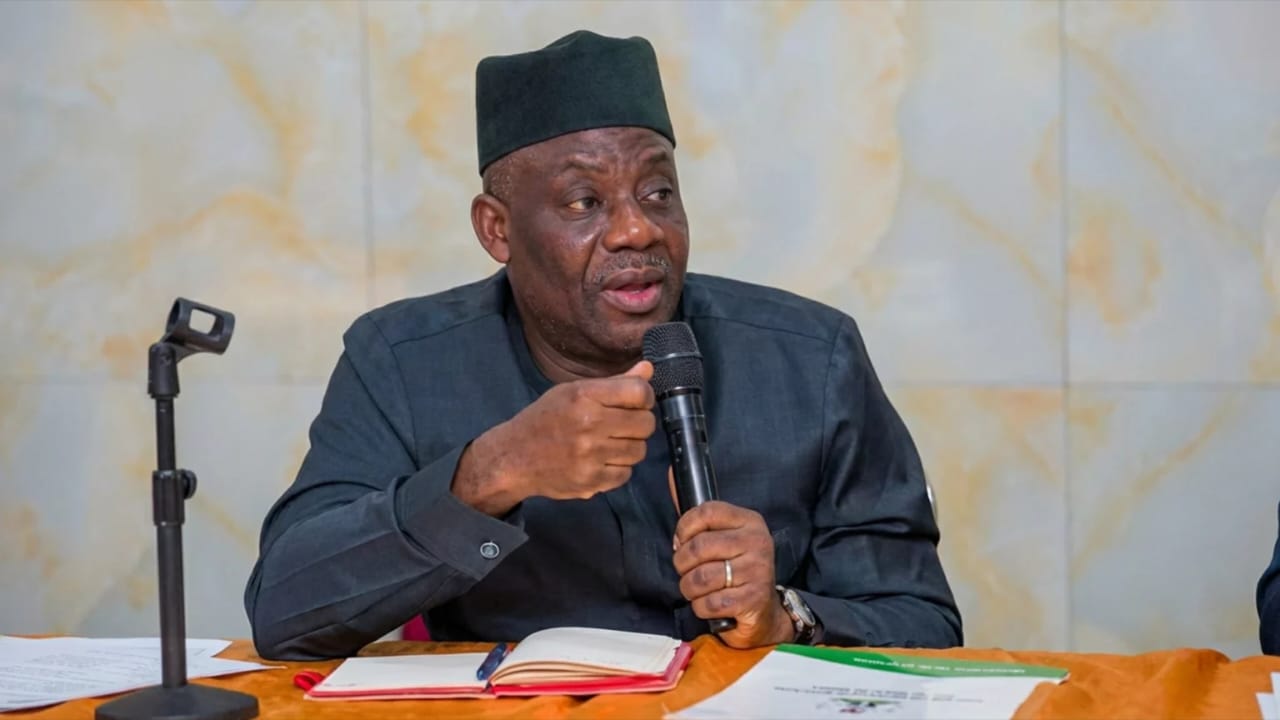
Announcing the cancellation at the 2025 Language in Education International Conference hosted by the British Council, the Minister of Education, Dr Tunji Alausa, disclosed that the decision was approved at the 69th meeting of the National Council on Education in Akure.
Alausa argued that children’s poor performance in major public examinations, including the West African Senior School Certificate Examination (WASSCE), Senior School Certificate Examination (SSCE), and the Unified Tertiary Matriculation Examination (UTME) conducted by the Joint Admissions and Matriculation Board—necessitated the policy reversal.
He maintained that data analysis showed the prolonged use of mother-tongue instruction negatively affected learning outcomes in certain regions, stating that English would now serve as the medium of instruction from pre-primary through tertiary levels.
“This is about evidence-based governance,” he said, adding that mass failure rates in some geopolitical zones were linked to what he described as over-subscription to mother-tongue instruction.
However, the decision was not universally supported. At the 2025 extraordinary National Council on Education meeting, the Minister of State for Education, Prof. Suwaiba Sa’idu Ahmad, reportedly backed the continuation of the policy.
With the reversal, Nigeria joins countries such as Ghana, Kenya, Uganda, Botswana, Zambia, Zimbabwe, Sierra Leone, Liberia, Malawi, Jamaica, Barbados, Trinidad and Tobago, the United States, the United Kingdom, Canada, Australia and New Zealand, where English is the principal language of schooling.
Education experts, however, insist that global best practice supports structured multilingual education rather than English-only instruction. Research from the United Nations Educational, Scientific and Cultural Organisation (UNESCO) shows that children learn faster and perform better academically when taught in languages they understand, especially during foundational years.
Specialists argue that in northern Nigeria where linguistic diversity is high and many communities rely on Hausa, Kanuri, Fulfulde and other minority languages—structured multilingual models could help close long-standing literacy gaps.
They warn that prioritising English risks marginalising millions of children whose first language is neither English nor one of the dominant regional languages.
With northern states accounting for a significant share of Nigeria’s estimated 18 million out-of-school children—and national dropout figures reportedly approaching 24 million—stakeholders caution that language-insensitive policies could deepen socio-economic disparities and weaken long-term human capital development.
Reacting, the Founder and Chief Executive Officer of Prakis Educational Services, Prof. Aderemi Obilana, called on the Education Minister to immediately reinstate the 2022 National Language Policy. Obilana, who also serves as a visiting professor at the University Institute of Applied and Human Sciences in the Republic of Chad, described the suspension as premature, unfounded and harmful.
In a statement personally signed by him and made available to The Guardian, Obilana faulted the Minister’s reference to poor WAEC, NECO and UTME results as justification for the cancellation, insisting that the decision failed to reflect global research and best practices.
He noted that evidence consistently shows children taught in their mother tongue during foundational schooling develop stronger reading comprehension skills. He referenced International Mother Language Day and UNESCO’s findings linking indigenous-language instruction to improved cognitive development and higher self-esteem.
“The minister should bear in mind that abolishing the National Language Policy could affect the loss of our cultural identity,” Obilana said. “Encouraging children to learn in their indigenous language leads to higher levels of self-esteem and pride in their cultural heritage.”
He urged the government to empower teachers through continuous professional development and adopt a student-centred approach, rather than abandoning the policy.
Similarly, the Initiator of the Creative Change Centre, Omole Ibukun, described the reversal as a “national mishap” that could derail long-term learning outcomes.
According to him, the poor performance cited as justification reflected implementation failure rather than policy weakness.
“There was no teacher retraining, no curriculum redesign, no learning materials in indigenous languages, and no monitoring of schools,” Ibukun told The Guardian. “A policy cannot succeed when it is abandoned even before implementation.”
He cited international examples such as Kenya, Tanzania, Ethiopia, Rwanda, Tunisia and South Korea, arguing that countries strengthen competitiveness by grounding early education in local languages before transitioning to global languages.
“Nations do not become competitive by speaking English earlier,” he said. “They become competitive by thinking deeply in languages that carry their conceptual frameworks, then translate that knowledge outward.”
Also speaking with The Guardian, Dr Adeboye Adewoye, a biotech executive based in the United States, criticised the reversal, accusing the government of yielding to colonial influence and ignoring systemic failures within the education sector.
He described the claim that the policy “destroyed education in certain regions” as historically inaccurate, arguing that the initiative failed due to poor implementation rather than any inadequacy of indigenous languages.
Adewoye urged policymakers to revisit the work of the late Prof. Babatunde Fafunwa, an eminent Nigerian educationist who championed mother-tongue instruction as central to early childhood education.
“With no teacher retraining, no curriculum redesign, no learning materials in indigenous languages, and no monitoring of implementation, the mother-tongue policy was abandoned before it even began,” he said.
As debate intensifies, education experts are calling for a transparent review of data, proper piloting of language-based instruction, and a national strategy that balances global competitiveness with cultural preservation.
Critics warn that sidelining Nigeria’s linguistic heritage could carry lasting consequences for learning outcomes, identity and national cohesion.
— TheGuardian













 EduTimes Africa, a product of Education Times Africa, is a magazine publication that aims to lend its support to close the yawning gap in Africa's educational development.