


















































For many Nigerian students, the dream has always followed a familiar script: study hard, graduate with good grades, secure a good job.
But in today’s reality, that script no longer guarantees anything.
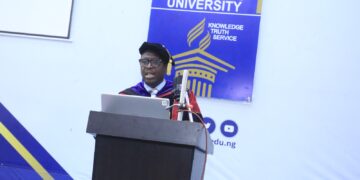
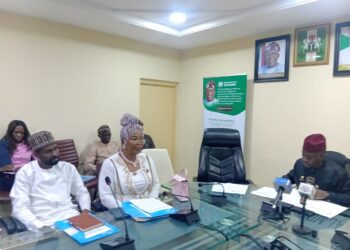
It was against this backdrop that American Open University, Nigeria, officially launched its Global Campus in Ibadan on Tuesday — not just as another private university, but as an institution promising to rethink how higher education prepares young people for work.
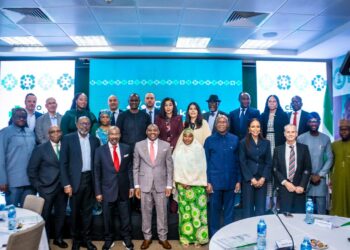
The event, themed “Future Forward,” brought together academics, industry leaders, regulatory agencies and community stakeholders.

Yet beyond the formal gathering was a deeper issue that resonates with students: how do you earn a degree that actually translates into opportunity?
President and Founder of the university, David Seyi Akanbi, said the institution was created to challenge what he described as an outdated promise of education.
“Visions don’t die. Even when the visioners pass on, the dream continues. Today, the dream has become reality,” he said.
According to him, American Open University was designed to replace traditional learning models with a hybrid system that blends digital learning, industry partnerships and global exposure.
“The old promise of ‘go to school, get good grades, get a job’ is broken. We are here to fix that by building a new model that makes the old one obsolete,” Akanbi added.
For undergraduates navigating a competitive labour market — and graduates battling unemployment — that statement speaks directly to lived experience.
The university also announced partnerships with global technology firms such as Microsoft, Google and Cisco, a move it says will allow students to gain globally competitive skills without leaving Nigeria.
In an era where many young Nigerians see relocation as the only path to growth, the idea of accessing international-standard training from home is significant.
Delivering the keynote lecture, Prof. Francis Egbokhare of the University of Ibadan pushed the conversation further.
He argued that Nigeria’s higher education challenges are not necessarily due to lack of resources, but poor utilisation and limited institutional imagination.
Speaking on “The Autarchic–Asymmetric Model for Nigerian Higher Education,” he said, “Infrastructure exists but is underused. Talent exists but is excluded.”
That observation reflects a frustration many students quietly carry — the sense that potential often goes untapped.
“Higher education must be redesigned for the country we have, not the one we are copying,” he added, suggesting that solutions must reflect Nigeria’s realities rather than imported templates.
Other stakeholders echoed support for the university’s direction.
Temitope Akintola, Zonal Director of JAMB in Ibadan, commended its emphasis on access and quality.
Toyin Olatayo, Academic Director of UniTES CISCO Academy, highlighted the importance of embedding industry certifications directly into academic programmes — something increasingly seen as essential for employability.
Professional bodies, including the Chartered Institute of Personnel Management and the Chartered Institute of Taxation of Nigeria, also expressed support, particularly for the institution’s focus on workforce readiness.
For students facing rising tuition costs, shifting academic calendars and uncertain job prospects, conversations like these matter.
The real test, however, will not be in launch speeches or partnerships announced, but in outcomes — graduates who can compete, create, and contribute meaningfully.
As Nigeria’s higher education landscape continues to evolve, young people are no longer satisfied with certificates alone.
They want skills. They want relevance. And above all, they want an opportunity that works.










 EduTimes Africa, a product of Education Times Africa, is a magazine publication that aims to lend its support to close the yawning gap in Africa's educational development.