

















































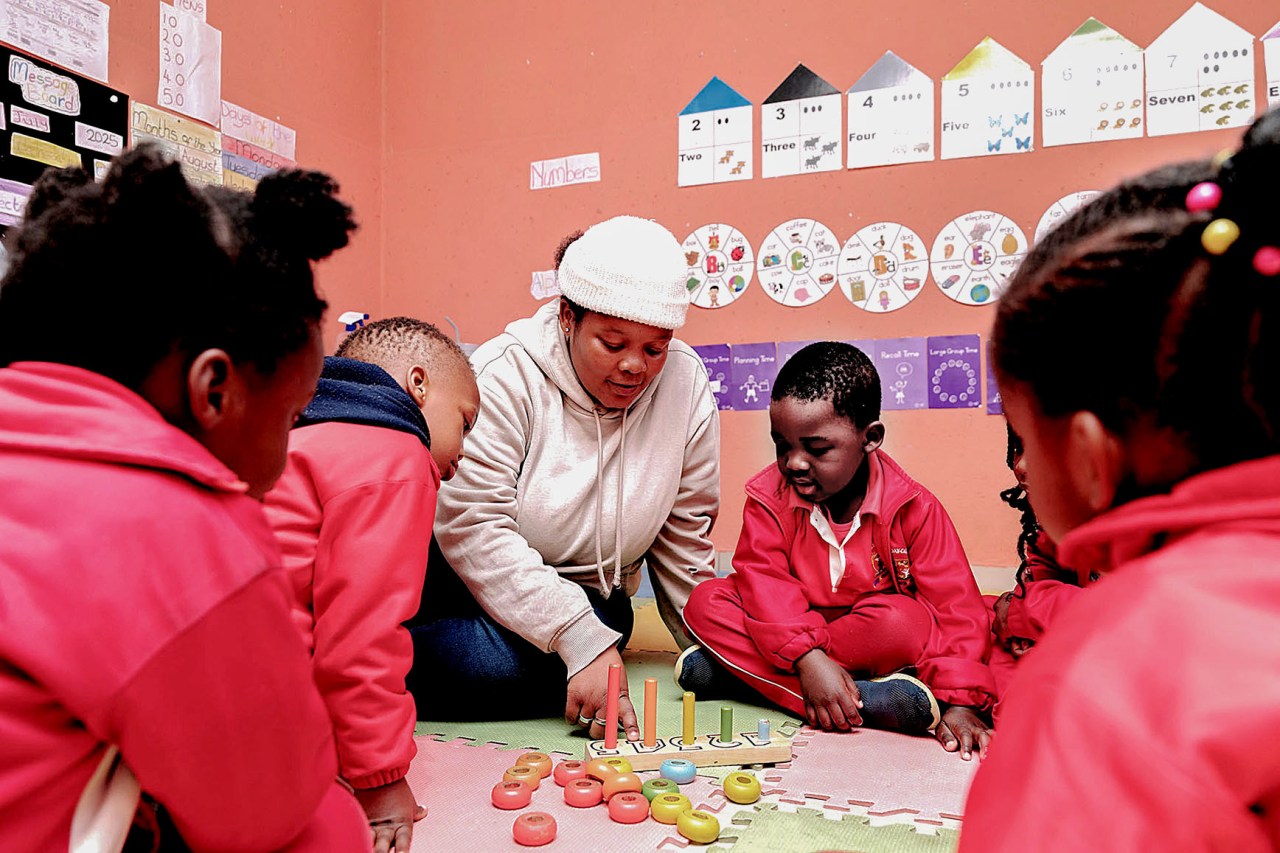


A groundbreaking study has revealed that home- and community-based early learning programmes in South Africa are significantly improving outcomes for young children, challenging conventional ideas of what quality early education looks like.
The evaluation focused on SmartStart, a national early learning network that equips local women to run programmes from their homes or community venues. Researchers tracked 551 children across 325 SmartStart sites over an eight-month period using the Early Learning Outcomes Measure (ELOM) – South Africa’s leading tool for assessing child development.
The results were striking:
The proportion of children “on track” developmentally jumped from 45% to 65%.

The percentage of children “falling far behind” was almost halved.
The gap between children from low- and high-income households shrank dramatically – from 25 points to just 6 points.
Crucially, SmartStart children scored 11 points higher on average than the national Thrive by Five Index, outperforming peers in more conventional preschool settings.
Why It Matters
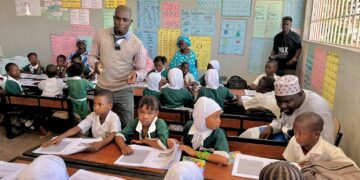
Every weekday morning, millions of South African children attend early learning programmes – whether at preschools, crèches, or playgroups. But in low-income areas, home-based programmes often serve as the backbone of childcare and early education.
Until now, these smaller, community-led initiatives were often seen as inferior to purpose-built centres. The new evidence, however, shows the opposite: when guided by structured routines, child-centred methods, and trained community practitioners, they can deliver transformational results.
Empowering Women, Empowering Communities
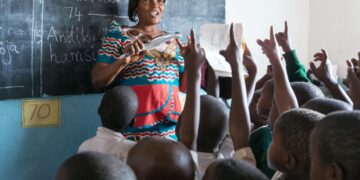
SmartStart works through 12 partner organisations, supporting more than 14,000 practitioners who reach 165,000 children weekly. Most practitioners are underemployed women, running programmes in converted home extensions, church halls, or community spaces.
The study found that simple practices – such as structured play, nurturing talk, building children’s language, and involving them in problem-solving – were strongly linked to gains in early maths and literacy.
“This is about unlocking the abundance that exists in every child, and recognising the power of ordinary women in under-resourced communities as agents of change,” said Grace Matlhape, CEO of SmartStart.
Rethinking “Quality” in Early Learning
The findings challenge long-held assumptions that high-quality early learning requires expensive infrastructure. Instead, researchers argue that what matters most is what children experience – consistent nurturing, play, and developmentally appropriate learning opportunities.
This approach could also help address South Africa’s urgent shortfall: the country still needs over one million new early learning places to achieve universal access, a goal set more than a decade ago.
The Bigger Picture
The study will be presented at a UN General Assembly side event in New York next week, alongside similar evidence from India and Uganda, highlighting the global potential of home-based and community-led solutions.
As South Africa prioritises early childhood development as a national agenda, this research signals that scaling homegrown, community-driven models may be the fastest, most affordable path to equity in education.











 EduTimes Africa, a product of Education Times Africa, is a magazine publication that aims to lend its support to close the yawning gap in Africa's educational development.