



















































When Krys Digbehi looked around schools in Abidjan, one problem stood out clearly: many students had nothing decent to eat. Rather than complain, he decided to build a solution.
Digbehi, who originally studied mathematics and computer science, later retrained as a professional chef at the Bassam Hotel School. Using skills picked up both formally and through self-learning, he launched a school catering business aimed at tackling poor feeding conditions in schools.
According to Digbehi, the need was obvious. More than 64 percent of schools in Côte d’Ivoire do not have a functioning canteen, leaving students to fend for themselves during break periods.
“As a student, I experienced it firsthand,” he said. “Food was either hard to find, unhealthy, or too expensive. Most students have no income, so they end up eating poorly—or not eating at all.”

He named his company Yeyiba, meaning “success” in Yacouba, his mother tongue.
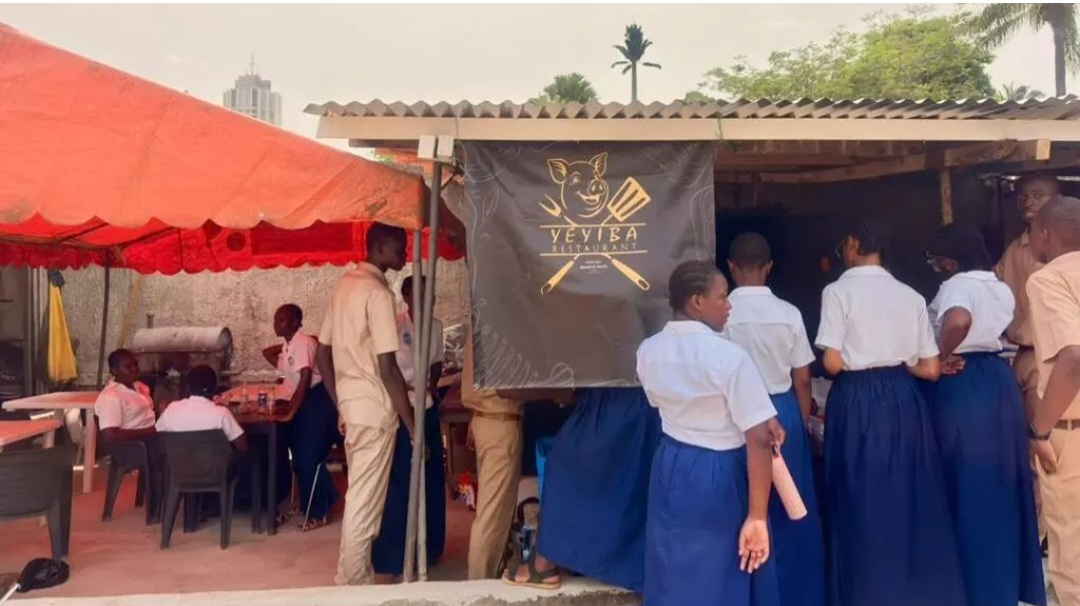
Using his personal savings and prize money from start-up competitions, Digbehi invested in mobile kitchen containers and professional catering equipment. Today, Yeyiba employs 15 people and provides meals in four schools and institutions across Abidjan.
Each school receives a fully equipped kitchen container, complete with stainless steel tables and a clean dining space. This setup allows students to eat on campus rather than leaving school in search of food.
The menu focuses on popular local dishes such as attiéké with chicken, alloco, fish and other Ivorian meals—prepared under hygienic conditions and with a strong emphasis on nutrition.
“The food is local, but it’s prepared professionally and healthily,” Digbehi said. “And above all, it’s cooked with love.”
Yeyiba now serves about 1,500 meals daily. Former customer Marc Delphin Kambou, who attended Lycée Classique d’Abidjan, says the impact on learning is clear.
“There’s a saying: a hungry man is not a free man,” he explained. “You can’t learn properly on an empty stomach. Students who eat well are more attentive and perform better than those who are hungry.”
Teachers have also embraced the service. At the 2IMPE technical training centre in Abidjan, director Bruno Digbehi Zeli says staff often join students in the canteen.
“You don’t see students sleeping in class,” he said. “When students are hungry or eat poorly, learning suffers. Eating well truly makes a difference.”
Looking ahead, Digbehi hopes to expand Yeyiba to more schools in Abidjan and eventually develop a sustainable school feeding model for rural areas.
The story highlights how local entrepreneurship is helping address education challenges—one meal at a time.













 EduTimes Africa, a product of Education Times Africa, is a magazine publication that aims to lend its support to close the yawning gap in Africa's educational development.