















































How well are Nigerian students really learning in school?
Not just passing exams — but actually understanding what they’re taught?

That question is at the centre of a 10-day training workshop currently holding in Lagos, focused on preparing for the 2026 National Learning Assessment (NLA).
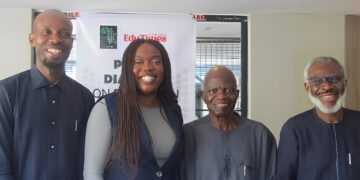
The workshop, organised by the Universal Basic Education Commission (UBEC), is bringing together assessment experts, curriculum specialists, and teachers from across the country.

Their mission: develop high-quality assessment items that will measure what students truly know and can do.
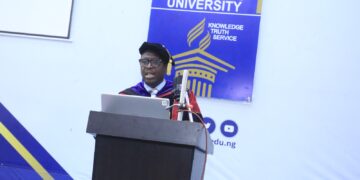
Speaking at the opening, UBEC Executive Secretary, Dr Aisha Garba, described the NLA as more than just another test.
“The National Learning Assessment is not merely a technical exercise; it is a strategic national undertaking, designed to generate reliable evidence on what our children know, understand, and can do at different stages of their schooling,” she said.
She noted that the 2026 NLA was approved by the Minister of Education, Tunji Alausa, as part of efforts to strengthen learning outcomes.
Garba also acknowledged support from development partners, including UNICEF, for providing both technical and financial backing.
Mrs Obianuju Anigbogu, Director of Educational Planning, Research and Development at the Federal Ministry of Education, explained that the NLA will assess learning outcomes at both the basic and senior secondary levels.
“The learning outcomes of our children are both basic and senior secondary, and this will inform decision making, reforms, teaching and learning, as well as teacher development,” she said.
In simple terms, the results will help government officials understand where students are struggling — and what needs to change.
Vanessa Lee, Chief of Education at UNICEF Nigeria, said the assessment will benefit everyone in the education system.
“At the end of this assessment, I expect that the children will know how they are learning; parents and communities will know how well the schools are doing, teachers will be able to improve their teaching, while at policy level, the Federal Ministry of Education and UBEC will be able to make changes to support improvements in the curriculum and teacher professional learning, among others.”
Technical Advisor Zarko Vukminovic added that national assessments like the NLA are key to improving educational quality, as they reveal both strengths and weaknesses in the system.
Participants say the workshop is already making an impact.
Professor Suleman Matasa of Usmanu Danfodiyo University described it as a “great experience” that contributes to improving quality education in the country.
Igba Mnena Naomi, a teacher at UBEC Model Smart School, Makurdi, said the training has helped her refine her teaching techniques and assessment methods.
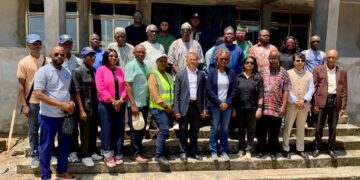
In total, 18 assessment experts from tertiary institutions, 35 curriculum experts from agencies including UBEC and the Nigerian Educational Research and Development Council (NERDC), and 37 teachers in English, Mathematics, Basic Science & Technology, Citizenship and Heritage Studies — drawn from the 36 states and the FCT — are participating, alongside ministry and UBEC directors.
For students, this may not feel immediate.
But it matters.
Because when national assessments are properly designed, they shape curriculum changes, teacher training, and even education reforms that directly affect classroom experiences.
If done right, the 2026 NLA won’t just measure learning. It could help improve it.











 EduTimes Africa, a product of Education Times Africa, is a magazine publication that aims to lend its support to close the yawning gap in Africa's educational development.