























































The West African Examinations Council (WAEC) has assured that its transition of the West African Senior School Certificate Examinations (WASSCE) to computer-based testing (CBE) is proceeding as planned, dismissing circulating reports that the initiative had been suspended.
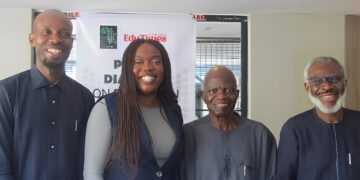
Dr. Amos Dangut, Head of WAEC Nigeria, addressed journalists after the 63rd Nigeria National Council meeting in Umuahia, Abia State, clarifying that the council has not received any formal directive from the National Assembly to halt the program.
“WAEC acts only on official directives, not media reports or public debate. Until we receive a formal communication, the plan remains unchanged,” Dangut said.
He noted that the 2026 transition will begin with pilot testing in schools equipped with the necessary ICT facilities, many of which have already volunteered. For schools without the infrastructure, WAEC will rely on community-based CBE centers.

A nationwide ICT-readiness assessment has categorized schools into three tiers: those needing support for CBE, those able to handle only objective papers digitally, and those capable of handling all exam components online. This classification will guide logistics for the 2026 examinations.
Dangut also addressed curriculum changes, confirming that two newly introduced core subjects—Citizenship and Heritage Studies, and Digital Technologies—will not be examined in 2026 or 2027 as their syllabuses are still being developed. Candidates will be assessed in only three core subjects: English Language, General Mathematics, and one trade subject, selecting additional subjects to meet the minimum requirement of eight and a maximum of nine.
He added that the federal government has streamlined trade subjects from 26 to six, with some renamed but retaining their content. Horticulture and Crop Production, derived from Agricultural Science, is among the approved trade subjects.
Dangut reassured that students will not be restricted in elective choices, explaining that science students can still take Economics or other electives outside their field. He also announced an extension for uploading Continuous Assessment Scores (CASS) to ensure fairness.
Responding to concerns about consultation, Dangut said unions such as the Nigerian Union of Teachers (NUT) and the All Nigeria Confederation of Principals of Secondary Schools (ANCOPSS) are fully represented and involved in decision-making.
He urged the media to educate the public on the benefits of CBE, highlighting pilot trials that showed improved student performance, reduced malpractice, and strong candidate engagement.















 EduTimes Africa, a product of Education Times Africa, is a magazine publication that aims to lend its support to close the yawning gap in Africa's educational development.