




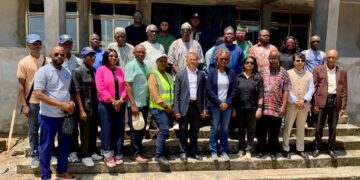





















































The Ministry of Technical and Higher Education (MTHE) has convened a high-level meeting with Vice Chancellors and Principals (VC&Ps) of higher education institutions to advance strategic reforms aimed at strengthening Sierra Leone’s tertiary education sector and enhancing its contribution to national development.
Opening the engagement, the Chief Technical and Higher Education Officer, Dr Josephus Brimah, called for frank and constructive dialogue on policy issues, sector priorities, and institutional challenges. He noted that the meeting was designed to reposition tertiary institutions through improved leadership, governance, and policy coherence, with outcomes expected to guide reforms that will strengthen the overall performance of the higher education system.
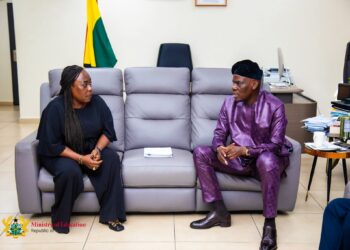
The Minister of Technical and Higher Education, Dr Ramatulai Wurie, urged universities and colleges to deepen collaboration with the Ministry to improve the relevance, quality, and responsiveness of tertiary education. Reflecting on achievements in 2025, she commended institutions that held timely graduation ceremonies and encouraged others to emulate this practice. She emphasized the need to align academic programmes with labour market demands to boost graduate employability, announcing that directives would soon be issued for curriculum revisions in priority growth sectors.
Dr Wurie also stressed strict compliance with Tertiary Education Commission (TEC) accreditation requirements, warning that the new TEC Act prescribes severe penalties for institutions running unaccredited programmes. She disclosed plans to digitize accreditation processes to improve efficiency, transparency, and compliance across the sector.

The Deputy Minister of Technical and Higher Education, Sarjoh Aziz Kamara, provided updates on the OneGov digital platform, which is being expanded beyond the student loan scheme to include universities. The platform will support streamlined fee payments and academic module management, creating a real-time, sustainable system that reduces administrative bottlenecks. Cabinet approval is expected soon, after which formal presentations will be made to institutions to facilitate adoption.
Highlighting developments in technical and vocational education and training (TVET), MTHE’s Director of TVET, Abdul Senesie, underscored the importance of a harmonized National Qualifications Framework (NQF) to ensure quality assurance, learner progression, and recognition of prior learning. He explained that the 2021 Universities Act established Technical Universities to create clear progression pathways for TVET graduates, which require a fully operational NQF.
The harmonized NQF now comprises 10 levels across Academic, TVET, and Micro-credential strands, aligned with African Continental and ECOWAS frameworks. Draft policies on credit accumulation, transfer, and recognition of prior learning have been developed, while national curricula for industrial plumbing and automobile maintenance have been harmonized. These reforms will enable TVET graduates to progress into degree programmes, with a national technical committee set to finalize and endorse the framework.
MTHE’s Deputy Chief Technical and Higher Education Officer, Sia Fasuluku, encouraged institutions to actively participate in the Ministry’s Let’s Research Forum to access European Union research and partnership opportunities. She emphasized the importance of timely submission of partnership information forms to secure education and research funding, and highlighted technical support from a new international partner to strengthen proposal development and alignment with EU priorities.
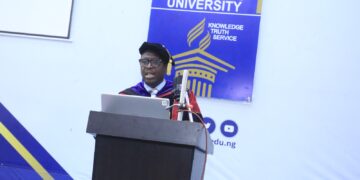
Providing institutional updates, the Vice Chancellor and Principal of the University of Sierra Leone, Professor Aiah Lebbie, reported that over 12,000 qualified applications had been received, with interviews completed and admission letters currently being issued. He attributed delays to the transition to a new digital admissions platform, which he said would significantly streamline future admission processes.
The Vice Chancellor and Principal of the Kono University of Science and Technology (KUST), Professor Jamiru, outlined progress made since assuming office, including the establishment of a library and laboratory, formation of policy and curriculum committees, staff recruitment, and initiatives to strengthen community engagement. He noted that nearly 200 new applicants had been admitted, alongside classroom refurbishments and the expansion of online learning.
Vice Chancellor and Principal of Njala University, Professor Bashiru Koroma, reported that the university reopened in November, with first-year students commencing classes on 17 November, although some joined late due to delayed examination results. He said fewer than 500 late entrants across 16 schools were provided with additional classes to help them catch up, and that the university was considering delaying first-year examinations to ensure no student is disadvantaged. He added that total enrolment now stands at just over 18,000 students.
Professor Koroma acknowledged significant resource constraints facing Njala University but said efforts were being made to cope, while calling for stronger support from the Ministry of Finance and other line ministries. He also announced that the university is ready to commence its veterinary programme, with all necessary preparations completed in collaboration with the Ministry of Agriculture.












 EduTimes Africa, a product of Education Times Africa, is a magazine publication that aims to lend its support to close the yawning gap in Africa's educational development.