



























































West Africa’s university sector is steadily gaining stronger global recognition. Once viewed mainly within a regional context, several institutions across the subregion are now earning international attention for research quality, academic reputation, and international collaboration.
In 2026, global ranking bodies such as the Times Higher Education (THE) World University Rankings and the QS World University Rankings once again provided insight into how universities in West Africa compare on the world stage.
These rankings evaluate universities based on a range of performance indicators, including the quality and impact of their research, the quality of teaching and learning, and their overall academic reputation. They also examine an institution’s international oincluding such aspects as global partnerships and the diversity of staff as well as the strength of its industry collaborations. In addition, graduate employability — how well students transition into the workforce — remains a key factor in determining overall performance.
While rankings do not tell the whole story about institutional quality, they offer a useful snapshot of performance and global competitiveness.

Here is what the 2026 data shows about the leading universities in West Africa.
1. University of Cape Coast (Ghana)
The University of Cape Coast (UCC) has emerged as one of the region’s strongest-performing institutions. It was placed in the 801–1000 band of the THE World University Rankings 2026, making it one of the highest-ranked universities in West Africa.
THE highlighted UCC’s improving research quality and expanding international profile.
2. University of Ghana, Legon (Ghana)
The University of Ghana continues to maintain its status as a leading research and teaching institution in the region. In the QS World University Rankings 2026, it performed strongly in areas such as employment outcomes and international research collaboration.
It remains one of West Africa’s most internationally visible universities.
3. University of Ibadan (Nigeria)
Nigeria’s oldest degree-awarding institution entered the 801–1000 range in the THE 2026 rankings.
The University of Ibadan remains widely respected for its research output across the sciences, social sciences, and humanities, and continues to play a central role in Nigeria’s academic landscape.
4. University of Lagos (Nigeria)
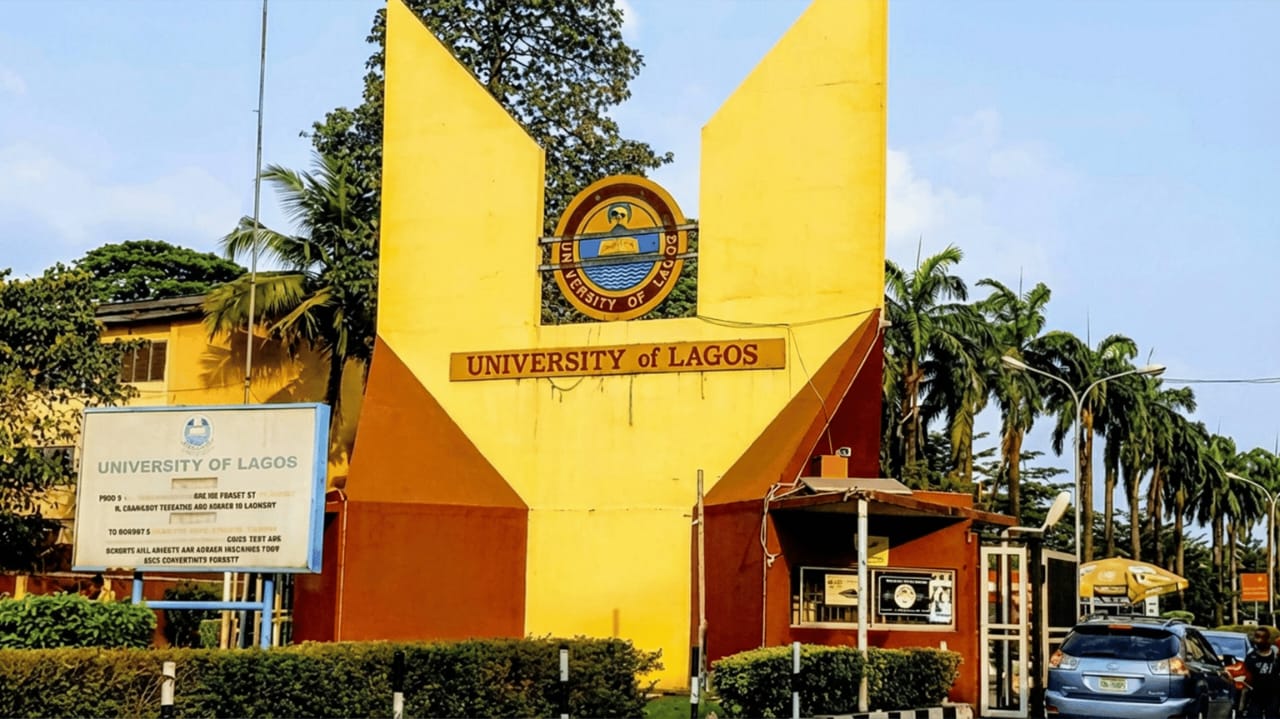
The University of Lagos (UNILAG) also secured a position within the 801–1000 band in THE 2026.
Its growing research impact and expanding international collaborations have strengthened its global visibility in recent years.
5. Cheikh Anta Diop University (Senegal)
Université Cheikh Anta Diop de Dakar entered the THE rankings for the first time in 2026 — a significant milestone for Francophone West African institutions.
Its inclusion reflects increasing global recognition of its research output and academic development.
6. Kwame Nkrumah University of Science and Technology (Ghana)
Although not listed within THE’s top 1000 for 2026, KNUST remains one of Ghana’s most respected institutions, particularly in science, technology, engineering and mathematics (STEM).
Its expanding research partnerships and innovation focus keep it competitive within the region.
7. Obafemi Awolowo University (Nigeria)
Obafemi Awolowo University (OAU) continues to enjoy a strong academic reputation, especially in engineering, law, humanities and the sciences.
While absent from the latest THE global ranking band, it remains highly regarded regionally and internationally.
8. Bayero University Kano (Nigeria)
Bayero University Kano was ranked in the 1001–1200 band of the THE World University Rankings 2026.
The ranking reflects steady growth in its research performance, particularly within the sciences and social sciences.
9. Covenant University (Nigeria)
Covenant University, one of Nigeria’s leading private institutions, also appeared in the 1001–1200 range of the THE 2026 rankings.
Its performance has been driven by strong industry partnerships and consistent research output.
10. Delta University for Science and Technology (Nigeria)
Delta University for Science and Technology is emerging as one of Nigeria’s promising specialised institutions.
With a strong focus on STEM education, applied research and innovation-driven programmes, the university is gradually building its academic profile and regional relevance.
What Do These Rankings Mean for West Africa?
The 2026 rankings suggest three key trends:
1. Growing Research Visibility
More West African universities are entering global ranking bands, reflecting improvements in research output and international citation impact.
2. Ghana and Nigeria Lead Regionally
Institutions from Ghana and Nigeria dominate the list, underscoring their continued investment in higher education and research capacity.
3. International Collaboration Is Critical
Universities with stronger global research networks and partnerships tend to perform better in international rankings.
Beyond the Rankings
While global rankings provide useful benchmarks, they are not the sole measure of educational quality. Many institutions across West Africa are making significant contributions to national development, innovation and human capital growth that may not always be fully captured by global metrics.
However, the increasing presence of West African universities in recognised global ranking systems signals gradual progress and growing competitiveness within the region’s higher education sector.
As research funding, policy reforms and international collaborations expand, more institutions may join these global lists in the coming years.














 EduTimes Africa, a product of Education Times Africa, is a magazine publication that aims to lend its support to close the yawning gap in Africa's educational development.