
























































The West African Examinations Council (WAEC) has announced updated guidelines on compulsory subjects for candidates preparing for the May/June 2026 West African Senior School Certificate Examination (WASSCE). The council also reaffirmed that science students remain eligible to register for Economics as an elective subject.
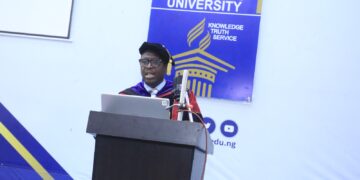
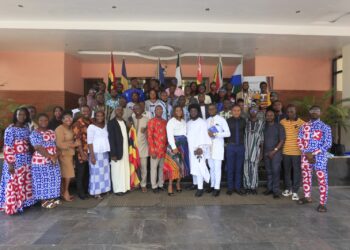
WAEC’s Head of National Office in Nigeria, Dr. Amos Dangut, gave the clarification during a news conference held after the 63rd Annual Meeting of the Nigeria National Committee (NNC) of the council in Umuahia, Abia State. The NNC, WAEC’s highest decision-making body in Nigeria, brings together key education stakeholders from across the country.
Dr. Dangut explained that no student will be restricted from selecting subjects outside their primary academic stream, noting that science candidates who wish to include Economics in their combinations are free to do so. He urged schools and counsellors to ensure proper guidance for students during registration, especially as the federal government’s directive on streamlined subjects will take effect in the 2026 examination cycle.
According to him, WAEC has reorganised the subjects offered in WASSCE into core, science, humanities, business, and trade fields. He said the core subjects now consist of English Language, General Mathematics, Citizenship and Heritage Studies Education, Digital Technologies, and Vocational Trade Subjects. However, Citizenship and Heritage Studies Education and Digital Technologies will not be examined until 2028 because their curricula and syllabi are still under development. This means candidates for the 2026 and 2027 examinations will be required to sit only English Language, General Mathematics, and one trade subject as their compulsory papers, after which they may choose additional subjects to complete the required eight or nine for registration.

Dr. Dangut added that the number of trade subjects, which previously stood at 26, has been reduced to six, though some have been renamed without altering their curriculum content or syllabi. These renamed subjects will still be examined in 2026.
He emphasised that WAEC does not create or review school curricula, as this responsibility belongs to the government. WAEC’s role, he clarified, is solely to assess students based on the government-approved curriculum implemented in schools.
Speaking on preparations for the planned transition to computer-based testing (CBT), Dangut said schools have been grouped into three categories to ensure a smooth migration. Some schools, especially in rural communities, may continue with paper-based examinations, while others in urban areas may run a mixed format or even operate fully on CBT as early as 2026. Regardless of the format, he assured that no candidate will be denied the opportunity to write the examination.
He also noted that candidates will not be assigned to examination centres located more than two kilometres from their homes. Schools, he advised, must conduct at least three Continuous Assessment Tests to enable candidates meet the Continuous Assessment Scores (CASS) requirement. To support this, WAEC has extended the deadline for uploading CASS data to ensure a seamless preparation process.











 EduTimes Africa, a product of Education Times Africa, is a magazine publication that aims to lend its support to close the yawning gap in Africa's educational development.