


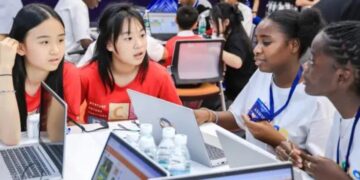













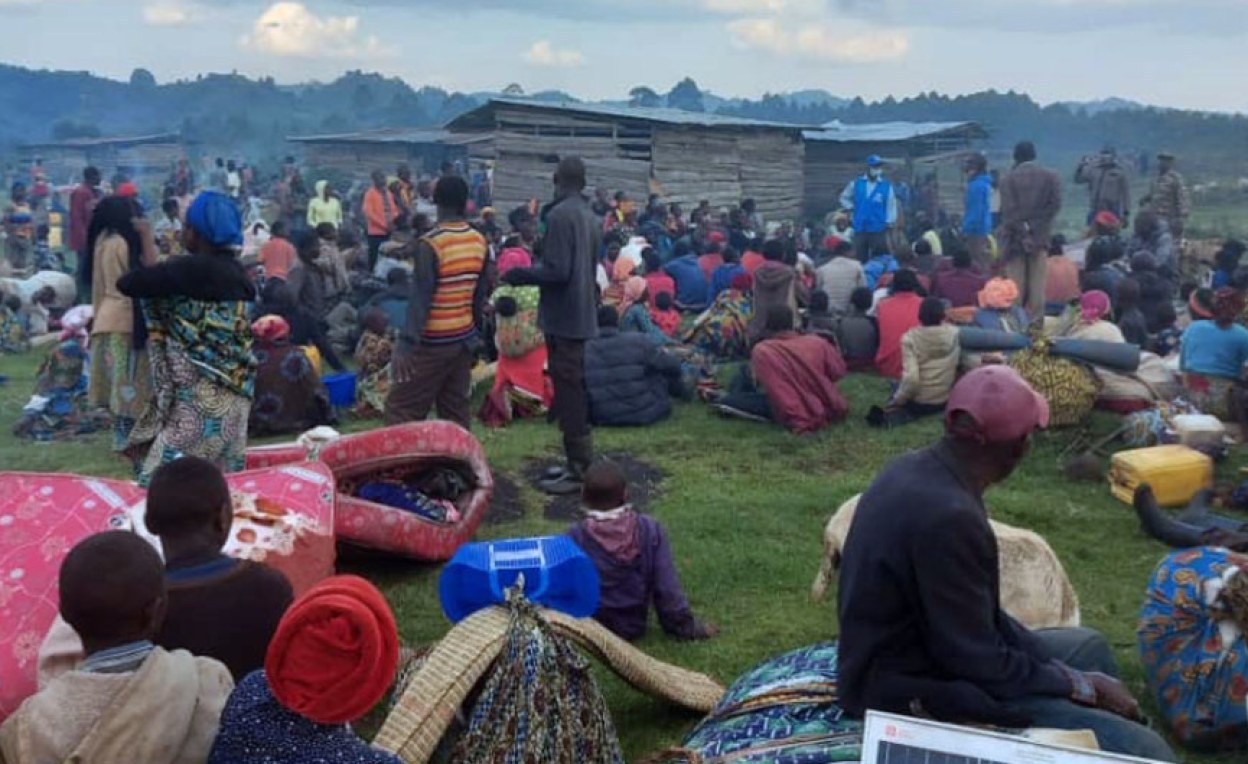


On a warm afternoon in Katwe, a suburb of Kampala, teenage girls sit attentively in a classroom at Complexe Scolaire Katwe. Among them is 14-year-old Justine Bigirimana, who dreams of becoming a doctor.
“I want to work in the biggest hospitals and save lives. One day, I hope to return home to Congo, share my knowledge, and inspire other girls,” she said.

Bigirimana is one of hundreds of Congolese refugee girls whose lives have been transformed by the school, founded in 2016 by Congolese educators to ensure displaced girls do not lose access to education.
A Safe Space for Learning

The school offers more than academics—it provides protection against early marriage and child labour. Unlike most Ugandan schools that use English and Luganda, lessons here are taught in French, Lingala, and Swahili, alongside English. This approach helps students transition smoothly while keeping them connected to their culture.
“When I first arrived, I felt lost. But when the teacher spoke French, I felt at home again,” Bigirimana recalled.
Seventeen-year-old Eunice Zawadi, who had struggled in mainstream Ugandan schools, said the language barrier nearly forced her out of education. “Here, I finally understand my lessons, and I’m catching up,” she said.
Uganda’s Open-Door Policy
Uganda hosts Africa’s largest refugee population—over 1.6 million people, according to UNHCR. Yet nearly half of school-aged refugee girls remain out of school. Only 11% make it to secondary education.
Through Uganda’s Comprehensive Refugee Response Framework, refugees are granted the right to work, move freely, and access services like healthcare and education. This policy has allowed schools such as Complexe Scolaire Katwe to integrate Congolese curricula with Ugandan systems, preparing students for both local and regional opportunities.
“Our school is proof that borders should not limit learning. Science is science, math is math—no matter where you come from,” said co-founder and headteacher, Frank Fariji.
Education Beyond Borders
The school prepares students for the Democratic Republic of Congo’s national exams by transporting them back to border towns for assessments, ensuring their qualifications are recognised at home. After primary school, pupils are guided to either continue with general education or pursue vocational training.
“We are raising confident girls who can contribute anywhere in Africa,” explained Dean of Studies, Arthur Mutombo.
Healing and Empowerment

Beyond academics, the school provides counselling to help girls cope with trauma from war and displacement. Teachers say this emotional support is critical in helping them rebuild their futures.
“We are not only teaching them—we are healing them,” said teacher Racheal Atim Okello.
The curriculum also includes practical skills such as soap-making, catering, and crafts, enabling girls to support their families financially.
Parents say the difference is clear. “This school gave my daughters a second chance. One wants to be a lawyer, the other a journalist. It has changed everything for us,” said Prosper Lukula, a refugee father.
Building Africa’s Future
Since its inception, the school has empowered over 400 girls, inspiring similar initiatives across Uganda. Today, about five Congolese-led schools operate nationwide, serving both Congolese and other migrant communities.
For the girls, education represents more than survival—it’s a path to leadership and self-reliance.
“I want to travel, learn, and return to teach other girls that nothing is impossible,” said Bigirimana.
As the sun sets over Katwe, the voices of refugee girls echo with ambition, determination, and hope—proof that education is giving them not just a second chance, but the power to build a stronger, more united Africa.






 EduTimes Africa, a product of Education Times Africa, is a magazine publication that aims to lend its support to close the yawning gap in Africa's educational development.