











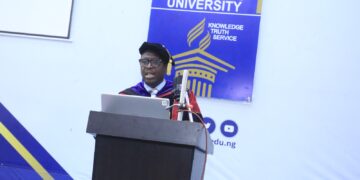










































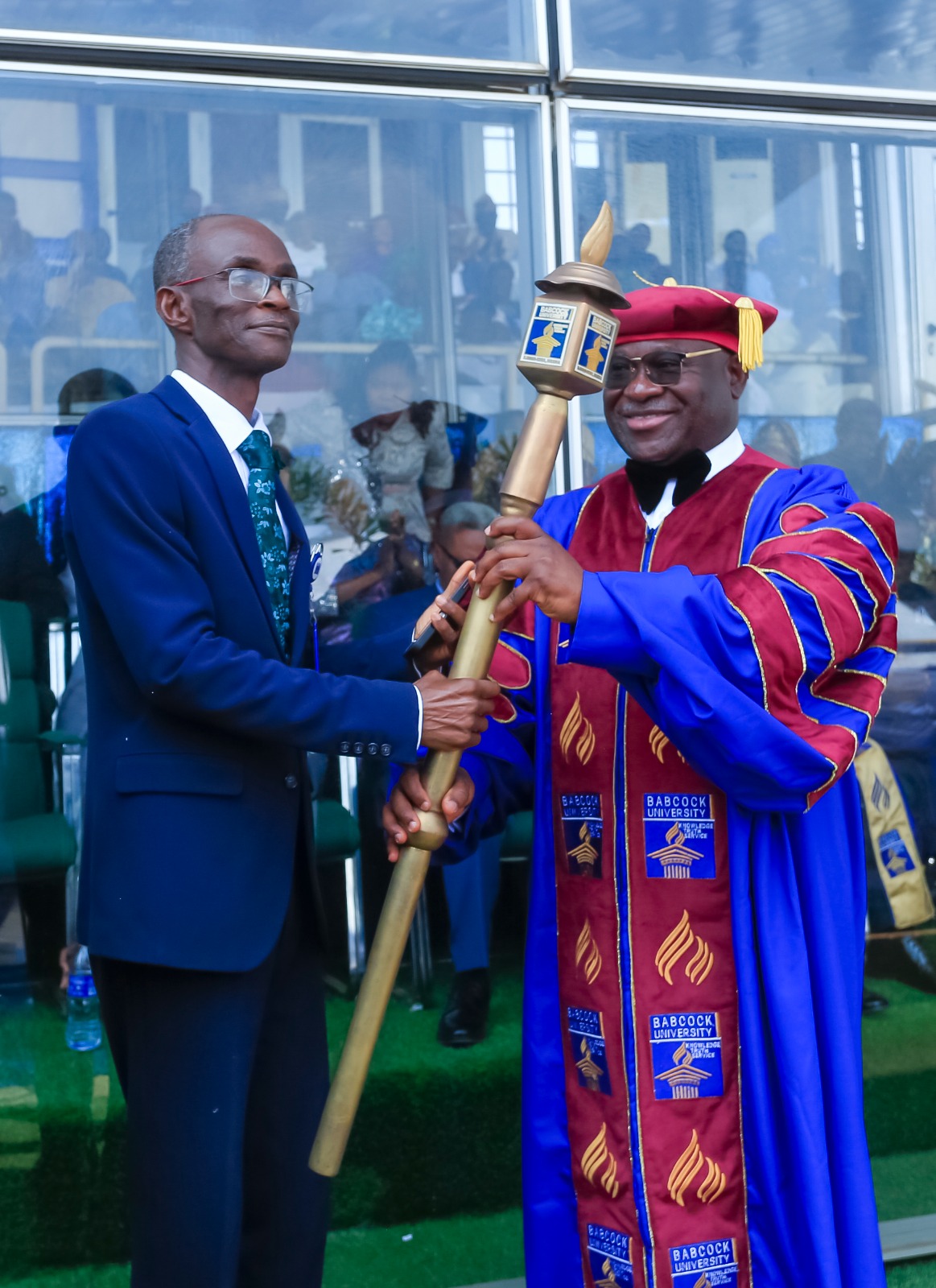


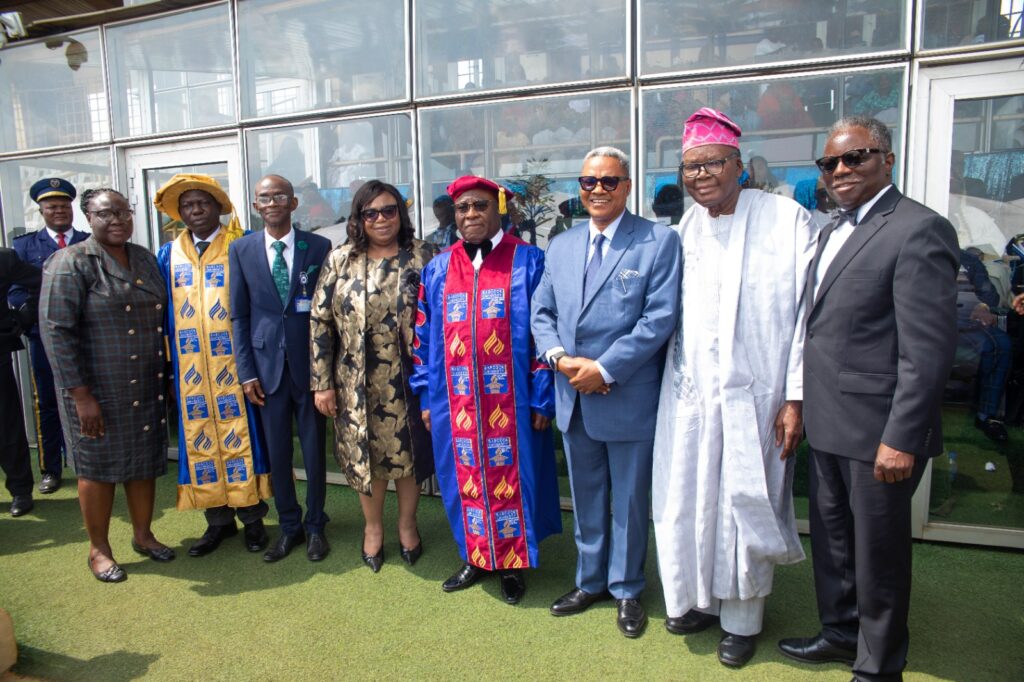
Babcock University on Monday witnessed a historic transition of leadership as Professor Ademola S. Tayo formally ended his 10-year tenure as President/Vice-Chancellor while Professor Afolarin Olutunde Isaac Ojewole was inaugurated as the institution’s 4th substantive VC—ushering in what he called a new season of rebuilding, renewal, and redemptive impact.



The solemnity of Tayo’s valedictory address merged with the fervor of Ojewole’s inaugural declaration, producing a day described by observers as “the most defining moment in Babcock’s recent history.”

In an emotional but dignified farewell titled “Consolidating a Decade of Transformation (2015–2025),” Prof. Ademola Tayo recounted what he described as “a journey of grace” marked by sweeping achievements in digital transformation, infrastructure, research productivity, and mission advancement.
Digital Revolution & ICT Gains

Under his leadership, Babcock experienced:
A 19-fold expansion in internet bandwidth
Full fiber-optic migration, smart boards, and cloud systems
A 390% rise in CCTV capacity with IP-enabled surveillance
Campus-wide digital security control rooms
A suite of internally developed software powering HR, exams, payments, medical records, student services, and administration
Professor Tayo’s team also secured Babcock’s landmark NDPC certification—making it the first Nigerian university to be certified as both Data Controller and Processor.
Research Boom
The university’s research output soared:
Publications jumped from 392 to 4,717
Citations from 280 to 24,460

Inaugural lectures from 1 to 53
Grants totaling ₦370m locally, and over $1.3m internationally
Infrastructure & Health Services
With over ₦13.9 billion invested in capital projects, Tayo delivered major facilities, including:
The New Senate Building
Engineering & Environmental Studies Complexes
Expanded Medical School and Teaching Hospital
Radiology & diagnostic upgrades
Five new hostels
Recreational centers and worship hubs
Debt-Free Exit
In his most applauded revelation, Tayo declared that the administration had fully repaid the ₦17.536 billion debt inherited in 2015.
“We leave this institution debt-free,” he stated. “This fiscal victory forms a solid foundation for the future.”
He urged the incoming administration to deepen digital modernization, expand infrastructure, enhance staff welfare, and strengthen endowment portfolios.
Professor Ojewole Assumes Office With Rallying Cry: “BABCOCK ARISE!”
Taking the podium moments later, Prof. Ojewole delivered an inaugural address that blended spiritual conviction, institutional critique, and bold ambition—unveiling a transformation agenda centered on people, mission, welfare, technology, and global competitiveness.
“My Mission Is Simple: Build People.”
Ojewole declared his core mandate to be people development, built around a new blueprint he called G.R.A.C.E:

G – Globally Relevant
R – Research-focused
A – Adventist-rooted
C – Competent Community
E – Entrepreneurial
“Our #1 assignment is people—not profit, not popularity, not programs,” he said emphatically.
He introduced new institutional philosophies:
HR to be renamed Office of Employee Growth & Well-being (GROW)
Student Affairs redefined as Student Development
A revived culture of mission fidelity, ethical governance, and spiritual identity.
Aggressive Reform Plans Unveiled
Ojewole outlined an extensive list of reforms touching every arm of the university.
1. Academic & Digital Transformation
50% increase in international students
25% global-exposure faculty target
100% accreditation across all programmes
Smart classrooms & advanced labs
System automation to eliminate delays in transcripts, admissions, and service delivery
Boost in ICT satisfaction and digital integration
2. Research, Innovation & Entrepreneurship
Launch of Babcock Innovation & Venture (BIV)
₦50m pilot fund (scaling to ₦250m) for commercialization of university research
Multidisciplinary hubs including:
Institute for Public Health & Lifestyle Medicine
Centre for Faith & Ethics in Leadership
Institute for Digital Transformation & AI for Good
Centre for Family Systems & Youth Research
3. Massive Welfare Agenda
Ojewole’s welfare promises drew the loudest applause:
Removal of environmental levy for junior staff
Mortgage scheme for staff
Improved health insurance
Enhanced leave bonus
Housing expansion, gyms, wellness centers, and staff canteen
Emergency & transition welfare funds
A subsidized BU Home Ownership Scheme
A new Coaster bus to prevent students being stranded during clinical postings
4. Mission & Spiritual Growth
A 10,000-capacity debt-free worship sanctuary
Missions & Evangelism Fund
Social impact Community Center
Expansion of Adventist Heritage governance mechanisms
5. Governance & Accountability
Ojewole pledged radical transparency:
Presidential Roundtable of Elders (past VCs and mission leaders)
100-Day Action Plan
Presidential KPIs & Impact Dashboard
Truth, Healing & Reconciliation Commission
Biannual Family Forums
He also launched BUVoice, a digital issue-reporting and transparency platform (www.buvoice.forum).
A New Campus Culture: “Hail Babcock!”
In a uniquely symbolic move, Ojewole introduced a new institutional salutation:
“Hail Babcock!”
Expected response: “God’s own University!”
He urged staff, students, alumni, and parents to protect the university’s reputation:
“Don’t hurt Babcock; build Babcock. Don’t destroy Babcock; develop Babcock. Support, don’t spoil.”
A Day of Transition, Unity, and Renewed Hope
Stakeholders hailed the seamless transition between two mission-driven leaders.
Prof. Tayo exits as one of Babcock’s most impactful leaders in operations, research expansion, infrastructure, and digital transformation.
Prof. Ojewole enters as a reformer with a people-first agenda, spiritual grounding, and aggressive modernization blueprint.
For the university community, December 1, 2025, will be remembered as the day the institution looked back with gratitude—then looked forward with courage.
Hail Babcock. God’s Own University.
Photo story














 EduTimes Africa, a product of Education Times Africa, is a magazine publication that aims to lend its support to close the yawning gap in Africa's educational development.