
























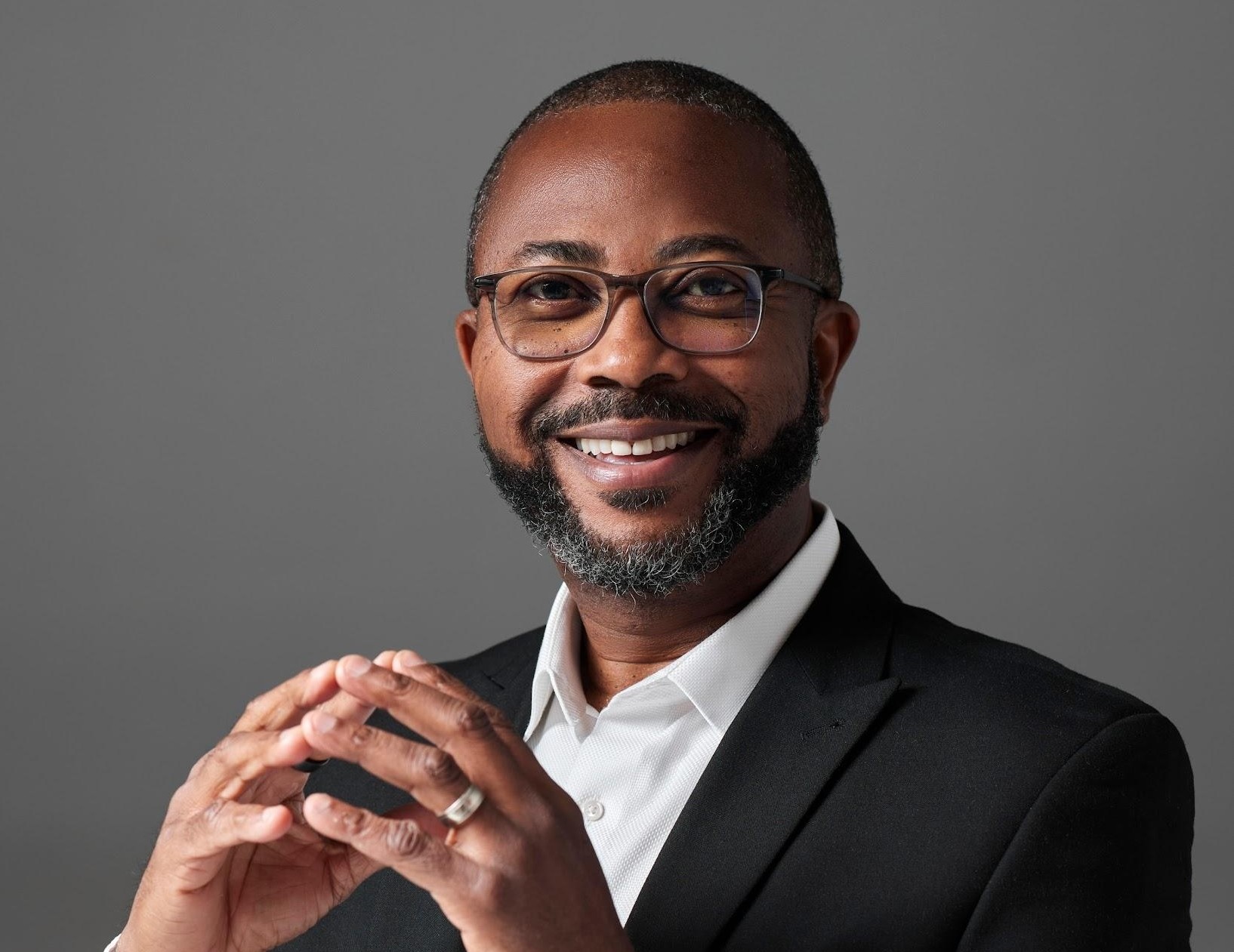


What does “Tech for Africa” mean to you, and why did you feel Africa needed this initiative now?
Tech for Africa represents technology as a public utility for development, not a privilege for the few. We’re a diaspora-led organization that builds local capacity through structured mentorship and connecting African talent with global opportunities.
Let me give you an example of what this looks like in practice. One of my assigned mentees started by taking a StrengthsFinder assessment. When she discovered her superpowers, including an uncommon attention to detail, she was energized. Now she can focus on leveraging her strengths rather than fighting her weaknesses. That’s what we do: help mentees navigate their careers using their discovered talents and connect them with resources to reach their full potential.
We soft-launched our first mentorship cohort on October 1, 2025, Nigeria’s Independence Day, symbolizing a new kind of empowerment through knowledge. The timing was intentional: Africa has the world’s youngest population, with about 77% of Africans under 35. This “youth bulge” offers tremendous potential, but only if we act now to address persistent structural gaps: limited mentoring, skills mismatches, and unequal access to opportunity.
You might also like thesePosts



What experiences shaped your conviction that technology can be a transformative force for Africa?
My conviction comes from both personal journey and professional lessons learned the hard way. I grew up in Lagos, attended K. Kotun Primary School and Igbobi College, and earned my B.Sc. in Computer Science at the University of Lagos. Those formative years showed me talented youth who, with the right resources, could excel in tech.
Working for Fortune 100 companies taught me a critical lesson: how to combine big-thinking strategy with the discipline of quick execution through smaller, achievable wins. I learned to apply highly focused 80/20 goals, identifying the 20% of effort that drives 80% of results. As Principal Enterprise Architect at Disney, I was formally recognized with an Adaptability and Flexibility Award for exactly this approach. That mindset now shapes how we build Tech for Africa: ambitious vision, pragmatic execution.
Another pivotal experience was mentoring through the IT Senior Management Forum, a U.S.-based network for Black tech executives. I saw how structured mentoring rapidly elevates careers. At a diaspora gathering, I watched seasoned Nigerian professionals light up at the prospect of guiding young Africans. That enthusiasm affirmed my core belief: given the right tools and guidance, African youth can leverage technology to leapfrog development hurdles.


How does your Nigerian background influence your pan-African approach to innovation and technology leadership?
My Nigerian heritage is foundational. Nigeria’s culture taught me the importance of community and adaptability. Having later lived and worked in the UK and the U.S., I blend a global strategic mindset with my roots.
Here’s how this plays out practically at Tech for Africa. Many African cultures have a strong hierarchical orientation, in which younger people may hesitate to speak freely with senior professionals. Understanding this, I use cultural intelligence to create psychological safety for our mentees. We explicitly encourage them to express themselves openly, ask “naive” questions, and challenge assumptions. Without this intentional design, mentees might nod politely while missing the transformative dialogue that real mentorship requires.
Being Nigerian also instills boldness and a “can-do” spirit that feeds my pan-African vision. For Tech for Africa’s board and mentors, we intentionally include members from across the continent and diaspora. Africa’s strength is in its diversity, and our work is a blueprint any African community could adapt.
What separates real impact from hype in Africa’s tech ecosystem?
Real impact is steeped in results, not words. Hype arrives dressed in flashy announcements and buzzwords. Impact shows up in measurable improvements in people’s lives.

At Tech for Africa, we’re already receiving measurable improvements from our mentees. Our approach is to proceed with small, compounding wins. We don’t promise an overnight transformation. We focus on steady, documented progress: a mentee who completes a certification, lands an interview, or builds their first portfolio project. These small wins compound into career trajectories.
As one strategist aptly noted, “Transformation is 10% tech, 90% people.” When I evaluate any initiative, I ask: Is it context-aware? Does it empower people? Can you measure the outcomes? If the answer is “we’re raising awareness” without concrete metrics, that’s hype. If the answer is “here’s what changed and how we know,” that’s the impact.
Africa has the world’s youngest population. How can technology realistically close the skills gap?
Technology can be the great equalizer, and the timing has never been better. Improved telework capabilities combined with African infrastructure investments mean young Africans can now access global opportunities from Lagos, Nairobi, or Accra. A motivated 22-year-old no longer needs to relocate to participate in the global digital economy.
More significantly, technological advancements such as AI are dramatically lowering the barrier to entry. AI tools can accelerate learning, help young developers write better code faster, and allow professionals to level up quickly in ways that weren’t possible five years ago. The gap between a self-taught developer in Ghana and a computer science graduate in California is narrowing.
However, technology alone won’t close the gap. At TFA, we pair technological access with human guidance, helping mentees learn to use AI tools strategically while mentors provide career context and professional judgment. Tools can teach skills, but mentors help young Africans understand when to use which tool, how to present their work professionally, and how to navigate workplace dynamics that no tutorial covers.
What role should technology play in reforming Africa’s mentoring and education systems?
Technology should be the accelerator that connects learners with mentors and knowledge they could never otherwise access. Traditional education in Africa often lacks robust mentoring components. Students are left to figure out career paths on their own, with limited exposure to professionals in their fields of interest.
Technology changes that equation entirely. Through video conferencing and our online platform, we match African youth with experienced mentors globally. A talented student in a town without industry professionals can now have regular calls with a Fortune 500 engineer who guides their development. We also host public webinars and information sessions designed to reach thousands simultaneously, democratizing access to expert knowledge that was previously available only through expensive conferences or personal networks.
Across education systems, technology can create feedback loops between the job market and the classroom. We can track which skills employers actually seek and adjust training accordingly. Some countries have started labour market information systems to align education with employment opportunities. Africa should widely embrace these systems, ensuring that what we teach matches what the economy needs.
How will Tech for Africa’s diaspora network ensure underserved populations are not left behind?
Inclusivity is at the heart of our mission. The African diaspora includes professionals from various regions now living across Europe, the U.S., and beyond. We tap into this talent pool to match mentors with mentees from all backgrounds. We recruit women in tech to mentor young women interested in STEM. Our mentors include people who grew up in villages but later succeeded abroad, providing relatable role models.
In rural areas, we will use a “hub and spoke” model in which local centres with internet access host virtual mentoring sessions and webinars, so even those without personal devices can participate. We’re also facilitating equipment donations from diaspora supporters. We’ve seen members donate laptops and sponsor data stipends for mentees who would otherwise lack connectivity. These practical interventions remove barriers that no amount of curriculum design can solve.
We’re pursuing collaboration with NIDCOM, the Nigerians in Diaspora Commission, to identify diaspora professionals willing to give back and to formalize channels for resource contributions. For women, we offer female mentors and create safe spaces for discussion. We track who we serve, set goals for diverse geographic representation, and solicit feedback on access issues. Our diaspora serves as bridges, bringing skills, networks, and resources directly into underserved communities.
How is Tech for Africa working with governments, the private sector, and development partners to accelerate tech-led growth?
We’re building partnerships across all three sectors, each playing to its strengths. With bodies such as NIDCOM, we’re working to formalize diaspora engagement so that professionals abroad can contribute systematically to national development priorities. We aim to embed mentorship into existing youth programmes rather than competing with government initiatives.
With the private sector, we’re engaging corporations to sponsor mentees, provide internship pipelines, and allow their employees to serve as mentors. Companies benefit from early access to vetted, trained talent. We’re also building relationships with existing tech hubs and accelerators across Africa to create pathways from skills development to employment or entrepreneurship. Rather than building competing infrastructure, we strengthen what already exists.
With development partners, we’re aligning our outcomes with established frameworks so our impact can be evaluated through proven development metrics. We want partners to see TFA as infrastructure they can build on rather than a one-off project. The goal is an ecosystem where governments create enabling environments, businesses provide opportunities, and development partners invest in proven capacity-building models like ours.
How do you define success for Tech for Africa?

Tech for Africa is successful when we measurably bridge Africa’s technology gap, so more communities can create, access, and benefit from practical digital skills and real-world tech solutions. Success means skills, mentorship, and partnerships that convert ideas into scalable ventures and solutions that improve everyday life.
At the highest level, we have a bold, measurable goal: by 2035, enable 100 million Africans to gain market-relevant digital skills and catalyze 10,000 sustainable tech ventures that improve everyday life across the continent. That’s our North Star. Every cohort, every mentorship pairing, every webinar, and every partnership is evaluated against whether it moves us toward that goal.
We also define success through our VOICE values: Vitality, Opportunity, Integrity, Collaboration, and Empowerment. Are we creating energy and momentum? Are we opening doors for those who lack access? Are we operating transparently? Are we building together rather than alone? Are we developing self-sufficient leaders, not dependents? These values, backed by credible reporting and proven development metrics, are how we hold ourselves accountable.
In 2026, what would success look like for you and your team at Tech for Africa?
By 2026, success will mean excellent feedback on our initiatives and the intrinsic satisfaction of seeing mentees thrive. But it also means building something that scales. We want to engage more diaspora professionals, launch regular webinar series that reach thousands, deepen partnerships with corporations and government bodies, and prove that our model works repeatably.
We’re in early conversations about establishing physical presence through partnerships with existing tech hubs in key African cities, creating spaces where our mentees can access equipment, connectivity, and community. We also plan to formalize our equipment donation programme, making it easier for diaspora supporters to contribute laptops and devices to mentees who need them.
Internally, success means operating as a repeatable, volunteer-friendly programme office that scales delivery without losing integrity. Practically, that means our systems work: volunteers and board candidates are acknowledged within 24 hours and triaged within 7 days. Roles are clearly defined, with 30-, 60-, and 90-day success outcomes. Records and execution stay organized in a single system of record.
We’re continuously strengthening our operations. Our board has called for clearer organizational goals and success metrics for the mentoring programme, and we’re developing those alongside a transparent mentor-vetting process. In 2026, I want to look at TFA and see an organization with real capacity: strong leadership, adaptable systems, and a culture built to deliver on its mission for decades to come.
Profile
Yemi Mateola is Chairman of Tech for Africa, where he mobilizes diaspora mentors to build digital skills across the continent, and Founder & CEO of Stratevora. As a board and executive advisor, he helps healthcare leaders improve efficiency through revenue cycle optimization, interoperable data solutions, and AI-powered automation. A Fortune 100 program leader and IT Senior Management Forum mentor, he is known for building teams that execute.












 EduTimes Africa, a product of Education Times Africa, is a magazine publication that aims to lend its support to close the yawning gap in Africa's educational development.