


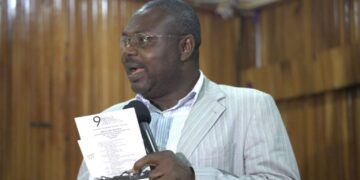


















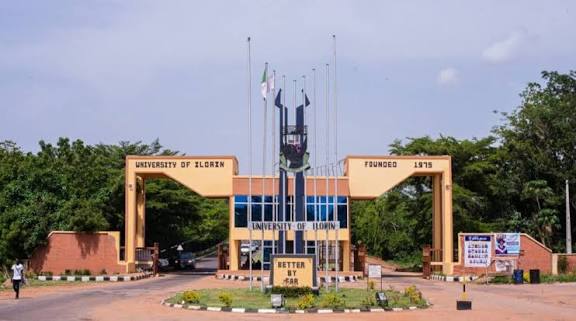


A Professor of Political Science at the University of Ilorin, Gbade Ojo, has criticised Nigeria’s indigene and non-indigene system, describing it as a major source of discrimination, social division, and weak national unity.



Ojo, a former Chief of Staff to the Oyo State Governor, made the remarks while delivering the University of Ilorin’s 291st inaugural lecture titled “The Worship of an Unknown Deity.”

He said the practice has denied many Nigerians equal access to admission, employment, promotion, scholarships, bursaries, postings, and other opportunities whenever they reside outside their states of origin.
According to him, the indigene-non-indigene arrangement has also allowed local interests to dominate federal institutions, particularly universities.

“Local potentates have virtually hijacked federal tertiary institutions in their domains, making a mockery of the idea of universality,” Ojo said, adding that non-indigene staff often face marginalisation and career stagnation.

The professor argued that Nigeria’s citizenship framework is defective and continues to weaken the country’s federal system.

“To work outside one’s ethnic enclave in Nigeria, especially at the state level, is a huge career risk,” he said. “Once labelled a non-indigene, such a person is treated as an outsider indefinitely.”
Ojo noted that many Nigerians feel compelled to return to their states of origin to marry, build houses, vote, and even be buried, a trend he said limits citizens’ loyalty to the federation.
He also faulted the National Youth Service Corps (NYSC), saying it has failed to promote genuine national integration, as most graduates posted outside their ethnic enclaves are rarely absorbed after service.
“At best, they are offered temporary appointments, while long-term residence does not qualify them to contest elections,” he said.
Ojo further described it as unjust that children of federal civil servants working outside their states are made to pay higher fees in state-owned tertiary institutions despite their parents paying taxes in those states.
Calling for reforms, he urged the country to redefine and de-ethnicise citizenship to strengthen fairness and national cohesion.
“Anyone who has lived in a place for at least ten years should not be discriminated against in any form,” he said.










 EduTimes Africa, a product of Education Times Africa, is a magazine publication that aims to lend its support to close the yawning gap in Africa's educational development.