

























Nigerian-born educators Oluwatoyin and Adeolu Kode have said a strong foundation in Science, Technology, Engineering and Mathematics (STEM) is essential for making African students globally competitive.


In a statement on Thursday, the couple, co-founders of STEM Prep Tutoring in the United States, said targeted STEM-focused academic support helps African immigrant students adapt to foreign education systems while also promoting digital empowerment in rural Nigerian communities.

“When African children migrate, the intelligence is already there, but the system shock is real,” Oluwatoyin said.
“STEM gives them confidence, relevance and a global language that cuts across borders.”
She explained that many Nigerian students arrive abroad as top performers but struggle within months due to differences in teaching methods, curriculum structure and digital learning tools.

“A child who was excelling in Lagos suddenly feels lost in class,” she said.
“It’s not a failure of ability; it’s a failure of transition support.”

According to Oluwatoyin, research shows that over 65 per cent of newly arrived African students experience academic regression in their first year.
She said this reality informed the creation of STEM Prep Tutoring in 2019, designed to help African students quickly close learning gaps while strengthening their STEM and digital skills.
“Our goal was clear: close learning gaps, empower parents with knowledge and position African students for competitive STEM careers,” she said.
Oluwatoyin said the organisation has supported over 820 students, recording an average 28 per cent improvement in Mathematics and English within three months.
She added that students preparing for standardised tests have recorded SAT score increases of between 180 and 360 points, with several gaining admission into top U.S. universities.
Beyond academics, she said the organisation exposes students to coding, robotics, artificial intelligence and web development, with some middle-school students already building apps and websites.
Adeolu said their work is strengthened by cultural understanding and shared experience.
“We’ve walked this path ourselves, so we understand both the academic pressure and emotional challenges immigrant children face,” he said.
The educators said success in the diaspora should also translate into development at home.
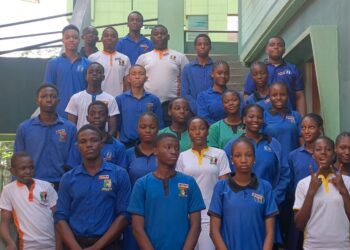
In 2024, Oluwatoyin sponsored a digital-skills training programme for 25 secondary school students in Eruwa, Oyo State, exposing them to basic coding, computer literacy, internet research and data handling.
Adeolu described the initiative as strategic.
“This is about capacity building. If Nigeria must compete globally, digital skills must reach rural communities too,” he said.
The Kodes said education-driven development remains central to national progress.
“Confident African students contribute meaningfully wherever they find themselves,” Adeolu said. “That also strengthens Africa’s global reputation.”
They added that STEM Prep Tutoring plans to expand its Nigeria-based programmes, launch a global digital learning academy, establish scholarship support for African immigrant students and partner with Nigerian schools to boost STEM education.










 EduTimes Africa, a product of Education Times Africa, is a magazine publication that aims to lend its support to close the yawning gap in Africa's educational development.