

























For millions of students preparing for UTME every year, JAMB isn’t just an agency, it’s the gatekeeper to higher education..



And now, the board says it is targeting ₦23.8bn as internally generated revenue for the 2026 fiscal year — a ₦4bn increase over its 2025 projection.

The figure was presented before the Senate Committee on Tertiary Institutions and TETFund as part of JAMB’s 2026 budget estimates.
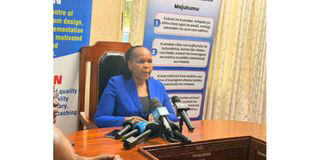
The presentation was delivered by Dr Muftau Bello, a director in the office of the Registrar, Prof Ishaq Oloyede.


According to him, out of the proposed ₦30.6bn budget profile for 2026, ₦23.8bn will be generated internally.
From that, ₦6bn is expected to be remitted to the Federation Account as operating surplus.
“A total of ₦30.6bn budget profile is proposed by JAMB in 2026 out of which ₦23.8bn is to be generated internally and ₦6bn to be remitted into the federation account as operating surplus for the year,” he said.
JAMB also reviewed its 2025 performance before the committee chaired by Senator Muntari Dandutse.

The board disclosed that it generated ₦18.5bn as internally generated revenue in 2025 and remitted ₦4bn as operating surplus.
Beyond the numbers, there’s something students will immediately care about access.
For the 2026 Unified Tertiary Matriculation Examination, JAMB says it has created 1,000 examination centres across the country.
That’s a significant jump from the fewer than 800 centres used in 2025.
The expansion, the board explained, is aimed at improving access and easing logistics for candidates nationwide.
For students in rural areas who travel long distances just to sit for UTME, this could mean less stress, lower transport costs, and fewer exam-day risks.
Members of the Senate committee commended the board’s financial performance and operational expansion under the leadership of Prof Oloyede, giving it what many described as a pass mark.
But one concern that hits directly at students’ pockets also came up.
Senator Yohanna Amos (Adamawa North) urged the board to further reduce the UTME examination fee, currently pegged at ₦3,500.
In response, the director noted that the fee used to be ₦5,000 before it was reduced to ₦3,500 under the current Registrar.
For now, ₦3,500 remains the price of entry into Nigeria’s tertiary education race.
As JAMB expands centres and projects higher revenue, many young Nigerians will be watching closely — not just the numbers in Abuja, but how those decisions affect access, affordability, and the pressure that comes with chasing admission.












 EduTimes Africa, a product of Education Times Africa, is a magazine publication that aims to lend its support to close the yawning gap in Africa's educational development.