


















































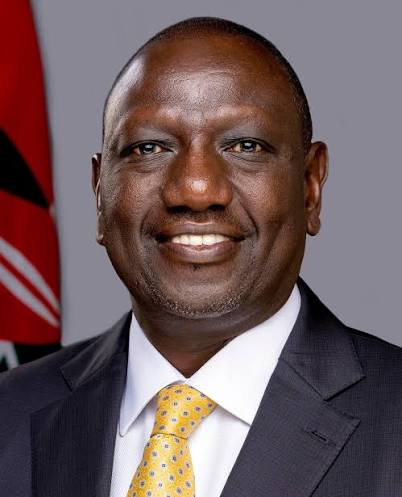


Kenyan President William Ruto has announced plans to provide fully funded university and college education for every student who qualifies for admission, in what could become one of the country’s most significant higher education reforms.


Speaking at the State House in Nairobi on Tuesday, Ruto said the government had finalised a new higher education funding model and submitted the necessary amendments to Parliament. If approved, the policy will take effect from September, ensuring that all eligible students receive full financial support for their tertiary education.

The proposed reforms are aimed at guaranteeing that access to higher education is determined by academic merit rather than a family’s financial circumstances. According to the President, no qualified student should be denied the opportunity to pursue higher education because of an inability to pay tuition fees.
Ruto admitted that previous funding models had fallen short of expectations, leaving many public universities under severe financial pressure.

“We tried the differentiated model, but it did not work. Although we promised 80 per cent funding, it dropped to about 40 per cent, and many universities suffered as a result,” he said.
He explained that the government later introduced a funding arrangement combining parental contributions, student loans and scholarships to promote equity. However, many deserving students continued to struggle with the cost of higher education.
Under the proposed universal funding model, every student who passes the required examinations and secures admission into a recognised college or university will have their education fully financed by the government.

While parents who are willing and able to contribute towards their children’s education will still be free to do so, the President stressed that financial hardship will no longer prevent qualified students from accessing higher education.
Ruto also called on Parliament to fast-track the approval of the legislative amendments, noting that the reforms would enable students to enrol in courses such as engineering and medicine without financial constraints limiting their choices.
If enacted, the policy is expected to ease the financial burden on thousands of Kenyan families while significantly expanding access to tertiary education ahead of the next academic session.

The proposal could also influence education policy discussions across East Africa, where many academically qualified students fail to enrol in universities because they cannot afford tuition and other associated costs.
Globally, only a handful of countries—including Germany, Norway and Austria—offer tuition-free or fully state-funded higher education. Within Africa, Mauritius and Algeria are among the few nations providing largely free public university education, while most countries continue to rely on a combination of government scholarships, student loans and private financing.
Should the reforms receive parliamentary approval, Kenya would join the small group of countries guaranteeing public funding for all students admitted to higher education institutions.













 EduTimes Africa, a product of Education Times Africa, is a magazine publication that aims to lend its support to close the yawning gap in Africa's educational development.