




















































The Mastercard Foundation has unveiled a $500 million Africa Higher Education for Transformation (AHEFT) Prize, a decade-long initiative designed to strengthen African universities and enhance employment opportunities for young people across the continent.



The Foundation announced that it will invest the funds over the next 10 years, making the AHEFT Prize one of the largest commitments to advancing higher education in Africa. The annual award recognises universities that demonstrate excellence in teaching, research, innovation and graduate employability.

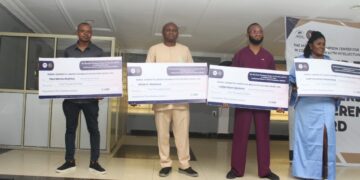
Five institutions emerged as the inaugural winners of the 2026 edition of the prize. They are Addis Ababa University(Ethiopia), the International Institute for Water and Environmental Engineering (2iE)** in Burkina Faso, **Kwame Nkrumah University of Science and Technology** (Ghana), Muni University (Uganda), and the University of Rwanda.

Each institution will receive **$3 million** to expand initiatives that improve access to higher education, promote research and innovation, and create stronger pathways to employment for young people.

Speaking at the launch, Mastercard Foundation President and Chief Executive Officer, Sewit Ahderom, said the award celebrates African universities that are redefining the role of higher education in driving social and economic development.
She noted that the Foundation’s investment reflects its confidence in the continent’s institutions to deliver home-grown solutions that empower millions of young Africans through quality education and innovation.
Among the award recipients, Uganda’s **Muni University** was recognised in the **Transitions to Employment** category for its Refugee and Host Community Youth Empowerment and Transformation Initiative (RETI), which has enabled nearly 70 per cent of programme participants to secure employment within three months of graduation.
**Addis Ababa University** received recognition for excellence in research and innovation, particularly for aligning scientific research with national development priorities and strengthening healthcare delivery through its collaboration with Tikur Anbessa Specialized Hospital.

Burkina Faso’s **2iE** was honoured for excellence in teaching and learning, having produced engineering graduates with consistently high employment rates. More than 70 per cent of its graduates secure jobs within one year, while over 95 per cent continue to work within Africa.
Similarly, **Kwame Nkrumah University of Science and Technology** was recognised for successfully translating research into commercial ventures through business incubation and technology commercialisation, while the **University of Rwanda** received the award for excellence in health after training more than 26,000 healthcare professionals and advancing community-based healthcare innovation.
According to the Foundation, the AHEFT Prize will recognise universities making significant contributions across areas including teaching and learning, entrepreneurship, employment creation, healthcare, climate resilience, agriculture, science, technology and artificial intelligence.
The Foundation plans to honour at least **150 African higher education institutions** over the next decade through the initiative.
Executive Director for Higher Education Initiatives at the Mastercard Foundation, **Dr John Nkengasong**, said universities must evolve beyond awarding academic qualifications to becoming catalysts for economic growth and sustainable development.
He stressed that higher education institutions should equip young people with practical skills, innovation and entrepreneurial opportunities that translate directly into employment and long-term economic transformation across Africa.
The inaugural AHEFT Prize winners will officially receive their awards during the **Higher Education Transformation Convening**, scheduled for **22 September 2026** in **Accra, Ghana**.














 EduTimes Africa, a product of Education Times Africa, is a magazine publication that aims to lend its support to close the yawning gap in Africa's educational development.