

























































Nigeria’s push to prepare students for an artificial intelligence-driven future has received another boost as Huawei Technologies Nigeria Limited and the National Commission for Colleges of Education (NCCE) signed a Memorandum of Understanding to expand AI initiatives and strengthen digital education across the country.



The agreement was signed on Thursday during the third Huawei Education Summit 2026 in Abuja, where education regulators, university administrators, state government officials and technology experts gathered to discuss the future of digital learning and innovation in Nigeria’s education sector.

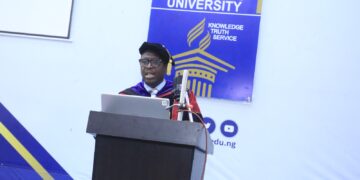
Speaking at the summit, the Deputy Managing Director of Huawei Technologies Nigeria, Jim Zhang, said rapid advances in artificial intelligence, cloud computing, cybersecurity and smart learning have transformed industries, making it essential for higher institutions to produce graduates equipped for the digital economy.

“Universities and colleges must equip students with practical digital skills and innovative mindsets so they can compete globally,” Zhang said.

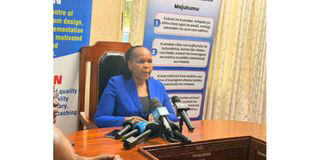
The Executive Secretary of the National Commission for Colleges of Education, Dr. Angela Ajala, described Huawei as a trusted partner in advancing digital education, noting that thousands of lecturers and students have already earned globally recognised ICT certifications through the Huawei ICT Academy Programme.
She disclosed that the renewed partnership would lead to the establishment of a Digital Academy at the commission to provide continuous digital skills training for lecturers, students and other stakeholders in the education sector.
“Our job is to ensure that no Nigerian child’s future depends on whether their teacher happens to have encountered technology,” Ajala said.
She further revealed that the commission has reviewed its curriculum to introduce specialised programmes in Artificial Intelligence and Robotics Education, Networking and Cybersecurity Education, Data Science and Analytics Education, as well as Software and Web Development.

The summit also featured discussions on smart campuses, digital infrastructure and sustainable ICT funding for tertiary institutions.
Director of Information and Communication Technology at the Tertiary Education Trust Fund (TETFund), Mr. Joseph Odo, said the agency now considers ICT a strategic priority rather than a support service.
According to him, TETFund has increased ICT intervention funding to ₦150 million for universities and ₦100 million for polytechnics and colleges of education to support modern teaching, research and digital transformation.
“The resources are intended to equip institutions with tools for modern teaching, learning and research, with continued emphasis on digital systems, specialised centres, capacity building and public-private collaboration,” the statement said.
The summit concluded with awards presented to students and institutions that represented Nigeria at the 2025–2026 Huawei ICT Competition in Shenzhen, China.
Among the beneficiaries were students from Ahmadu Bello University, Igbinedion University, Okada, the University of Lagos, the University of Port Harcourt, Nasarawa State University and the Federal University of Technology, Minna, in recognition of their outstanding performance on the global stage.










 EduTimes Africa, a product of Education Times Africa, is a magazine publication that aims to lend its support to close the yawning gap in Africa's educational development.