
























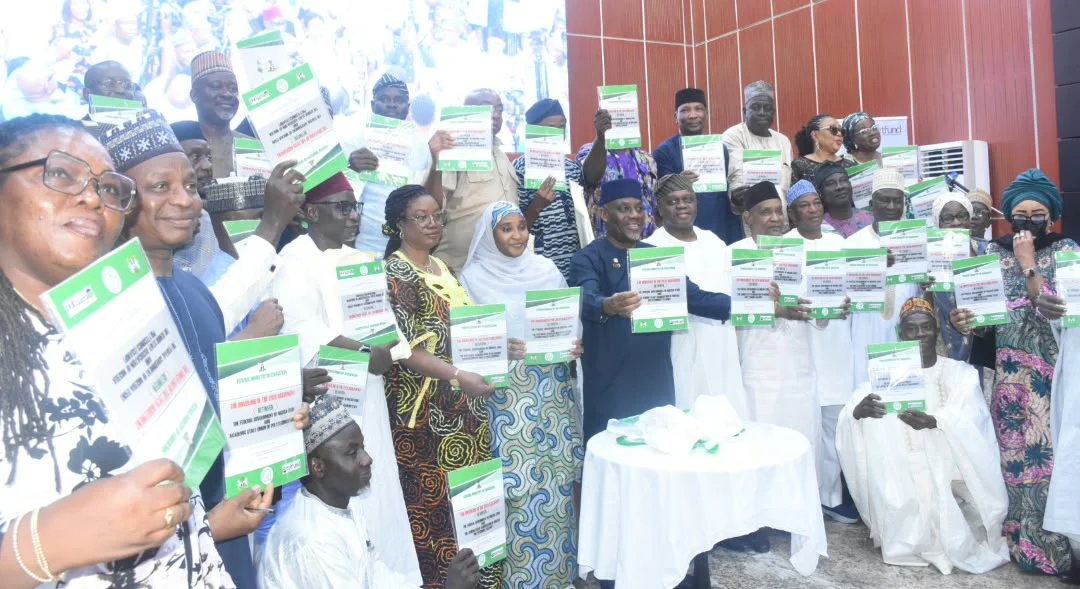


The Federal Government has paid the Consolidated Academic Tools Allowance (CATA) and Consolidated Non-Teaching Tools Allowance (CONTA) to eligible staff of tertiary institutions across Nigeria.


The Minister of Education, Dr Tunji Alausa, disclosed this on Tuesday in Abuja during the unveiling of the 2026 agreements between the Federal Government and academic and non-academic staff unions in tertiary institutions.

According to Alausa, the allowances took effect from January 2026 and are intended to support the professional and operational needs of eligible workers in universities, polytechnics and colleges of education.

He described the agreements as a significant step towards improving staff welfare, promoting industrial harmony and ensuring stability in Nigeria’s tertiary education system.


The minister attributed the development to President Bola Tinubu’s commitment to resolving longstanding disputes between the government and staff unions, which have contributed to repeated strikes and disruptions to academic calendars.
Alausa said years of delayed and unfulfilled agreements had weakened trust between the government and unions, leaving students to lose valuable learning time while families faced additional expenses and teaching and research activities suffered setbacks.
He said the new agreements were expected to rebuild confidence and support the government’s commitment to ensuring that students complete four-year academic programmes within four years.
The minister also announced plans to expand the existing implementation and monitoring committee established for the Academic Staff Union of Universities (ASUU) to cover agreements with academic and non-academic staff unions across all tertiary institutions.
According to him, the expanded committee will include more union representatives and relevant stakeholders to strengthen monitoring, address implementation challenges and ensure that both parties meet their obligations. The government is also considering making the committee permanent.
Alausa urged government agencies, governing councils and institutional managements to comply with the implementation guidelines, maintain accurate records and cooperate with the monitoring committee. He also appealed to union leaders to use established dispute-resolution channels rather than resort to public confrontations or strikes.
Earlier, Chairman of the Federal Government Tertiary Institutions Expanded Negotiation Committee, Alhaji Yayale Ahmed, commended the government and the unions for reaching agreements through dialogue and collective bargaining.
Ahmed urged the unions to exercise patience during implementation, noting that government processes could take time. He also called for the resolution of discrepancies in the agreements to ensure that no union was disadvantaged.
Similarly, President of the Senior Staff Association of Nigerian Universities (SSANU), Mr Mohammed Ibrahim, praised the minister’s role in addressing longstanding concerns affecting tertiary institution workers.
Ibrahim said the payment of outstanding salary arrears and implementation of the allowances had improved workers’ morale. However, he urged the government to ensure that all provisions of the agreements were fully implemented.
The agreements are expected to undergo review after three years, in line with provisions allowing either the government or the unions to initiate further negotiations.
Source: News Agency of Nigeria (NAN)











 EduTimes Africa, a product of Education Times Africa, is a magazine publication that aims to lend its support to close the yawning gap in Africa's educational development.