
























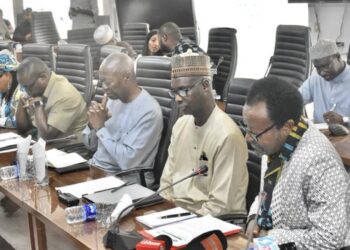
The Academy of Medical Sciences of Nigeria (AMSN) has installed former Vice-Chancellor of Nnamdi Azikiwe University (UNIZIK), Professor Joseph Ahaneku, as its new president for a two-year term.
A renowned consultant chemical pathologist and current Vice-Chancellor of the National University of Science and Technology, Abuja, Ahaneku was inaugurated alongside 11 other executive officers at an event held in Ikeja, Lagos, on Saturday.

He succeeds Emeritus Professor Frank Osato Giwa-Osagie, who served as the Academy’s immediate past president.
At the ceremony, the Academy also awarded its highest honour, the Nobel (Golden) Prize, to Professor Okechukwu Ogah, a consultant cardiologist and Professor of Medicine at the University College Hospital (UCH), Ibadan. Ogah received a medal and a cash prize of N10 million.

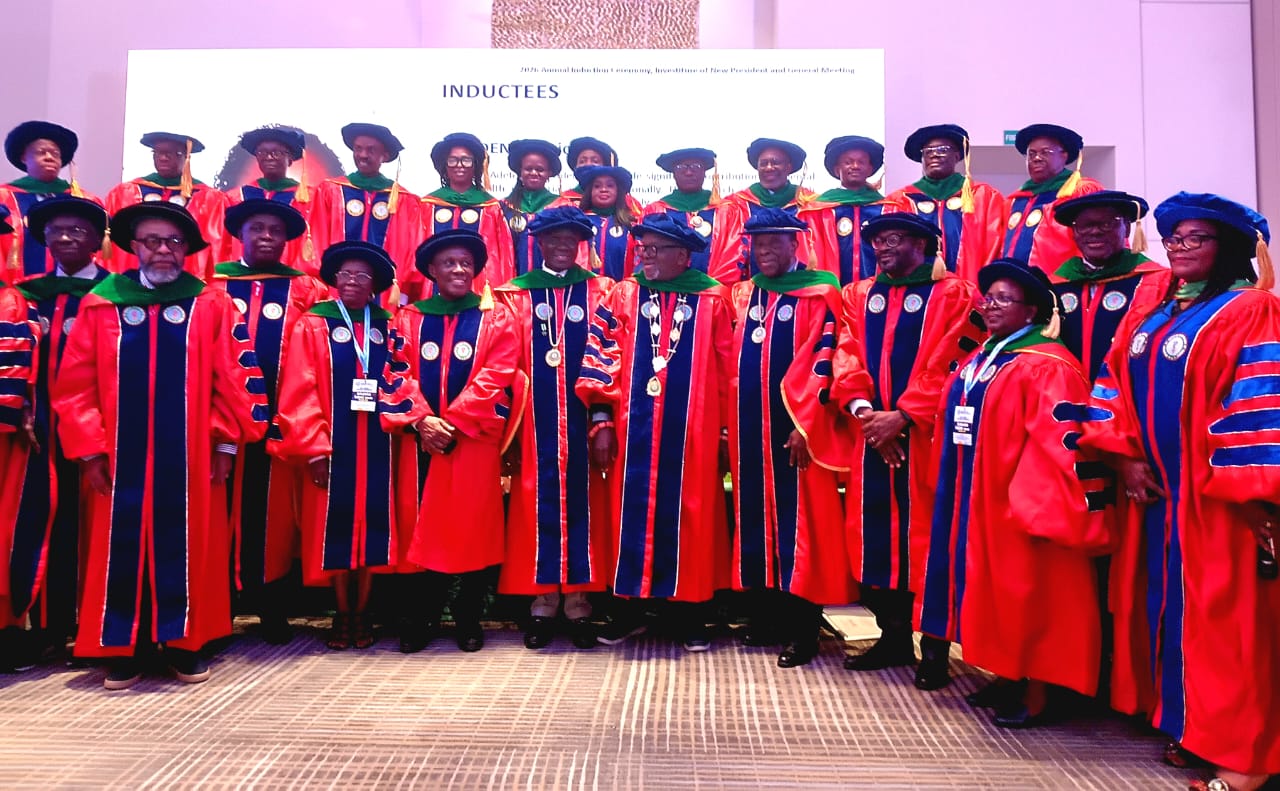
The Academy further inducted 13 new fellows, comprising 12 professors and one PhD holder, in recognition of their contributions to different fields of medical sciences in Nigeria.
The inductees include Professors Sunday Akintoye, Emmanuel Balogun, Rasheed Balogun, Ene Ette, Okechukwu Ogah, Omonike Ogbole, Anthony Okorodudu, Olusola Olawoye, Adebola Orimadegun, Bamidele Owoyele, Wellington Oyibo and Musa Yakubu, alongside Dr Abiola Adeniyi.
Speaking at the event, the Chairman of the Academy’s Board of Trustees, Olorogun Dr Sonny Folorunso Kuku, said the new president, the gold medallist and the inducted fellows had undergone rigorous selection processes and met the institution’s requirements.
He congratulated the award recipients and inductees, expressing confidence in their ability to contribute to the advancement of medical sciences in the country.
In his valedictory address, the outgoing president, Emeritus Professor Giwa-Osagie, expressed satisfaction with the achievements recorded during his administration, attributing them to the cooperation of the Academy’s leadership, fellows and staff.

He also urged members to extend the same support to his successor and the new executive team, stressing that the institution’s growth required collective commitment.
Giwa-Osagie highlighted the Academy’s commitment to promoting excellence in medical research, education and mentorship, as well as ensuring that research findings are translated into practical medical interventions to improve human health and welfare.
In his inaugural address, Ahaneku outlined plans to strengthen the Academy through strategic partnerships, improved visibility and greater participation among its members.
He said his administration would build on the achievements of previous leadership through what he described as a horizontal and vertical relationship matrix.
Under the horizontal strategy, he encouraged existing and newly inducted fellows to contribute their expertise to the Academy’s committees and sections. He also announced plans to expand the institution’s presence across Nigerian universities, tertiary health facilities and research institutes.
Addressing concerns about the participation of younger researchers, Ahaneku disclosed that the average age of Academy members was about 65 years, adding that his administration would intensify efforts to attract younger medical professionals and researchers.
Through the vertical strategy, he said the Academy would strengthen partnerships with government ministries, departments and agencies, development partners and private-sector organisations to improve infrastructure and support its activities.
Ahaneku also emphasised the importance of resource mobilisation, jokingly describing himself as the Academy’s ‘chief beggar’, a traditional title associated with the institution’s president.

Another highlight of the ceremony was the investiture of businessman and philanthropist Deacon Olatunji Kolade Bello as a patron of the Academy.
The event was attended by several prominent Nigerians, including Elder Felix Ohiwerei and former Minister of Power, Professor Bart Nnaji.











 EduTimes Africa, a product of Education Times Africa, is a magazine publication that aims to lend its support to close the yawning gap in Africa's educational development.
