
























The Nigerian Education Loan Fund (NELFUND) has ruled out publishing the names of students benefiting from its loan scheme, citing data protection concerns and the need to protect beneficiaries from embarrassment and possible targeting.
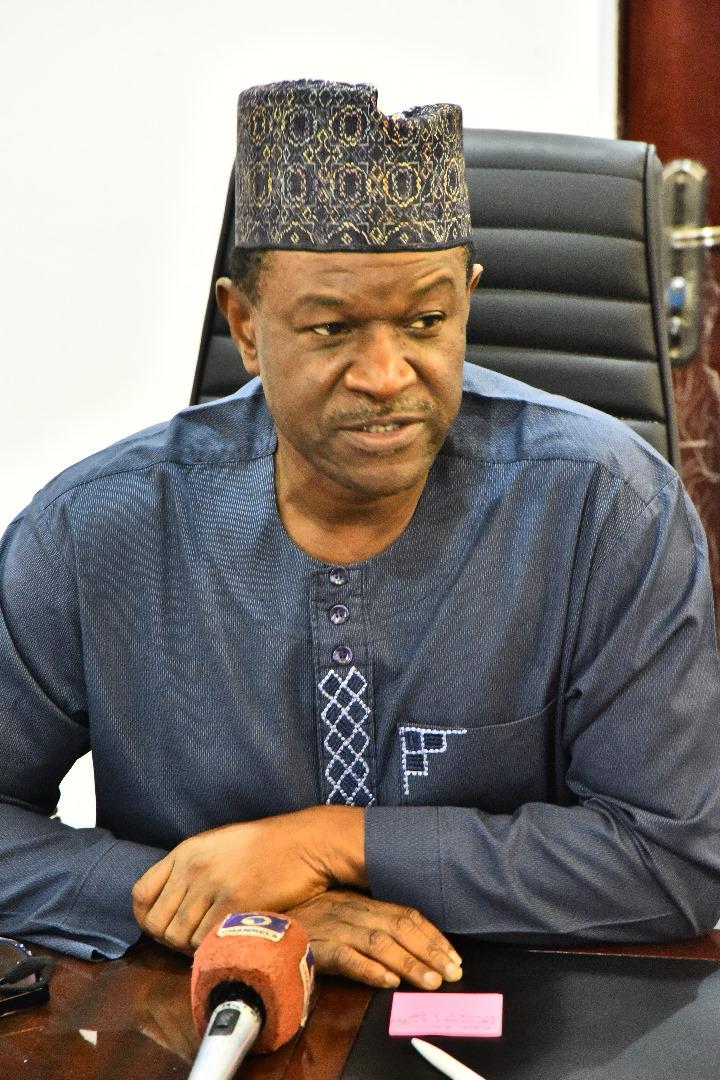
The Managing Director and Chief Executive Officer of NELFUND, Akintunde Sawyerr, disclosed this in an interview with The PUNCH, amid growing calls for transparency and accountability in the administration of the government-backed student financing programme.

Sawyerr explained that although the Fund would disclose the institutions receiving payments and the number of students benefiting from the scheme, it would not make the identities of individual beneficiaries public.
According to him, students who depend on loans to finance their education should not have their financial circumstances exposed to public scrutiny.

He said some beneficiaries might feel embarrassed about taking loans, while others could become targets if their identities were made public.
As of November 9, 2026, NELFUND had disbursed ₦375.28 billion since the launch of its student loan application portal on May 24, 2024.
The amount comprises ₦194.77 billion paid to tertiary institutions for approved tuition fees and ₦180.50 billion released to students as upkeep allowances.

The Fund also reported that 1,675,474 student loan disbursements had been recorded across 320 beneficiary institutions.
Explaining its position on public disclosure, Sawyerr said: “No, certainly not. There are data protection issues. If you borrow money from an institution or you borrow money from me, you don’t want to see it on a notice board or to see it on television that you borrowed money from me.

“Some people are embarrassed by taking loans. Also, some people don’t want to be targeted, so we’re never going to publish the names of individual beneficiaries. We’ll tell you the schools that we paid; we can tell you the numbers, but the data protection laws prevent us from giving out the names of individuals who have taken loans.”
The NELFUND chief also maintained that the student loans would remain interest-free for now, insisting that Nigerian students deserved access to educational financing without additional interest charges.
He, however, rejected suggestions that the loans should be converted into grants, arguing that beneficiaries should understand their repayment responsibilities after completing their education and securing employment.
On the sustainability of the scheme, Sawyerr said loan recovery would not be the Fund’s only source of financing, identifying investments, donations and statutory allocations as additional sources of revenue.
He also disclosed that some beneficiaries had started repaying their loans, while some Nigerians had expressed interest in supporting the programme by paying the educational expenses of other students.
Meanwhile, Sawyerr explained that NELFUND had introduced a tokenisation system to prevent double tuition payments and give students greater control over the payment of their institutional fees.
He said the system allows beneficiaries to authorise electronic payments directly to their respective institutions through tokens received on their mobile phones.
The Fund has also introduced a price dispute feature on its application portal to allow students to challenge tuition fees they consider excessive before applying for loans.
Sawyerr added that although NELFUND could withhold funding from institutions over unreasonable fee increases, disciplinary action remained the responsibility of relevant regulatory agencies, including the National Universities Commission, National Board for Technical Education and National Commission for Colleges of Education.
The development comes as the student loan scheme continues to expand, with increasing attention on its transparency, accountability, repayment structure and long-term financial sustainability.











 EduTimes Africa, a product of Education Times Africa, is a magazine publication that aims to lend its support to close the yawning gap in Africa's educational development.