























































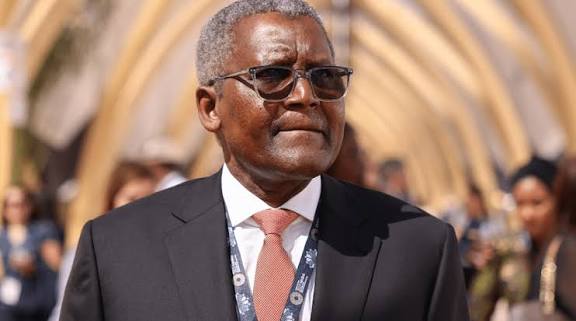


The Aliko Dangote Foundation (ADF) has launched a N1 trillion scholarship programme aimed at keeping over 1.3 million Nigerian students in school over the next decade, marking the largest private-sector education intervention in the country’s history.
The initiative, unveiled in Lagos, is designed to tackle funding gaps, reduce dropout rates and expand access to quality education across all 774 local government areas.
Founder of the foundation, Aliko Dangote, described the programme as a long-term investment in Nigeria’s future, stressing that many young people leave school not because they lack talent, but because they lack financial support.
“This is not charity. It is a strategic investment in Nigeria’s human capital,” Dangote said. “Every child we keep in school strengthens our economy, reduces inequality and builds our future.”

The scholarship scheme, which will be fully digital and merit-based, is expected to support 45,000 new students annually from 2026, rising to 155,000 beneficiaries by the fourth year and sustained at that level for 10 years.
The programme is structured around four key areas where educational exclusion is most severe. Under the Aliko Dangote STEM Scholars initiative, 30,000 undergraduate students in public universities and polytechnics will receive tuition support each year. Another 5,000 students annually will benefit from the Technical and Vocational Education and Training (TVET) scheme, covering tools and training materials.
The MHF Dangote Secondary School Girls Scholars programme will support 20,000 public-school girls yearly from JSS1 to SS3, with continued backing into tertiary education, particularly in states with high numbers of out-of-school girls.
In addition, a large-scale teacher training programme will begin with 10,000 secondary school STEM teachers, expanding nationwide.
Dangote said the focus would be on measurable outcomes such as retention, completion rates and post-school impact, noting that the foundation would work closely with the Nigeria Education Loan Fund (NELFUND) and examination bodies.
Vice President Kashim Shettima praised the initiative, describing it as “nation-building in its purest form” and a major boost to the Federal Government’s human capital development agenda.
“A population becomes a liability only when it is uneducated,” Shettima said, noting that private-sector leadership is critical to national development.
Education Minister Tunji Alausa also commended the programme, calling it “pure human capital development” that aligns with the administration’s plan to shift Nigeria from a resource-based to a knowledge-driven economy.
Several stakeholders, including state governors, traditional rulers and international partners, lauded the initiative, with the Ooni of Ife, Oba Adeyeye Ogunwusi, describing it as transformational and strategic for Nigeria’s future.
Dangote said the scheme marks only the first phase of expanded education interventions, urging government, the private sector and communities to work together.
“Our young people are not asking for handouts,” he said. “They are asking for opportunities. And they deserve that chance.













 EduTimes Africa, a product of Education Times Africa, is a magazine publication that aims to lend its support to close the yawning gap in Africa's educational development.