


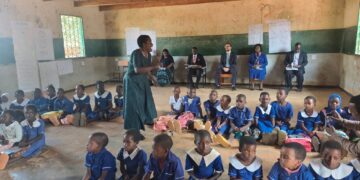

















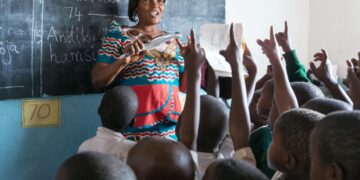





































A new report has revealed a deepening learning crisis across Africa, with only 13.4 per cent of primary school pupils achieving minimum proficiency levels in reading and mathematics.
The report, National Primary-Level Learning Proficiency Statistics from Africa by Martin Gustafsson, analysed harmonised data from 47 countries, covering about 97 per cent of the continent’s school-age population.

It found that when out-of-school children are included, the already low proficiency rate drops further to 10.8 per cent, highlighting the scale of learning poverty across the continent.
Despite commitments such as the Nouakchott Declaration to end learning poverty by 2035, the report noted that progress remains slow and uneven.

Nigeria Among Low-Performing Countries
In Nigeria, only 9.5 per cent of learners meet minimum proficiency standards by the end of primary school. Reading proficiency stands at 12.7 per cent, while mathematics lags behind at just 6.3 per cent.
The report also indicates that Nigeria struggles to improve learning outcomes as children progress through school, suggesting persistent gaps in foundational education.
Mixed Performance Across Africa
Across the continent, learning outcomes vary widely.
In Kenya, 31.1 per cent of learners achieve minimum proficiency, placing it among stronger-performing systems. Reading proficiency is 25.2 per cent, while mathematics reaches 36.9 per cent, with the country recognised as an emerging improver in global education rankings.
South Africa ranks in the eighth decile across African countries. While there have been improvements over time, inequality within the education system continues to affect outcomes.
In Rwanda, national assessments suggest high proficiency levels, with 91 per cent of Grade 6 learners proficient in mathematics. However, the report cautions that differences in benchmarking may mean the figure is overstated.
Meanwhile, Senegal sits around the mid-range, based on adjusted data aligned with international standards.
Early Learning and Data Gaps Highlighted
The report underscores that early-grade learning—especially in Grade 1—is critical to long-term academic success, with large disparities already evident at that level.
It also highlights the impact of non-educational factors such as child stunting on learning outcomes. Evidence cited shows significantly lower performance among stunted children compared to their peers.
Another major concern raised is the lack of transparency and accessibility of education data across Africa. Key assessment programmes such as PASEC and SACMEQ play a crucial role but are limited by restricted access to detailed datasets.
Call for Urgent Reforms
The report calls for stronger investment in education monitoring systems, improved data transparency, and a renewed focus on learning outcomes rather than just school access.
It emphasises that without significant improvements in foundational learning and better tracking of progress, Africa may struggle to meet its target of ending learning poverty by 2035.
Experts also urged governments to strengthen early-grade interventions and ensure that assessment systems are equipped with skilled analysts and high-quality data tools.
The full report is available online for further insights into Africa’s learning landscape.















 EduTimes Africa, a product of Education Times Africa, is a magazine publication that aims to lend its support to close the yawning gap in Africa's educational development.