

















































At a time when Nigeria faces a worsening education emergency, no fewer than ₦97.88bn allocated for basic education remains unutilised by state governments, raising fresh concerns about governance, accountability and political will.
An investigation has revealed that at least 21 states and the Federal Capital Territory have failed to access funds provided under the Universal Basic Education Commission (UBEC) framework as of March 2026. The primary reason is their inability or refusal to provide the required counterpart funding, a condition for accessing the grants.

This development comes despite Nigeria’s alarming out-of-school children population, estimated at about 18.5 million, according to data from UNICEF. The figure represents one of the highest globally, with children in both northern and southern regions increasingly affected by poverty, insecurity and weak education systems.
How the UBEC funding works

Under the Universal Basic Education scheme established by law in 2004, the Federal Government provides matching grants to states to support primary and junior secondary education. However, states must contribute 50 per cent counterpart funding to qualify for disbursement.
While the policy is designed to promote ownership and accountability, it has become a major bottleneck. Many states have consistently failed to meet this requirement, leading to a steady accumulation of unaccessed funds.
Data shows that 2025 recorded the highest default, with ₦68.1bn left untouched within a single year, pushing the total unaccessed funds to nearly ₦98bn.
States lagging behind
Among the states with the highest unaccessed funds, Imo tops the list with ₦10.6bn, followed by Ogun with ₦9.7bn and Rivers with ₦7.8bn. Others include Niger, Abia and Oyo, each with over ₦7.1bn in unaccessed allocations.
The Federal Capital Territory also has about ₦5.07bn yet to be accessed, while Ekiti, Bayelsa and Adamawa account for over ₦3.5bn each.
Education experts say the pattern suggests not just financial constraints, but deeper issues of governance and prioritisation.
Compliance shows it is achievable
In contrast, 15 states have consistently accessed their UBEC funds. These include Bauchi, Borno, Jigawa, Kaduna, Katsina, Plateau, Sokoto, Taraba and Yobe in the North, alongside Benue, Delta, Enugu, Kogi, Ondo and Osun in the South.
Analysts argue that this demonstrates the feasibility of the counterpart funding model when there is political will and fiscal discipline.
Falana raises alarm
Human rights lawyer Femi Falana criticised both federal and state governments for failing to uphold the right to free and compulsory basic education.
He noted that existing laws, including the Child’s Rights Act and the Universal Basic Education Act, guarantee access to education for all Nigerian children. However, he lamented that millions remain out of school while funds meant to address the crisis lie unused.
Falana also alleged that some states that access the funds fail to deploy them effectively for infrastructure, teaching and learning improvements.
A systemic governance failure
Stakeholders have described the situation as both a policy and moral failure. Analysts argue that leaving education funds idle in the face of such a crisis reflects misplaced priorities among political leaders.
They warn that the implications extend beyond education, linking the growing number of out-of-school children to rising insecurity, poverty and social instability.
Development experts also caution that continued failure to access and utilise available funds could weaken Nigeria’s credibility with international partners and reduce future investment in the education sector.
Human and economic cost
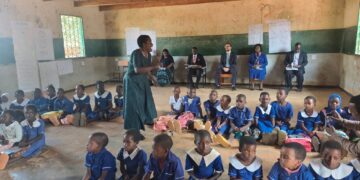
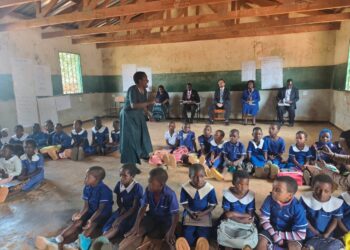
Across the country, millions of children remain out of school due to a mix of economic hardship, insecurity and poor infrastructure. In many communities, schools lack basic facilities, while overcrowded classrooms and inadequate learning materials discourage attendance.
Experts estimate that the unaccessed ₦97.88bn could have funded the construction and rehabilitation of classrooms, recruitment and training of teachers, provision of instructional materials, and targeted interventions for out-of-school children.
Calls for urgent action
There are growing calls for stricter enforcement measures to compel states to comply with UBEC requirements. Some stakeholders advocate sanctions for defaulting states, while others suggest reviewing the counterpart funding model to accommodate financially weaker states.
For now, the situation presents a stark contradiction: substantial funds are available to improve education, yet millions of Nigerian children remain excluded from the classroom.
Observers warn that unless urgent steps are taken to align political commitment with available resources, Nigeria risks long-term social and economic consequences tied to a poorly educated population.
Source: Punch Newspaper







 EduTimes Africa, a product of Education Times Africa, is a magazine publication that aims to lend its support to close the yawning gap in Africa's educational development.