













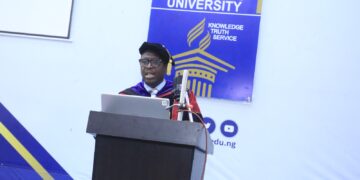














































After decades of teaching, research, mentorship and service, retired professors in Nigeria’s public universities will now receive pensions equal to their full annual salaries.
This follows a new agreement between the Federal Government and the Academic Staff Union of Universities (ASUU), which guarantees that professors who retire at the mandatory age will earn 100 per cent of their annual salary as pension.

Under the pact, only professors who served continuously in recognised public universities until retirement will qualify. The agreement also formally fixes the retirement age for professors at 70 years.
The provision, captured in Section 3.6 of the 35-page agreement obtained by The Guardian, is widely seen as a major boost to the welfare of senior academics who dedicate their lives to Nigeria’s university system.

Stakeholders say the move is not just about money, but about dignity after service. According to them, the policy rewards years of intellectual labour, strengthens morale within universities, and could slow the growing “Japa” trend that has seen top scholars leave the country.
In 2025 alone, ASUU revealed that at least 309 professors exited Nigeria’s public universities within a single month.
Beyond pensions, the agreement introduces a new Professorial Cadre Allowance.
Full-time professors will now earn ₦1.74 million annually (₦140,000 monthly), while Readers will receive ₦840,000 annually (₦70,000 monthly). The allowance is aimed at easing administrative burdens and supporting research coordination, allowing senior academics to focus more on teaching and mentorship.
Female academic staff also benefit from improved welfare, as the agreement provides for six months maternity leave in line with Public Service Rules.
Presenting the renegotiated agreement in Abuja, Minister of Education, Dr Tunji Alausa, described it as a historic turning point for Nigeria’s university system. He said it reflects the commitment of President Bola Tinubu’s administration to end recurring strikes, restore confidence, and ensure uninterrupted academic calendars.
According to Alausa, the agreement lays the foundation for lasting industrial harmony, built on dialogue, trust and mutual respect.
For many professors nearing retirement, the deal represents more than policy reform — it is recognition, reassurance and respect after a lifetime in the classroom.
















 EduTimes Africa, a product of Education Times Africa, is a magazine publication that aims to lend its support to close the yawning gap in Africa's educational development.