






































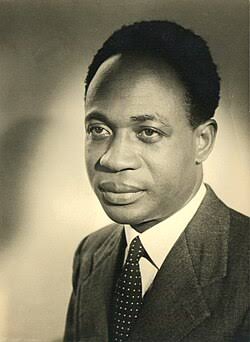


Kwame Nkrumah is one of the most iconic figures in African history. When we talk about independence and Pan-Africanism, his name naturally comes up. He was not just a politician; he was a dreamer, a strategist, and a man who believed Africa could stand on its own feet. Ghana’s independence in 1957 was a turning point for the entire continent, and Nkrumah played a major role in making that dream real.
He didn’t only fight for Ghana’s freedom—he fought for the freedom of the entire African continent. His ideas and actions inspired many African leaders and freedom fighters across the continent.
Here are important facts about Kwame Nkrumah, covering his life, achievements, struggles, and legacy.
Facts About Kwame Nkrumah:

Birth and Early Life: Kwame Nkrumah was born on September 21, 1909, in Nkroful, a town in the Western Region of Ghana. His actual name was Franscis Nwia Kofi Ngonloma.
Family Background: He was born into a humble family, and his father was a goldsmith.
Early Education: Nkrumah attended Roman Catholic schools in his hometown before moving to Achimota School.
Secondary Education: He studied at Achimota School, one of Ghana’s most prestigious institutions, where he began showing leadership skills.
Further Studies Abroad: In 1935, he traveled to the United States for higher education.
University Education: He studied at Lincoln University in Pennsylvania and later at the University of Pennsylvania.
Influence of Pan-Africanism: While in the US, he was influenced by Pan-African leaders and activists like Marcus Garvey and W.E.B Du Bois.
Return to Ghana: Nkrumah returned to Ghana in 1947 and joined the struggle against British colonial rule.
Call for Self-Government: His famous slogan “Self-Government Now” became the rallying cry for the independence movement.
First Major Political Role: In 1951, he became the Leader of Government Business, the highest political position held by an African in the Gold Coast.
Independence Achievement: On March 6, 1957, Ghana became independent, making it the first sub-Saharan African country to break free from colonial rule.
First President: Nkrumah became Ghana’s first Prime Minister and later its first President in 1960.
Pan-African Vision: He strongly believed in African unity and played a key role in promoting Pan-Africanism.
Founding OAU: In 1963, he helped establish the Organization of African Unity (OAU), now known as the African Union.
Economic Impact: He pushed for industrialization through projects like the Akosombo Dam, aimed at powering Ghana’s industries.
Education and Social Reforms: He introduced policies to improve education, healthcare, and infrastructure, believing they were key to national development.
Controversial Leadership: His rule became criticized for authoritarianism after he declared Ghana a one-party state in 1964.
Kwame Nkrumah remains a complex figure in African history. He was celebrated as a hero, but also criticized for some of his methods. Yet, his contribution to Ghana’s independence and the Pan-African movement is undeniable. He showed that Africa could lead itself and that the dream of unity was not impossible.
Even today, his legacy still shapes the way we think about leadership, development, and continental unity. Nkrumah left a mark that cannot be erased. His story is a reminder that the struggle for freedom and progress requires courage, sacrifice, and a clear vision.







 EduTimes Africa, a product of Education Times Africa, is a magazine publication that aims to lend its support to close the yawning gap in Africa's educational development.