


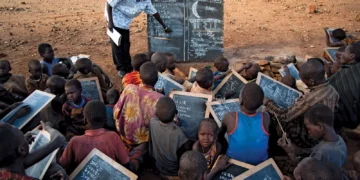























Teachers are increasingly being recognised as important drivers of change in schools and communities, with the Ashoka Teachers Challenge showcasing how educators can turn everyday classroom problems into practical solutions.



Here are seven things you may not know about the initiative and its winners:

1. Three teachers emerged as winners
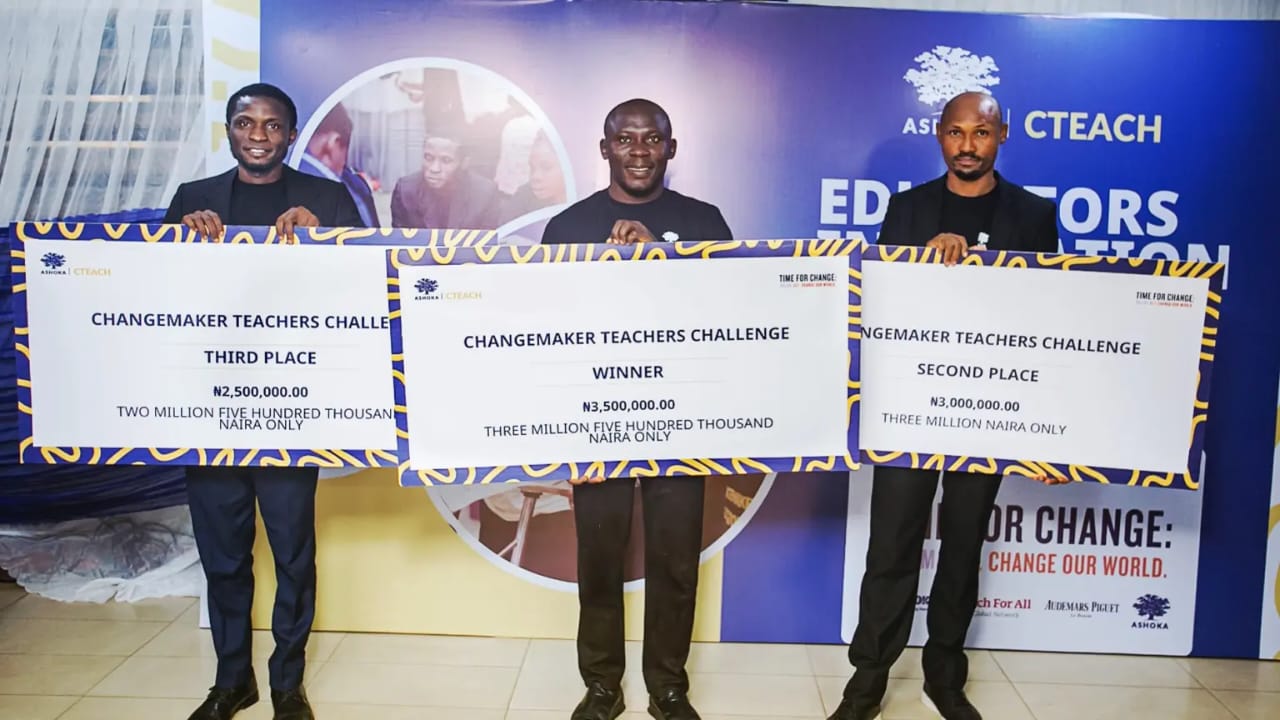
The challenge culminated in the Educators Innovation Showcase, where three teachers were recognised for their innovations.

Adeyanju Adeyoola of Lagos State Model Junior College, Kankon, Badagry, won first place and received N3.5 million for the BKind Anti-Bullying Game Initiative.
Felix Alabi of Abule-Eko Community Junior Grammar School came second with ClassSync and received N2.5 million.
Abraham Lawal of Lagos Progressive Junior Secondary School placed third with his Student Leadership for Future of Work initiative and received N1.5 million.
2. The challenge is designed to turn teachers into changemakers
Ashoka believes teachers should not only implement educational reforms but should also be empowered to identify problems, develop solutions and inspire students to become changemakers.
3. More than 100 teachers applied
More than 100 teachers from the first three cohorts applied for the challenge.
Twenty semi-finalists were selected to test their ideas in their schools for four weeks and provide evidence of their impact before five finalists were selected.
4. The first-place project tackles bullying through game
Adeyanju Adeyoola’s BKind Anti-Bullying Game Initiative uses games to address bullying while encouraging kindness, empathy and positive relationships among students.
5. ClassSync uses students to help other students learn
Felix Alabi created ClassSync to address learning gaps in mathematics, particularly in overcrowded classrooms.
The initiative pairs high-performing students with classmates who need additional support, focusing on areas such as addition, subtraction, multiplication, division, fractions and algebra.
6. Other finalists tackled waste, leadership and entrepreneurship
Abraham Lawal’s Student Leadership for Future of Work initiative focuses on preparing young people with leadership skills for a changing world of work.
Another finalist, Abiola Alabi, developed Waste to Worth, which transforms discarded materials such as bottle caps, fabric remnants, cake boards and coconut shells into useful decorative items.
Aderinoye Temitope also explored entrepreneurship through Basic Science.
7. Ashoka believes one teacher can influence hundreds of students

Christianah Adeboye, Project Lead of the CTEACH Changemaker Teachers Challenge, said empowering teachers could have a multiplier effect across the education system.

The programme therefore encourages teachers to integrate empathy, collaboration, shared leadership and problem-solving into their everyday classroom activities.
For Ashoka, the goal goes beyond producing academically successful students. It is about helping young people develop the confidence and skills to identify problems around them and participate in solving them.












 EduTimes Africa, a product of Education Times Africa, is a magazine publication that aims to lend its support to close the yawning gap in Africa's educational development.