



















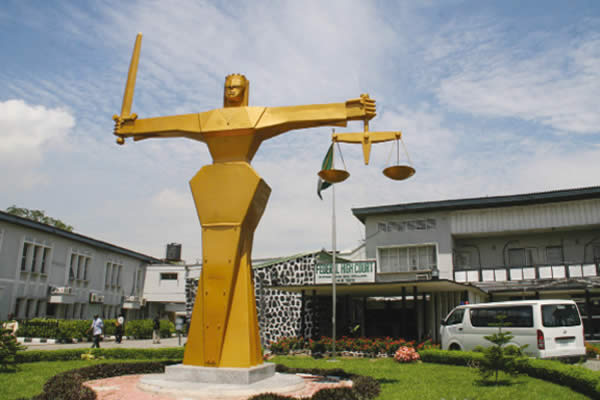


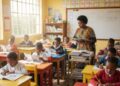
A Federal High Court in Lagos has ruled that every Nigerian child has a legal right to free, compulsory basic education — and that the Federal Government, the 36 states, and the FCT must provide it.
Justice Daniel Osiagor delivered the judgment on October 9, 2025, in a case filed by human rights lawyer Femi Falana (SAN) and activist Hauwa Mustapha on behalf of the Alliance on Surviving COVID-19 and Beyond. They approached the court out of concern that millions of children were being denied quality basic education despite the existence of a federal law guaranteeing it.

In the judgment obtained by The PUNCH, Justice Osiagor held that Section 11(2) of the Universal Basic Education Act places a binding duty on all levels of government to ensure free and compulsory basic education for every child of primary and junior secondary school age.
He explained that while states are expected to pay 50 per cent counterpart funding before accessing the Universal Basic Education Fund, choosing not to do so is not illegal — even though it undermines children’s educational opportunities.

The judge also ruled that Falana and Mustapha had the right to bring the case, saying issues affecting millions of children should not be blocked by rigid rules on who can sue.
Justice Osiagor stressed that education is no longer just a policy promise. By passing the UBE Act, he said, the government turned it into an enforceable legal right.
“The law has imposed obligations, and those obligations are enforceable,” he stated.
He concluded that the Federal Government, states, and FCT must guarantee free and compulsory basic education, even though they cannot be forced to access the N68bn UBE fund.

The court resolved two of the three issues in favour of the applicants, affirming the right of Nigerian children to basic education as a matter of law — not charity.
—Punch







 EduTimes Africa, a product of Education Times Africa, is a magazine publication that aims to lend its support to close the yawning gap in Africa's educational development.