


























Who was Justice Modupe Omo-Eboh?
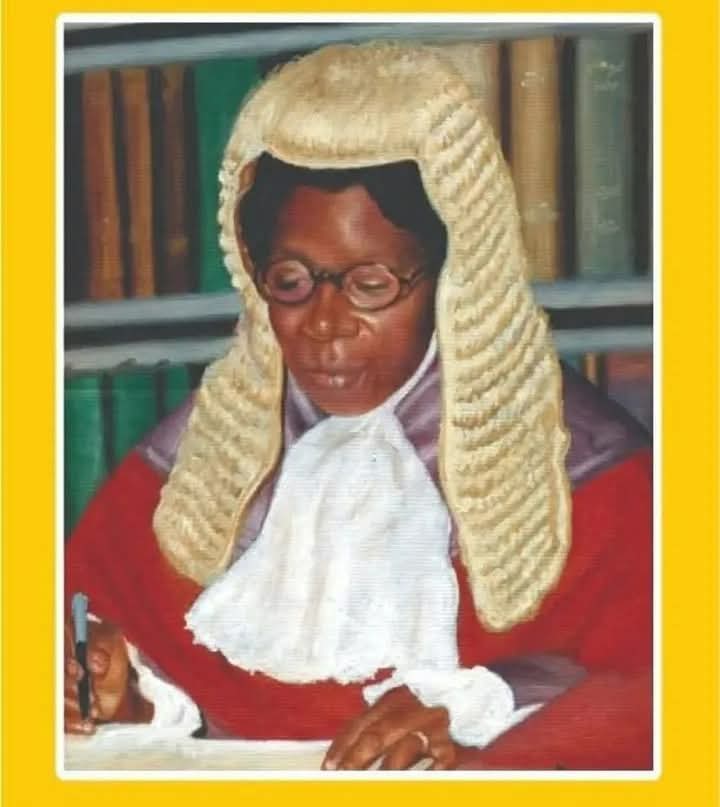
Justice Modupe Omo-Eboh was the first female judge of Nigeria’s High Court. Her appointment on November 10, 1969, marked a monumental moment in the country’s legal history, breaking gender barriers in a male-dominated judiciary.



Early Life and Family Legacy
Born in Lagos in 1922 as Modupe Akingbehin, she came from a prominent lineage rooted in Nigerian history. Her great-grandfather was Oshodi Tapa, a key historical figure in Lagos. She was also a great-great-granddaughter of Bishop Samuel Ajayi Crowther, the first African Anglican bishop, and a niece of Herbert Macaulay, regarded as the father of Nigerian nationalism. Despite her impressive ancestry, it was Modupe’s individual drive and passion for justice that defined her journey.

Education and Legal Training
She attended Queen’s College in Lagos, one of Nigeria’s most prestigious girls’ schools. She later moved to London to study law and was called to the Bar at Lincoln’s Inn on March 14, 1953. At a time when few Nigerian women pursued legal careers, Omo-Eboh dared to step into the courtroom.
Career Milestones
Upon returning to Nigeria, she joined the legal service and steadily rose through the ranks. Her career progression included roles as:

Lawyer
Magistrate

Chief Magistrate

Administrator-General and Public Trustee
Director of Public Prosecutions
Acting Solicitor-General
Her groundbreaking moment came in Benin City, where she was sworn in as High Court Judge on November 10, 1969, becoming the first woman to serve in this capacity in Nigeria.
Later Contributions
In 1976, Justice Omo-Eboh was appointed to the Lagos State judiciary, where she continued her service with dignity and distinction. She was widely respected for her fairness, depth of legal knowledge, and unwavering commitment to justice.
Legacy and Death
Justice Modupe Omo-Eboh’s life and work paved the way for countless women in Nigeria’s legal system. She was not just a participant in the nation’s justice system—she was a pioneer, mentor, and role model.
She died on February 25, 2002, at the age of 80. Her story remains a powerful reminder that gender should never be a barrier to greatness.
Justice Omo-Eboh’s story is more than a historical footnote—it is a call to action.
Thanks for reading always follow Folaranmi Ajayi for historical and political education.













 EduTimes Africa, a product of Education Times Africa, is a magazine publication that aims to lend its support to close the yawning gap in Africa's educational development.