












































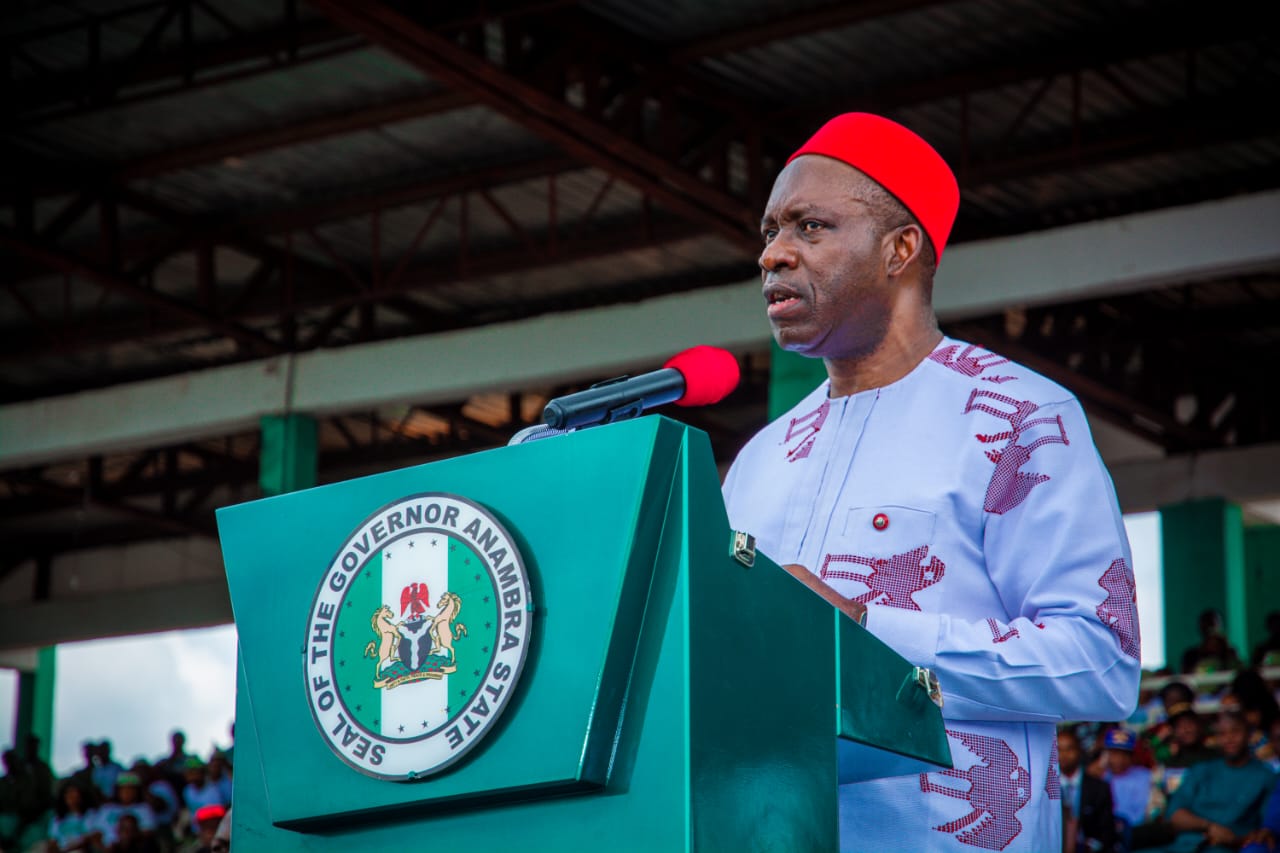


When Anambra State Governor, Professor Chukwuma Soludo, announced that nearly half of the state’s ₦757 billion 2026 budget had been allocated to education, the figure immediately stood out. At 46.9 per cent, the allocation does not merely meet global standards—it dramatically exceeds the 15 to 20 per cent benchmark recommended by UNESCO for public education spending.



In a country where education budgets often struggle to compete with infrastructure and security priorities, Anambra’s decision signals more than fiscal generosity. It reflects a deliberate ideological choice: to place education at the very centre of governance and development.

According to a statement released by the governor’s Press Secretary, Christian Aburime, the move aligns with Soludo’s long-term vision of transforming Anambra into Nigeria’s education headquarters—a knowledge-driven economy powered by skilled citizens rather than extractive advantages.
A Budget That Breaks the Mold

UNESCO’s recommendation that governments devote between 15 and 20 per cent of total public expenditure, or 4 to 6 per cent of GDP, to education is widely regarded as a global minimum. Many Nigerian states fall well below this threshold. Anambra’s 2026 education allocation more than doubles the upper limit of that recommendation, placing the state in a rare category not just within Nigeria, but across the continent.
Budget analysts note that fresh comparisons across states show Anambra outpacing peers such as Enugu, Kano, and Jigawa in education investment relative to total spending. For Soludo, a former Central Bank governor and economist, the numbers are not symbolic—they are strategic.
“This is about building human capital at scale,” a government official explained. “Education is the most sustainable infrastructure any government can invest in.”

From Policy to Classrooms
Beyond the headlines, the true test of any education budget lies in outcomes. The Anambra government argues that results are already visible across classrooms and communities.

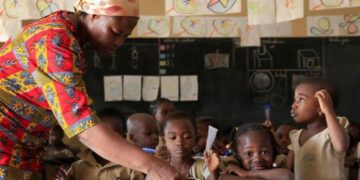
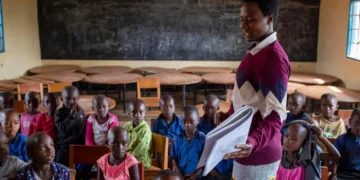
Since assuming office, Governor Soludo has approved the recruitment of 8,115 teachers, a move officials say has effectively ended the long-standing problem of schools operating without qualified educators. In many rural and urban public schools, understaffed classrooms had become the norm. The new hires, according to the government, have restored balance and improved learning conditions.
The teacher recruitment drive has been complemented by an unprecedented free education policy covering kindergarten through senior secondary school. Under the policy, parents are no longer burdened by tuition fees or hidden levies that once discouraged school attendance.
The impact has been significant. Government data shows that public secondary school enrolment has increased by 47 per cent, while primary school enrolment has risen by 27 per cent. Officials say these gains have positioned Anambra as the state with one of the lowest rates of out-of-school children in Nigeria.
For many families, the changes represent more than statistics. They are lifelines—opportunities once considered unreachable.
Education as Economic Policy
Soludo’s education-first strategy is rooted in a broader economic philosophy. In a global economy increasingly driven by innovation, digital skills, and knowledge production, states that underinvest in education risk long-term stagnation.
By committing nearly half of its budget to the sector, Anambra is betting that educated citizens will drive productivity, entrepreneurship, and social stability. The administration argues that education spending should not be viewed as consumption, but as capital investment with compounding returns.
Observers say the policy also sends a powerful signal to development partners, investors, and institutions seeking environments with skilled labour and stable social indicators.
A Model or an Outlier?
While the scale of Anambra’s education budget has drawn praise, it has also sparked debate about sustainability and replication. Critics question whether other states—particularly those with lower internally generated revenue—can adopt similar models.
Supporters counter that Soludo’s approach reframes the conversation. Instead of asking whether states can afford to invest heavily in education, they argue the real question is whether they can afford not to.
Looking Ahead
As the 2026 fiscal year approaches, attention will shift from allocation to implementation. How effectively the funds translate into improved learning outcomes, infrastructure, teacher quality, and innovation will ultimately define the legacy of the policy.
For now, Anambra’s education budget stands as a bold statement of intent—a declaration that development begins in the classroom, and that global benchmarks are not ceilings, but starting points.
In a nation searching for sustainable pathways to growth, Anambra’s experiment may offer lessons that extend far beyond its borders.









 EduTimes Africa, a product of Education Times Africa, is a magazine publication that aims to lend its support to close the yawning gap in Africa's educational development.