


















































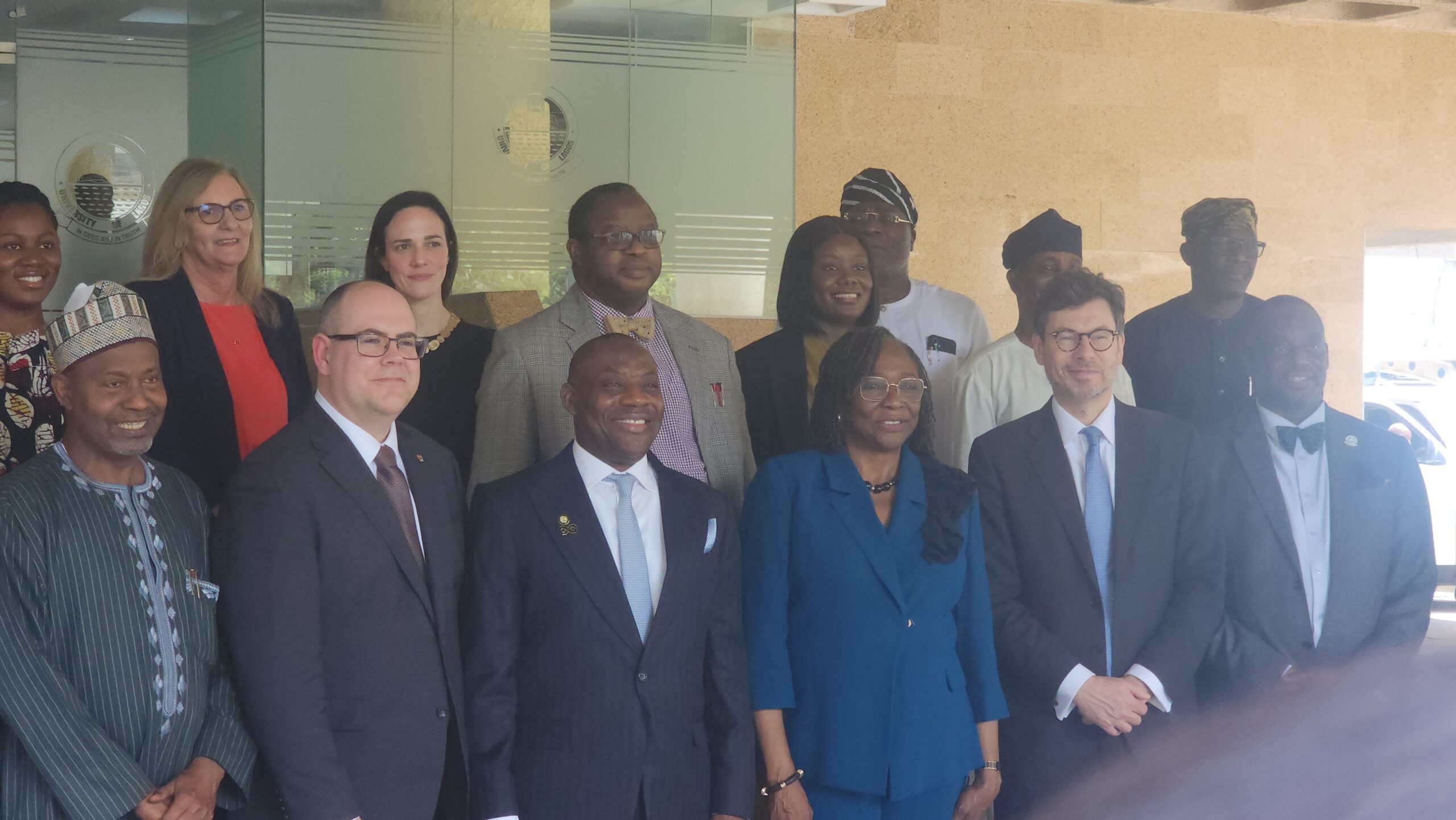


The Federal Government has advanced its transnational education agenda with the signing of a Memorandum of Understanding (MoU) between the University of Lagos (UNILAG) and the University of Birmingham, United Kingdom, aimed at strengthening collaboration in surgical education, research and the delivery of globally recognised academic programmes.



The MoU was signed on Thursday, January 29, 2026, at the Senate Chambers of the University of Lagos, with the Minister of Education, Dr. Maruf Tunji Alausa; the Vice-Chancellor of UNILAG, Prof. Folasade Ogunsola; and representatives of the University of Birmingham in attendance.

Executed under the Birmingham–Institute of Research for Medical Sciences (BIRMS) programme, the agreement is anchored on Transnational Education (TNE) and provides a framework for the delivery of validated University of Birmingham academic programmes at UNILAG.
Speaking at the event, Prof. Ogunsola said the MoU did not mark the beginning of the relationship between both institutions but rather formalised an already existing and productive partnership.

She explained that UNILAG and the University of Birmingham have collaborated for over a decade in global surgery research and academic programmes.

“Today marks a historic milestone in Nigeria–UK academic collaboration,” she said. “This partnership is built on more than ten years of mutually beneficial research, mentorship and academic exchange, particularly in global surgery.”
The Vice-Chancellor disclosed that through the Nigeria Institute of Health Research and the Global Surgery Unit (GSU), the collaboration has established research units in 37 institutions across Nigeria’s geopolitical zones.
According to her, the interventions have resulted in over a dozen studies and a 15 per cent reduction in surgical site infections through behavioural change measures now adopted as policy by the Federal Ministry of Health.
She added that the partnership has supported the MSc in Surgery programme at UNILAG’s College of Medicine, mentoring over 120 UNILAG students and more than 1,000 students nationwide.
Responding to a question from our correspondent on how the university intends to ensure the MoU goes beyond documentation, Prof. Ogunsola said the agreement merely confirms an existing bond.
“The signing does not indicate the starting point of the partnership; it confirms the bond and track record of collaboration between UNILAG and the University of Birmingham,” she stated.
She further noted that the partnership aligns with UNILAG’s vision of equitable global engagement, experiential learning and co-creation, while strengthening teaching and research in critical areas such as artificial intelligence, health sciences and engineering.
In his remarks, the Minister of Education, Dr. Alausa, described the MoU as a “bold and audacious step” towards transforming Nigeria’s education sector and positioning the country as a hub of academic excellence.
He disclosed that the Federal Government has approved a Transnational Education policy to guide cross-border academic partnerships, ease admission pressures, expand access to tertiary education and attract foreign investment into the sector.
“This partnership aligns perfectly with the National Education Sector Renewal Initiative (NESRI), which prioritises infrastructure development, teacher training, technology integration and global competitiveness,” the minister said.
Dr. Alausa explained that the TNE model under the agreement involves the validation of University of Birmingham programmes to be delivered at UNILAG, allowing Nigerian students to earn internationally recognised degrees without leaving the country.
He added that the collaboration would also promote joint research in renewable energy, healthcare, artificial intelligence and other critical sectors, while enhancing employability and skills acquisition.
Also speaking, the British Deputy High Commissioner, Mr. John Baxter, described the partnership as a practical response to Nigeria’s higher education capacity challenges, noting that over 1.3 million qualified Nigerians are unable to secure admission into tertiary institutions annually.
“This collaboration brings world-class UK education to Nigeria and expands access to high-quality degrees locally,” he said, adding that the UK Government strongly supports TNE partnerships as part of efforts to deepen educational ties with Nigeria.

Baxter highlighted artificial intelligence and data science as critical to the future of work, noting that the partnership would equip young Nigerians with skills to compete in a global digital economy.
The event was attended by senior officials, including the Executive Secretary of the National Universities Commission (NUC), Prof. Abdullahi Ribadu; Executive Secretary of TETFund, Arc. Sonny Echono; Provost of the University of Birmingham, Prof. Nick Vaughan-Williams; Director of the British Council in Nigeria, Donna McGowan; and the Barling Chair of Surgery at the University of Birmingham, Prof. Dion Morton.
The MoU is expected to deepen academic exchange, expand access to globally competitive education and serve as a model for future UK–Nigeria higher education partnerships.












 EduTimes Africa, a product of Education Times Africa, is a magazine publication that aims to lend its support to close the yawning gap in Africa's educational development.