























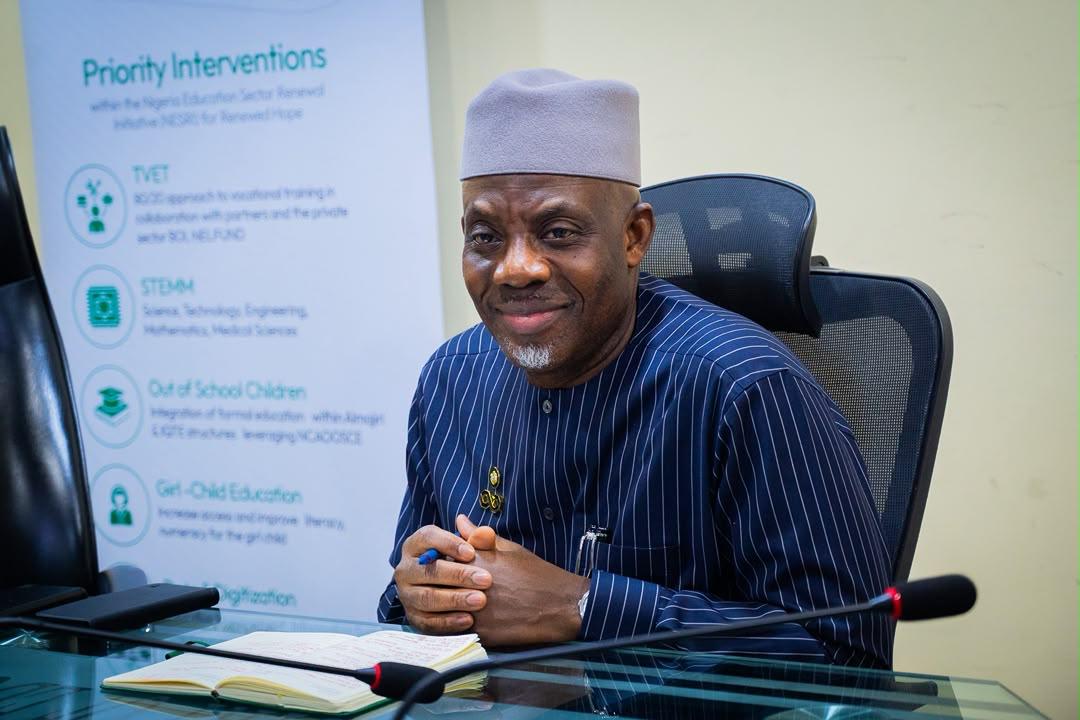


The Federal Government has pledged to honour its agreements with tertiary institution workers to prevent strikes and ensure Nigerian students complete their academic programmes within the prescribed period.



The Minister of Education, Dr Tunji Alausa, gave the assurance on Tuesday in Abuja during the unveiling of the 2026 agreements between the Federal Government and academic and non-academic staff unions in universities, polytechnics and colleges of education.

Alausa said the administration of President Bola Tinubu was committed to ending recurring industrial disputes caused by unfulfilled agreements, which have disrupted academic calendars and prolonged students’ stay in tertiary institutions.
He reiterated the President’s campaign promise that four-year degree programmes should be completed within four years, stressing that the newly unveiled agreements were designed to restore trust between the government and education workers.

“During his campaign, President Bola Ahmed Tinubu promised that a four-year course would be completed in four years. Today, through his leadership, these agreements give practical expression to that pledge,” the minister said.

FG Unveils New Allowances for Tertiary Institution Workers
The agreements cover the Consolidated Academic Tools Allowance (CATA) for members of the Academic Staff Union of Polytechnics (ASUP) and the Colleges of Education Academic Staff Union (COEASU).
They also provide for the Consolidated Non-Teaching Tools Allowance (CONTTA) for eligible non-teaching staff across universities, polytechnics and colleges of education.
The allowances are scheduled to take effect from January 1, 2026, in line with the agreements and applicable implementation guidelines.
Alausa said the allowances were intended to support the professional and operational needs of academic and non-academic staff, adding that improved staff welfare was essential to the quality of teaching, research and learning in Nigerian tertiary institutions.
He, however, acknowledged that signing and unveiling the agreements would not be sufficient without faithful implementation.
The minister assured the unions that the Federal Government would fulfil its obligations, noting that public confidence would depend on the government’s ability to honour its commitments.
FG Expands Monitoring Committee to Prevent University Strikes
To prevent future disagreements from escalating into strikes, the Federal Government plans to expand the existing Implementation and Monitoring Committee established under its agreement with the Academic Staff Union of Universities (ASUU).
The expanded committee will monitor agreements with academic and non-academic staff unions across universities, polytechnics and colleges of education.
According to Alausa, the committee will track implementation milestones, assess progress, identify outstanding obligations and address challenges before they trigger industrial disputes.
Its membership will include relevant unions and stakeholders, while periodic reports will be used to promote accountability and ensure that agreed provisions are implemented within the stipulated timelines.
The minister urged government agencies, institutional governing councils and management teams to comply with implementation guidelines, maintain accurate records and cooperate with the committee.
He also advised union leaders to communicate with their members and channel complaints through established mechanisms rather than resorting to confrontations that could disrupt academic activities.
Alausa said the agreements included a provision for review every three years, allowing the government and unions to discuss emerging concerns and mutually agreed adjustments.
ASUP, COEASU Report Progress in Agreement Implementation
The chairman of the Federal Government Tertiary Institutions Expanded Negotiation Committee, Malam Yayale Ahmed, said the success of the agreements would depend on the willingness of both parties to implement their commitments.
Ahmed, a former Permanent Secretary in the Federal Ministry of Education, said the negotiations required compromise and an understanding of the interests of both workers and the government.
He stressed that the unveiling of the agreements marked the beginning of the implementation process, adding that the real test would be whether the government fulfilled the provisions as agreed.
He also disclosed that discrepancies had been identified in some parts of the agreement and would be addressed in collaboration with the Ministry of Education and the National Salaries, Incomes and Wages Commission.
Meanwhile, the National President of ASUP, Comrade Shammah Kpanja, described the negotiation process as the fastest in the union’s history.
Kpanja said negotiations began in December 2025 and culminated in the signing of the agreement in April 2026. He added that implementation had commenced, with members receiving outstanding arrears between July and September.
However, he urged the Federal Government to implement all remaining provisions before the end of the year.
Similarly, the National President of COEASU, Dr Lawal Bazza, said the colleges of education subsector had achieved more than 70 per cent implementation of its agreement.
He expressed confidence that the expanded monitoring committee would help resolve outstanding issues and accelerate implementation.
The President of the Senior Staff Association of Nigerian Universities (SSANU), Comrade Ibrahim Mohammed, also commended the Federal Government for the progress made in the renegotiation process.

The agreements were presented to representatives of academic and non-academic staff unions, including ASUP, COEASU, SSANU, the Non-Academic Staff Union of Educational and Associated Institutions (NASU) and the National Association of Academic Technologists (NAAT).
The Federal Government said the agreements were part of efforts to improve staff welfare, strengthen industrial harmony and ensure uninterrupted academic activities across Nigerian tertiary institutions.
However, the success of the initiative will depend on the timely implementation of the agreed provisions and the ability of the expanded monitoring committee to resolve disputes before they lead to strikes and disruptions of academic calendars.









 EduTimes Africa, a product of Education Times Africa, is a magazine publication that aims to lend its support to close the yawning gap in Africa's educational development.