




















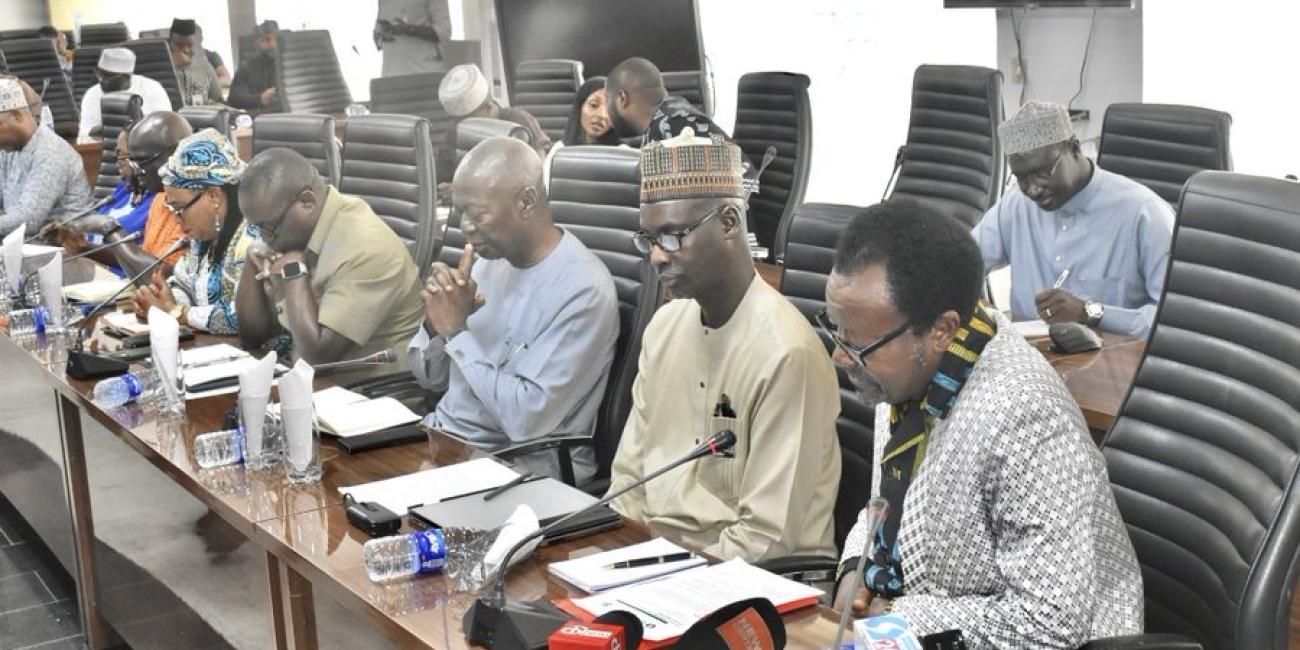


The Chairman of the Independent National Electoral Commission (INEC), Professor Joash Amupitan, has assured Nigerians and the international community that the commission will remain neutral in the 2027 general elections, declaring that it has no preferred candidate or political party.
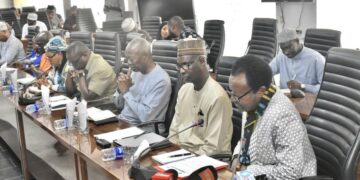
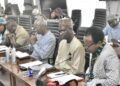
Amupitan gave the assurance on Friday, October 30, 2026, while receiving the Economic Community of West African States (ECOWAS) Pre-Election Fact-Finding Mission, led by former Sierra Leone Vice-President, Victor Bockarie Foh, at INEC’s National Headquarters in Abuja.

“INEC under my watch has no candidate and no political party,” Amupitan declared, adding that the commission’s allegiance was to the rule of law, the sovereign will of Nigerian voters and the country’s democratic progress.
The INEC chairman also disclosed that Nigeria’s National Register of Voters had surpassed 103 million ahead of the 2027 general elections, highlighting the scale of preparations required to conduct the polls.

According to him, the commission has completed nine of the 14 major statutory milestones contained in its revised timetable and schedule of activities for the elections.
He said INEC had concluded three phases of the Continuous Voter Registration (CVR) exercise and completed the nationwide physical display of the Preliminary Register of Voters.
Amupitan further explained that the commission would deploy personnel and technological resources across the country’s 36 states and the Federal Capital Territory, covering 774 Local Government Areas, 8,809 Registration Areas and 176,846 polling units.
On electoral technology, he reaffirmed INEC’s commitment to deploying the Bimodal Voter Accreditation System (BVAS) for fingerprint and facial biometric accreditation of voters.
He also highlighted plans to deploy electronic result management systems, including the eEC8A electronic verification platform, alongside the INEC Result Viewing Portal (IReV), to strengthen transparency in result management and verification.
The commission, he added, was conducting zonal readiness assessment tours across the country’s geopolitical zones to evaluate its preparedness and identify areas requiring further attention.
On election security, Amupitan said INEC was working with relevant security agencies through the Inter-Agency Consultative Committee on Election Security (ICCES) to strengthen security arrangements ahead of the polls.

He called on ECOWAS to deepen its collaboration with the commission through the deployment of long-term and short-term election observers, technical assistance and support in addressing challenges such as disinformation, logistics and inclusive voter education.
Responding, Foh said the ECOWAS mission was part of the regional organisation’s established practice of assessing electoral preparedness in member states approaching general elections.
He explained that the mission was being conducted in line with Article 31 of the ECOWAS Protocol on Democracy and Good Governance, Article 53 of the ECOWAS Conflict Prevention Framework and relevant decisions of the Authority of Heads of State and Government.
Foh said the delegation would also engage political party leaders, government representatives, civil society organisations, security agencies and other stakeholders to obtain a broader understanding of Nigeria’s political and institutional environment ahead of the elections.
The ECOWAS representatives stressed that their assessment was not limited to INEC but would examine the preparedness of other electoral stakeholders and identify areas where the regional organisation could provide technical and institutional support.
The meeting comes as preparations for the 2027 general elections gather momentum, with electoral transparency, the credibility of voting technology, result management and public confidence in the independence of electoral institutions remaining key issues in Nigeria’s democratic process.









 EduTimes Africa, a product of Education Times Africa, is a magazine publication that aims to lend its support to close the yawning gap in Africa's educational development.
