


















































February 28 and the New Threshold of War
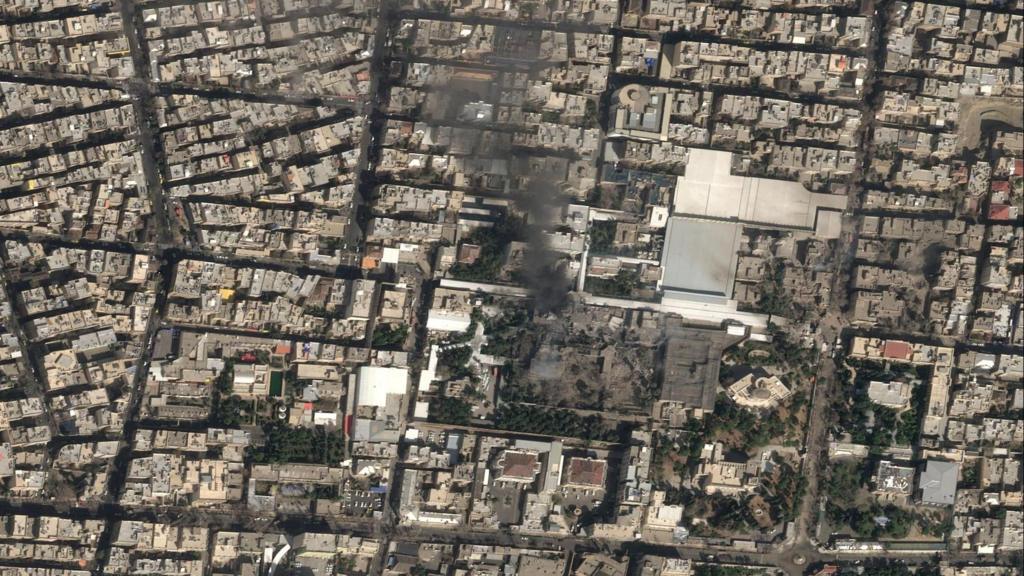
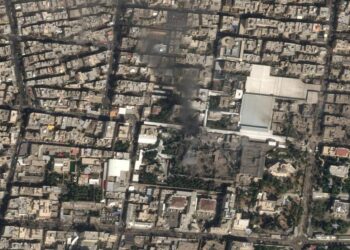
At dawn on February 28, 2026, Israeli warplanes struck the Niavaran Palace complex in Tehran, killing Iran’s Supreme Leader, Ayatollah Ali Khamenei, and several senior security officials in what Israeli authorities described as a coordinated decapitation of Iran’s national security command.

The assault, launched in coordination with the United States as the opening phase of “Operation Epic Fury,” marked the most concentrated deployment of American military firepower in the Middle East since the 2003 Iraq invasion. Within 48 hours, more than 1,000 targets across Tehran, Isfahan, Qom, Karaj and Kermanshah were hit.
Israeli Prime Minister Benjamin Netanyahu framed the operation as an existential necessity. U.S. President Donald Trump described it as a dual strategy of counter-proliferation and regime destabilisation, later announcing on Truth Social that the United States had commenced “major combat operations” alongside Israel.

Among those reported killed were senior figures within Iran’s defence and intelligence establishment, including top members of the Islamic Revolutionary Guard Corps and the Supreme National Security Council.
Retaliation Across Eight Countries
Iran responded within hours. Ballistic missiles and drones were launched toward Israel and U.S. military facilities across Bahrain, Iraq, Jordan, Kuwait, Oman, Qatar, Saudi Arabia and the United Arab Emirates.
The fallout was immediate. In Israel, a residential building in Beit Shemesh was struck, leaving civilians dead. In Kuwait, American troops were confirmed killed — the first U.S. fatalities of the conflict. Gulf states that host U.S. bases suddenly found themselves unwilling theatres of war.
The Iranian Red Crescent reported more than 200 fatalities and hundreds injured nationwide as of March 1. The deadliest reported incident occurred in Minab, where students were killed after a strike near a military facility. U.S. Central Command acknowledged reports of civilian harm but denied targeting non-military sites.
Strait of Hormuz Closure Jolts Global Economy
By March 2, Tehran had escalated further, announcing the closure of the Strait of Hormuz — the artery through which roughly one-fifth of the world’s oil supply flows.
More than 150 oil tankers were left anchored outside the chokepoint. Brent crude spiked sharply, while major shipping firms suspended transit through the Gulf, rerouting vessels around the Cape of Good Hope. Analysts warned of renewed inflationary pressure, particularly across import-dependent economies in Africa and Asia.
Regional proxies also stirred. Yemen’s Houthis signalled a return to Red Sea attacks. Hezbollah resumed rocket fire into northern Israel, prompting retaliatory airstrikes in Beirut.
The Road to February 28
The confrontation did not emerge in isolation.
Iran’s nuclear programme, initiated in 1957 and exposed in 2002, has remained a flashpoint for decades. The 2015 Joint Comprehensive Plan of Action (JCPOA) briefly curbed enrichment in exchange for sanctions relief, but the U.S. withdrawal from the deal in 2018 reignited tensions.
Direct Israel-Iran exchanges intensified in 2024 and 2025, including strikes on nuclear facilities and retaliatory missile barrages. Meanwhile, internal unrest gripped Iran from late 2025, driven by economic collapse and political repression.
Diplomatic efforts appeared close to revival in early February 2026 after indirect talks in Muscat. Omani officials even hinted at breakthrough understandings on uranium stockpiling and international verification.
Yet days later, the International Atomic Energy Agency reported discrepancies in Iran’s nuclear disclosures. On February 24, President Trump used his State of the Union address to accuse Tehran of pursuing “sinister” nuclear ambitions. Four days later, the airstrikes began.
A Strategic Crossing
The broader implications are profound.
The deliberate killing of a sitting sovereign leader in a declared military operation represents a shift in doctrine. Targeted killings, once covert and deniable, have now entered overt policy language. Offers of “immunity” for defectors and threats of “death” for loyalists underscore the regime-destabilisation dimension.
Critics argue the operation assumes that removing top leadership will trigger systemic collapse or popular uprising. Instead, early indicators suggest fragmentation without capitulation — a state weakened yet still capable of regional disruption.
Global reaction has been cautious to critical. China condemned the killing. Russia described it as unlawful. The United Nations Security Council convened emergency consultations. Traditional U.S. partners signalled unease, even where they intercepted incoming missiles.
The Grass Between Elephants
In the Yoruba proverb, when two elephants fight, it is the grass that suffers.
Beyond Tehran and Washington, the shockwaves are hitting oil-dependent African economies, migrant workers in Gulf states, Lebanese civilians and global supply chains. Aviation disruptions, shipping reroutes and digital infrastructure interruptions have underscored how modern conflict radiates far beyond battlefields.
February 28, 2026, now marks a strategic threshold. The question is no longer whether escalation is possible; it is whether the international system can absorb its consequences.
Whether this conflict ends in capitulation, stalemate or regional war remains uncertain. What is clear is that the rules governing statecraft, sovereignty and the use of force have shifted.
And history will likely record that dawn in Tehran as the moment the shift became irreversible.
About the Writer

Mariam Busari is a final-year student of Peace and Conflict Studies in Nigeria and an aspiring UN peace advocate and diplomat. Her interests focus on social justice, governance, and the dynamics of power and conflict in global affairs. She is passionate about peacebuilding, civic engagement, and youth-led impact initiatives, and writes from a conflict transformation perspective.













 EduTimes Africa, a product of Education Times Africa, is a magazine publication that aims to lend its support to close the yawning gap in Africa's educational development.