




















































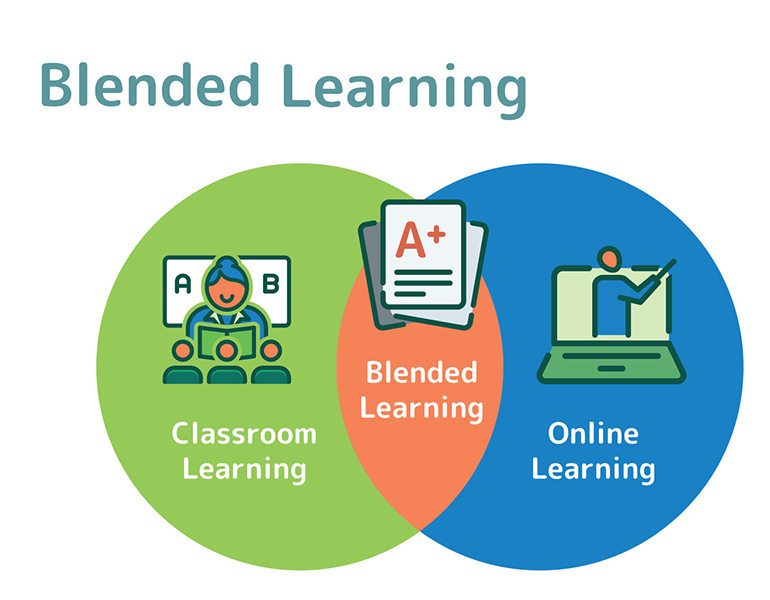


Nigeria’s education system faces persistent challenges: overcrowded classrooms, uneven quality of instruction and stark regional disparities. Against this backdrop, **blended learning**—a teaching model that combines traditional face-to-face lessons with digital resources—has emerged as a promising solution. Around the world, blended learning is already reshaping how students access knowledge; in Nigeria it is steadily gaining ground, offering the potential to expand access, improve quality and create more flexible learning opportunities.
Momentum has grown markedly over the past two years. In 2025 the Federal Government reaffirmed its commitment to strengthening open and distance learning as part of the National Policy on Education. At the 3rd International Conference of the Open, Distance and eLearning Association of Nigeria, officials highlighted adaptive pedagogies and the need to connect learners, technologies and communities.
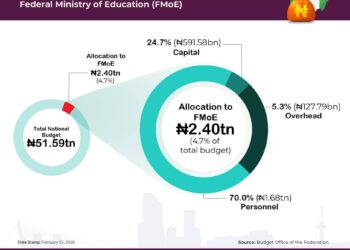
Private institutions are also pushing innovation. Miva Open University has launched a network of blended-learning hubs, pairing AI-driven online instruction with physical study centres to ease the university admission bottleneck. The 2025 federal budget earmarked ₦50 billion for online and technical-vocational education at secondary-school level, including ₦10 billion dedicated to virtual classes.
Infrastructure is slowly improving. National broadband initiatives aim to expand coverage, while teacher-training programmes—such as the Universal Basic Education Commission’s “Smart School” scheme with the National Teachers’ Institute—are equipping educators to deliver lessons through digital platforms.

Benefits
Blended learning offers several clear advantages:
Greater access and flexibility– Students, including those in rural areas, can engage with lessons and materials beyond the school day and at their own pace.
Personalised learning – Multimedia resources cater to different learning styles, helping pupils review difficult topics and deepen understanding.
Relief for overstretched institutions– Online components allow universities and colleges to reach more learners without the immediate need for additional classrooms.
Richer interaction– With routine content delivered online, face-to-face sessions can focus on discussion, critical thinking and practical projects.
Continuing Challenges
Yet significant hurdles remain. Internet penetration stands at about 44 per cent, leaving many households with unreliable or unaffordable connectivity. Data costs and the price of devices further limit participation, particularly in rural communities. Many teachers still lack experience with digital pedagogy, and cultural preferences for traditional classroom instruction can slow adoption. Regulatory frameworks for quality assurance and assessment also require strengthening.
The Way Forward
To make blended learning truly inclusive, Nigeria will need sustained investment in broadband and electricity infrastructure, affordable devices and data packages, and robust teacher-training programmes. Policy consistency and rigorous standards are equally important to ensure that all blended courses meet national and international benchmarks. Addressing gender, regional and socio-economic disparities must remain a priority so that technology narrows, rather than widens, the education gap.
Conclusion, Blended learning is no passing trend; it is becoming an essential element of Nigeria’s educational future. With coordinated action by government, private providers and international partners, Nigeria can harness technology to create a more resilient, equitable and dynamic education system—one capable of serving its fast-growing population and preparing students for the demands of a rapidly changing world.
References:
Babajide, V. F., & Olaleye, F. O. (2017). *The impact of blended learning on student performance at course-level in higher education.* International Journal of Education and Development using Information and Communication Technology, 13(1), 4–18.
Federal Ministry of Education, Nigeria. (2022). National Policy on Education.
UNESCO. (2019).Information and Communication Technology in Education in Sub-Saharan Africa: A Comparative Analysis of Basic E-Learning Initiatives














 EduTimes Africa, a product of Education Times Africa, is a magazine publication that aims to lend its support to close the yawning gap in Africa's educational development.