



















































The Director-General of the National Information Technology Development Agency (NITDA), Kashifu Abdullahi, has revealed that Google, LinkedIn, and TikTok collectively deactivated more than 28 million fraudulent or harmful accounts within the past year — many of them linked to Nigerian online actors.
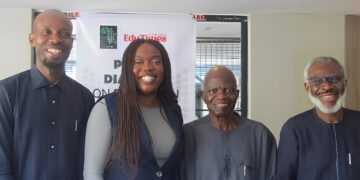
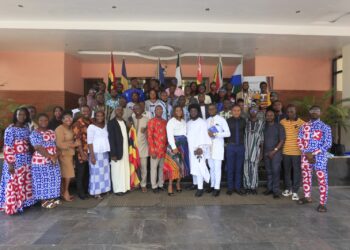
Abdullahi made the disclosure on Monday in Abuja at a symposium on digital innovation and crisis communication organised by the Centre for Crisis Communication.
According to him, Google alone removed 9.68 million accounts, while LinkedIn — a platform widely regarded as a space for professionals — shut down nearly 16 million for fraud, impersonation, and other abuses. TikTok also carried out millions of suspensions during the same period.
> “Just three platforms — Google, LinkedIn and TikTok — deactivated over 28 million accounts last year,” he said.
“LinkedIn removed almost 16 million. For me, this is outrageous because LinkedIn is mostly a professional site. People now use it for impersonation and social engineering to defraud organisations and individuals.”

Abdullahi added that over 58.9 million pieces of harmful content linked to Nigeria were taken down by the platforms, though about 420,000 posts were later restored after review.
He said the crackdown resulted from growing collaboration between Nigerian authorities and global tech companies to fight disinformation, online scams, extremist messaging and coordinated digital abuse. However, he warned against governments exploiting content moderation systems to silence critics or minorities.
> “If content is not violating any laws in Nigeria, there is no way we can just say take it down,” he stressed, calling for transparent and rights-respecting processes for reinstating content.
Representing the Minister of Information and National Orientation, Mohammed Idris, the Director-General of the Voice of Nigeria, Jibrin Ndace, said emerging technologies should strengthen crisis communication rather than inflame tensions. He noted that modern insecurity challenges are shaped as much by narratives as by physical threats.
Chairman of the Centre for Crisis Communication, Maj. Gen. Chris Olukolade (retd.), described crisis communication as a strategic national security tool. He pointed out that emergencies now unfold at the speed of social media, making verified, timely information essential for public safety.
The revelations come amid growing concern over Nigeria’s expanding cybercrime networks, widespread impersonation schemes targeting professionals, and the increasing use of social media for political propaganda, scams, and coordinated misinformation.












 EduTimes Africa, a product of Education Times Africa, is a magazine publication that aims to lend its support to close the yawning gap in Africa's educational development.